Before opening the book, I thought I knew what to read. A tree, from childhood to big. It sprouts in spring, shades in summer, leaves fall in autumn, and stands there bare in winter. The popularization of trees is nothing more than photosynthesis and evaporation, which I knew from biology class before. But the author only used more than a dozen pages to make me change my mind completely.
Trees have symbiotic wisdom
I have always felt that trees grow quietly and alone, take root in the soil, bathe in the sunshine, and do not disturb each other. It was not until I read this book that it completely subverted my cognition! The author himself is a forestry expert. With the “breath of the forest” as the core, he reveals the survival code of trees to us in particularly popular and down-to-earth words, letting me know that there is a huge and warm “social network” hidden in the forest.
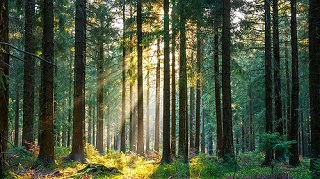
Trees have never been isolated. They will quietly transmit nutrients and send signals through the underground roots and fungi, just like the neighbors took care of each other when we were young. Different tree species will also work together. For example, oaks will shade the small plants around them, and beech will help regulate soil moisture. This natural symbiosis Wisdom, the more you read it, the more amazing it is. It turns out that nature has long hidden the truth of “mutual assistance” in the growth of trees.
I have a particularly impressive scene, which is the attitude of trees in the face of harm in the book.
The tree is gnawed by animals and the branches are torn off by the wind and rain. It will not “collapse” or “can’t think of it”. It slowly grows new tissue around the wound, wraps the injured part into it, and continues to grow upwards. The wound is still there, but it is no longer bleeding; the scar is left, but it does not affect its touch to the sky.
When I read this, I was thinking: If only I could deal with the pain like a tree, just quietly wrap that experience into it, and then continue to grow in the direction of light. Keep the scar, and it won’t affect my ability to become a better person.
The tree is not in a hurry, but the branches and leaves are lush
The most worth mentioning is that there are not only these interesting popular science knowledge in the book, but also the philosophy of survival. The author analyzes in detail the “breathing” mechanism of trees, conforming to the rhythm of the four seasons, relaxed and not panicking. This growth attitude of “foing the trend” is precisely what our contemporaries lack most. We are always chasing in anxiety, busy with inner volume, busy with anxiety, forcing ourselves to exhaust both physically and mentally. But like a tree, I forgot to learn to pause, learn to adapt, and find a balance in life between tension and relaxation.
Most of us are trapped in reinforced concrete cities, facing the screen and dealing with trivial things every day, getting further and further away from nature and our hearts. We always pursue faster and better, but forget to stop and feel life, and forget what the real “living well” is. And this book is like a bridge, allowing us to reconnect with nature and re-examine ourselves – trees do not compete or grab, but can flourish; we let go of internal consumption in order to harvest peace. It not only heals the soul, but also makes me understand that getting along with nature and reconciling with myself is the most important topic for contemporary people to learn.
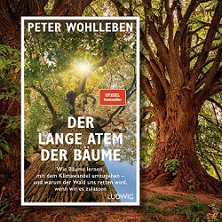
A bridge from the city to the forest
Whether you are a person who likes nature and pays attention to environmental protection, you can read the ecological code of the forest from it; or a high-pressure workplace person and an anxious urban person, you can get healing from the survival philosophy of trees and relieve stress; even if you just like to read popular science essays with warmth, this book will never disappoint you. It has both Scientific rigor, poetic philosophy, no obscure technical terms, each paragraph is like listening to the author’s story of the forest.
Really, Der lange Atem der Bäume is like a love letter written by Peter Wohlleben to the forest. There is no flashy rhetoric, but the words are gentle and powerful. It is not only a popular science book, but also a spiritual healing guide. After reading it, you will learn to breathe, cooperate and grow like trees, and find inner peace and strength in the noisy world. No matter what state you are in now, it is recommended to read it. Believe me, it will bring you unexpected healing and inspiration, and then you will find that we should have learned from a tree long ago.