When I read it, I kept thinking about a question: why do I have to fry it?
Eventually, I discovered my own answer, for unripe tomatoes are indeed poisonous. There are some things we must swallow whole, whether we like it or not; however, once we have battered them up and immersed them in hot oil, they become something we can eat. This process is not a form of whitewashing, but transformation.
In this film titled “Fried Green Tomatoes at the Whistle Stop Cafe”, there are two main themes. The first one is that during the 1920s, two women in the south, the fierce and untamed Idgie and the kindhearted Ruth, opened a cafe that was welcoming to all people despite segregation and even kidnapped Ruth away from her abusive husband. The second theme is that in the 1980s, Evelyn, an ordinary middle-aged woman, was listening to an older woman narrate events that happened in the past in a nursing home.
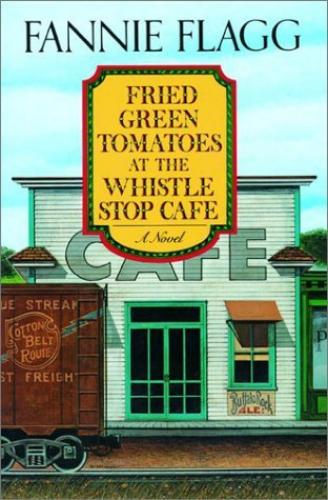
But it is not those very acts, but rather the way Idgie acts — I just can’t dismiss it. Idgie never considered whether the act was right or wrong and what others would think of her. Idgie could not bear the sight of someone in distress and thus extended a helping hand. When reading of how Idgie brought a bunch of homeless people to get Ruth, I held the book as though I were an accomplice in this crime committed through time and space. It’s not her courage I admire — it’s her conviction.
It’s all compromises, overeating, depression, and fights with youngsters taking up parking spaces in the supermarket parking lot for Evelyn. I laughed while reading about it, but my nose stung. The anger isn’t really about the person she’s fighting with; she is actually angry with herself because her life was just so quiet. The story didn’t make her a better woman but rather gave her a taste of the vivacity present in the story, which led her to act beyond the norm: take the parking space, shout at strangers, and no longer hide the fact that she eats donuts. It’s not the elegance but the wildness which is virtuous here.
After looking through the whole book, I couldn’t find a word that could be used as a motto. Ninny’s closest expression of wisdom is: that world is gone, but how fast can your car go in this world? This is more like a joke. Idgie didn’t give a speech about freedom, and Ruth didn’t say that I finally came back to myself.
They are just alive, and the author just scribbled down the living appearance, the oil stains on the walls of the cafe, the wild tomatoes by the railway tracks, and the drops of water on the iced tea glass.
There is no rigorous echo between the two lines, and some episodes are interrupted. At first, I always wanted to find some kind of structural symmetry, but then I gave up. This kind of abandonment itself has become a reading lesson, allowing something not to be fully explained. The narrative of the whole book is like the squeak of a rocking chair in the shade of a southern afternoon. It is scattered, but it does not irritate people.
I can still see that picture when I close my eyes: Idgie squatted by the stove, coated the cut green tomatoes in the batter, threw them into the oil pan, and they crackled. I can almost smell the frying oil, mixed with the smell of old wood and coffee grounds.
I think I will remember this book. It’s not because it let me know the plot, nor because it told me any big truth. It’s because it confirmed one thing: A person doesn’t need to be right before he can become brave.
Idgie has never learned how to resist correctly, and Evelyn has not fixed herself before coming back to life. They all take shape little by little as they go.
When I read that Evelyn finally just got in the car and drove, a very small voice in my heart said: You can also try it. The voice did not come from a perfect role model, but from two women who were full of flaws but never stopped moving.
This is probably the simplest and most powerful point of Fried Green Tomatoes at the Whistle Stop Cafe: Courage is not a virtue, but a habit. If you fry a few batches, your hands won’t shake.
