One winter evening, on my way home from work, I stopped by a convenience store that was about to close. At the counter stood a teenage girl, counting her change over and over. She wasn’t buying much—just a carton of milk and a loaf of bread. The cashier didn’t rush her, and the people waiting in line said nothing. The whole thing lasted maybe two or three minutes, but it stayed with me for a long time. Looking back, I think it’s because, in that moment, I realized how often we brush past other people’s lives without knowing what they’re going through.
Reading Small Things Like These, I kept thinking back to that scene.
The story is simple. It’s Christmas 1985 in Ireland. Bill Furlong, a coal merchant, delivers fuel, supports his family, and looks after his wife and daughters. He’s not wealthy, but his life is stable. During one delivery, he stumbles onto something the local convent wants to keep hidden. Faced with the truth, he hesitates for a long time. Staying silent means his life stays the same. Reaching out could cost him and his family.
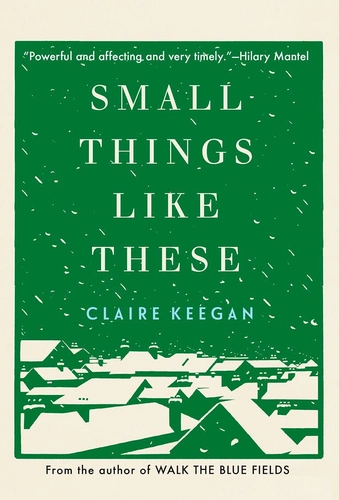
Judging by the plot summary, this sounds like a story about exposing social wrongs. But what drew me in wasn’t that—it was Bill himself. He isn’t a hero or a reformer. He worries about making a living, fears offending people, and thinks about his family’s future. He doesn’t have the idealistic glow you often find in literary characters. And that’s precisely why, when he starts to struggle, the reader feels the real weight of it.
I especially loved how Keegan writes Bill’s inner life. Much of the time, he doesn’t say anything. He just sees things and carries those images home with him. On the surface, life goes on. But inside, he can no longer find peace. That reminds me of so many real-life moments. It’s not that we don’t know what’s right. It’s that knowing comes with consequences.
Many critics who’ve written about this book keep coming back to the phrase “ordinary decency.” Some of them argue that what makes Small Things Like These so valuable isn’t that it exposes a historical wrong, but that it reminds us: society’s coldness doesn’t come from too many bad people. It comes from too many people choosing to look away. The more I read, the more I agreed. Bill isn’t really facing one girl’s fate. He’s facing a bigger question: when everyone else is quietly going along, how much is one ordinary person willing to pay to do the right thing?
One line from the book has stayed with me:
“Was there any point in being alive without helping one another?”
Keegan doesn’t turn that into a slogan. She embeds it in a person’s real circumstances. Reading it, I thought about all the small things in life. Helping someone doesn’t have to be dramatic. Sometimes it’s holding a door for a stranger. Sometimes it’s simply not turning away when someone is at their lowest. Those things can feel tiny, but they might change someone’s whole day—or their whole life.
The most distinctive thing about Small Things Like These is its restraint. It’s under 150 pages. No complicated plot. No intense conflict. Keegan uses very spare language to write very dense emotion. Readers who prefer fast paced stories might find it too quiet—maybe even feel that nothing happens. But if you sit with it, you realize that what changes isn’t the plot. It’s the character’s heart.
I still remember the winter in that book. Coal dust. Cold wind. Christmas lights. Morning delivery routes. And all the things left unsaid. Many great novels explore justice, courage, and kindness. Small Things Like These takes a quieter path. It doesn’t tell you what kind of person you should be. It simply places one ordinary person’s choice before you.
What decision he finally makes—well, each reader might have a different answer. And that act of thinking, perhaps, is the most important thing this little book leaves you with.
