Hey friend, ever get that feeling—you’re living right in the middle of people, but you feel like an outsider, like that lone wolf inside you is howling at the moon in the dead of night?
Reading Steppenwolf, I felt like Hermann Hesse was exposing his deepest inner conflicts. He pulls you right into that murky river to watch a man tear himself apart between being “human” and being “wolf,” then stitch himself back together, one slow stitch at a time. If you’ve ever found this world too loud, too fake, too damn slick, this book is for you. Don’t be afraid of the ache. Come on in.
That man named Harry, living the truth you’re too scared to admit
Harry Haller is in his fifties, knows his Mozart, the kind of intellectual who suffers in a very refined way. But there’s a wolf living inside him. This wolf hates the cozy little smiles of the bourgeoisie, despises all that forced warmth, and at the same time, aches to have someone just pat his head.
Then a little pamphlet called Treatise on the Steppenwolf strips him bare. You think you’re one of the few sane people left? Nah. You’re just too afraid to be happy.
And then comes a woman. Hermine. She doesn’t talk about ideals. She teaches him three things: how to dance, how to drink, how to laugh. Right there, I felt deeply uncomfortable. What Hesse really means to say is this: what feels like “noble loneliness” may just be fear in disguise.
I won’t spoil the Magic Theater for you. But every door you open is a desire you locked up yourself. It hurts. And it’s a blast.
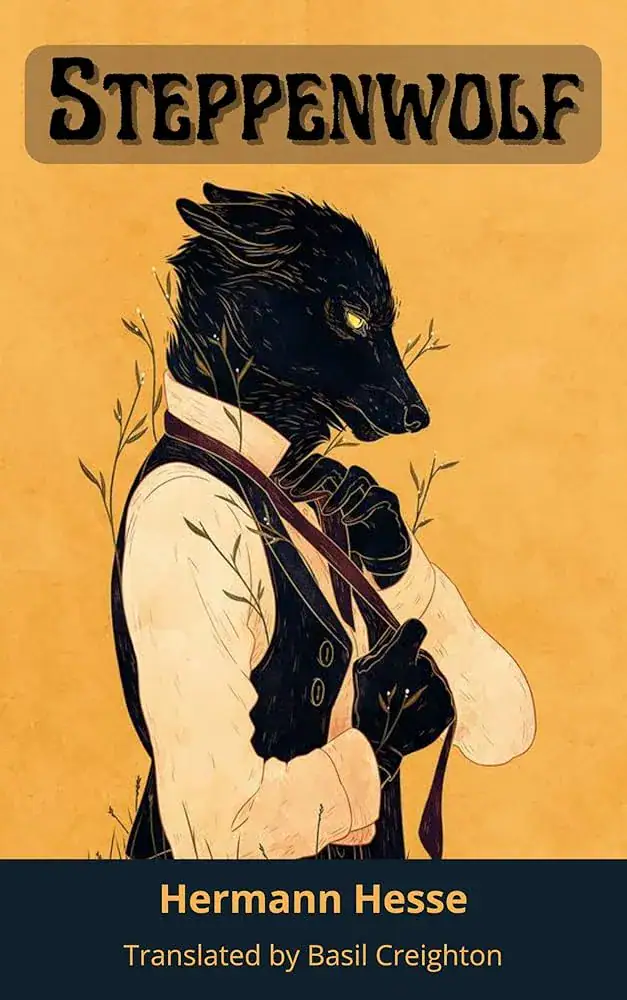
Being split isn’t the sickness. Pretending you’re whole is.
A lot of readers feel crushed by Steppenwolf at first. Hesse writes loneliness as thick as fog in an old, dusty room. But what really hits you is a line that comes later, like a curse whispered in your ear. A musician named Pablo tells Harry, “You stopped being two people long ago. You are a hundred people.”
You’re not a battlefield of either/or. You’re a theater packed with a hundred different souls. You can be noble and filthy, brave and a coward, aching for eternity while binging on cheap thrills. The real problem isn’t that you’re split apart. It’s that you’ve always believed you shouldn’t be.
I put the book down and just stared at the wall for a long time. The goal isn’t to cure ourselves but to coexist with the many sides of who we are and still be able to laugh.
Humor is the final weapon. Immortality lives in the dance step.
The easiest thing to miss in this book is the dark, deep humor Hesse hides in there. Seriously. He takes a man as stiff as a tombstone and makes him learn the foxtrot. He drags Goethe and Mozart into a wild, absurd nightmare and deconstructs them. Hesse isn’t telling you to accept your pain. He’s teaching you to smile right in its face.
Near the end, this beautiful image appears: the Immortals. They aren’t saints on a pedestal. They’re the ones who learned to dance through their own laughter. If you can turn your pain into a dance and your loneliness into a song, you’ve got your hand on the doorknob of eternity.
So don’t go thinking Steppenwolf is a book that depresses you. It pulls you down to the very bottom, then grabs your arm and demands one last dance.

This is the most honest date you’ll ever have with yourself
I’m not recommending this book because it’s a classic. I’m recommending it because it understands all those embarrassing, messy parts of you better than you do. You’re terrified of socializing but even more terrified of being forgotten. You want to be profound, but you scroll through videos until 2 AM. You call this world a complete garbage fire, then you cry at a beautiful sunset.
Steppenwolf won’t hand you any answers. But it will sit right next to you and stare into that same abyss and say, “Yeah. It’s pretty damn ugly down there. But there’s a light in there too.”
Find a quiet night to read it. Pour yourself a stiff whiskey or a strong cup of tea. When you hit a passage that makes you squirm, close the book and curse Hesse out loud. He won’t mind. An honest bastard is always better than an elegant fake.
When you finish, you’ll understand one thing. You don’t have to kill the wolf inside you. And you don’t have to fully become a tame little human. You just have to push open the door to that Magic Theater. Let all hundred versions of yourself play out their scenes. When the sun comes up, you’ll still be walking through this loud, messy world. But inside your chest, there will be one inch of silence that no one can ever take from you.
