I first read Anne Frank’s diary when I was twelve. My teacher handed it out with the air of someone delivering medicine. “This is important,” she said. “You will find it sad.” I did find it sad. I also found it boring in parts. Anne complained about her mother. She worried about her periods. She described the same rooms over and over. I missed the point entirely. I reread it as an adult, and now I cannot stop thinking about the sound of the window.
Anne and her family hid in the Secret Annex for two years. They could not look outside during the day. The windows were covered. But at night, when the office workers had gone home, Anne would crack a window. She writes about it a few times. The air. The stars. The chestnut tree she could see from the attic. She calls the tree “the most beautiful thing in the world.” I had forgotten that detail. I read it again and thought: she was fifteen. She had not seen a real sky in two years. That tree was her ocean.
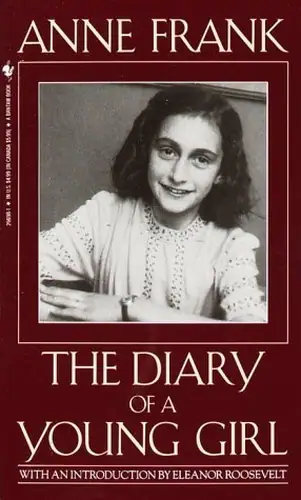
The book is not a novel. It is a diary. Anne rewrote it herself after hearing a radio broadcast that said ordinary people should save their wartime letters and journals. She wanted to publish it after the war. She edited it. She cut passages. She polished the prose. She never got to see it in print. She died in Bergen Belsen in March 1945, a few weeks before the camp was liberated. She was fifteen.
Everyone knows the hopeful lines. “In spite of everything, I still believe that people are really good at heart.” That line is beautiful. But the line that haunts me comes earlier. Anne writes: “I want to go on living even after my death.” She was thirteen. She already knew she might not survive. She already knew she wanted to leave something behind. That is not hope. That is instinct.
She writes about her mother with frustration. She writes about her own vanity. She writes about her changing body. She is not a saint. She is a teenager who is hungry, bored, and trapped. Her father, Otto, was the only one of the eight who survived. When he read the diary, he said he had not known his daughter. That is the real tragedy of the book. Not the Nazis. Not the betrayal. The gap between what a parent sees and what a child actually is.
At twelve, I did not understand why Anne kept fighting with her mother. Now I do. She was not a bad kid. She was a normal kid trapped in a closet with the person who knew her best. Of course they fought. At twelve, I did not understand why she wrote so much about Peter van Pels, the boy in the annex. Now I do. She was lonely. She needed someone to touch. A hand on a shoulder. A whisper in the dark. That is not romance. That is survival.
The diary ends abruptly. The family was betrayed. The Gestapo came. Anne wrote her last entry on August 1, 1944. Three days later, they were arrested. She left her diary on the floor of the annex. Miep Gies, one of the helpers, found it after they were gone. She saved it for Otto. She did not read it. She hoped Anne would come back and ask for it.
I keep my copy of the diary on a shelf next to other books about the Holocaust. I do not reach for it often. It is too heavy. But when I do, I always flip to the passage about the chestnut tree. “The sun is shining,” she wrote, “the sky is deep blue, there is a magnificent breeze, and I am longing for everything.” She was fifteen. She was hiding from people who wanted her dead. She still wanted to live.
If you are looking for a fast paced thriller, this is not it. If you want a quiet, messy, deeply human document written by a girl who should have grown old, read it. You will never forget the window. You will never forget the tree.
