For years, a friend warned me away: “It’s about two teenagers with cancer. You will cry.” I avoided it—until another friend handed me a copy and said, “Just read the first page.” I did. I didn’t cry at first. Not until page 125—then the tears wouldn’t stop.
On paper, the plot feels almost like a joke. Two kids meet at a cancer support group. Augustus Waters, with osteosarcoma and a missing leg, is handsome, charming, and has a way of speaking that feels lifted straight from a greeting card. Hazel Grace Lancaster has thyroid cancer that has spread to her lungs. She carries an oxygen tank and watches the same reality show on repeat. They fall in love. They travel to Amsterdam to meet the reclusive author of a book they both love. Then the joke ends.
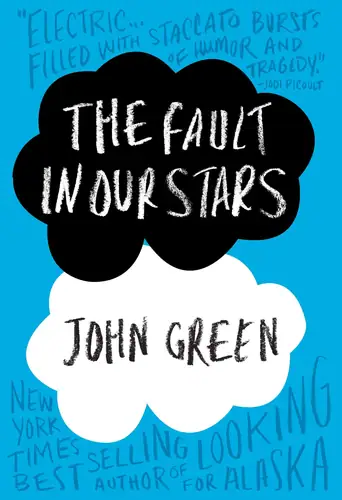
John Green had worked for years as a chaplain in a children’s hospital before writing this book. He’s said in interviews that he got tired of stories where sick kids are either saints or cautionary tales. He wanted to write a novel where the teenagers are just teenagers. They make out. They fight with their parents. They get jealous. They also get sick — but the sickness isn’t the point. What matters is that they keep going anyway.
Late in the book, Augustus says, “Some infinities are bigger than other infinities,” explaining that a short life filled with meaning can be better than a long life without it. I’ve thought about that line a hundred times since. In traffic jams. At funerals. On birthdays where I felt like I was wasting time. Green isn’t saying cancer is a gift. He’s saying the time you have — however much or little — is yours. You get to decide what to do with it.
The book is funny in a way that feels real. Hazel jokes about her oxygen tank. Augustus calls it his “literally” metaphor addiction. They mock each other’s coping mechanisms. They also break down. There’s a scene where Augustus admits he’s scared of oblivion, of being forgotten. Hazel says, “I am already forgotten. I never did anything worth remembering.” That conversation takes place in a drainage pipe: two sick kids in a concrete tunnel, discussing death like it’s a math problem. That scene captures the essence of the book—not the cancer, but the ordinary, absurd, and beautiful struggle of living while knowing your time is limited.
I have a friend who survived leukemia when she was sixteen. She doesn’t talk about it. But once, drunk, she told me that the worst part wasn’t the chemo. It was the way people looked at her after. Like she was a story, not a person. Hazel gets that same look. People call her brave. She’s not brave. She’s just still breathing. Green understands that distinction.
The Amsterdam trip goes wrong. The author they meet isn’t a wise old man. He’s a drunk, bitter jerk who wrote one good book and spent the rest of his life disappointing everyone. That might be the book’s most honest moment. No wise mentor. No cure. Just a shitty author who tells them the sequel was a lie.
“The world is not a wish-granting factory.” That’s another line that stuck. I used to believe that if you tried hard enough, things would work out. Then I watched people die who had tried very hard. I watched marriages end that people had fought for. I watched careers stall that people had given everything for. Green isn’t telling you to stop trying. He’s just saying it doesn’t guarantee anything. You try anyway. That’s the only dignity.
The ending isn’t a surprise. Augustus dies. Hazel goes to his funeral. She reads a letter he wrote her. He says, “You gave me a forever within the numbered days.” That’s cheesy. Green knows it’s cheesy. But he earns it because the rest of the book is so unsentimental. You cry because you’ve watched two kids fall in love and run out of time, not because Green twisted your arm.
I finished this book at two in the morning. I didn’t sob. I just sat there. I thought about my own health. I thought about the people I love who have died too young. I thought about the friend who warned me not to read it. She was right that I would cry. She was wrong — I didn’t regret it.
The title comes from Shakespeare. Julius Caesar. “The fault, dear Brutus, is not in our stars, but in ourselves.” Green inverts it. Sometimes the fault is in the stars. Sometimes you get dealt a bad hand, and it’s no one’s fault. The only thing you can do is play it.
If tearjerkers aren’t your thing, skip it. If you find cancer novels manipulative, skip it. But for those who want a smart, funny, and devastating story about two teenagers refusing to be defined by illness, this book is essential. Keep a tissue nearby—you won’t need it until page 125, and then you’ll need a box.
