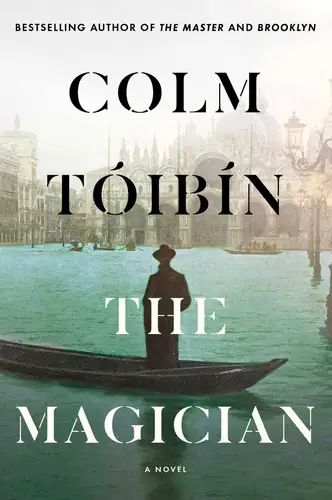
I’ll be honest. I picked up The Magician expecting one of those respectable, slightly airless literary biopics dressed up as fiction. You know the kind. “He walked pensively toward the desk.” Letters quoted for three pages. A lot of tasteful suffering.
Colm Tóibín fooled me.
This book crept up on me the way a quiet relative does when they suddenly tell you something genuinely unhinged at a family funeral. It’s about Thomas Mann, the Nobel Prize winner, author of Death in Venice and The Magic Mountain, the stuffy giant of European letters. Except Tóibín keeps pulling back the curtain on the terrified, closeted, deeply contradictory man underneath all that formal tweed.
Here’s what got under my skin. Mann spent his whole life hiding. Hiding that he was attracted to men, hiding his contempt for his own family, hiding from the Nazis while his books burned. Every speech, every carefully edited diary entry, every dinner with his wife Katia after writing gorgeous prose about forbidden desire upstairs. All one long performance. The man was doing damage control for decades.
The wild part is he wasn’t even good at it. His son Klaus was openly bisexual and wrote about it. His daughter Erika married the poet Auden just to get a passport out. Meanwhile Thomas was writing letters to his brother saying things like “I feel more like a sister to you” and then destroying the evidence. Tóibín doesn’t hammer you with the irony. He just puts Mann at his desk, has him write something achingly true, then sends him downstairs for dinner like nothing happened.
I kept getting frustrated with him. Just say it. But then I’d remember. This was Germany in the 1910s, then the 20s, then the Nazi years, then exile in America during McCarthy. Every time he got close to telling the truth about himself, history handed him a fresh reason to shut up. That felt real in a way that was just exhausting.
The scene that stayed with me comes late in the book. Mann is old, living in California, and a young gay writer comes to visit him, basically looking for some sign of recognition. Mann talks about Goethe. About how artists must protect their “secret.” You want to grab him by the shoulders. But you also understand it completely. That’s what decades of hiding does. It stops being a choice and just becomes who you are.
Tóibín writes in calm, unhurried sentences that never reach for effect. That’s exactly right for a subject who spent his life working so hard to avoid exactly that. The book doesn’t wrap anything up neatly. Mann dies still half hidden. But you put it down feeling like you watched someone pull off the hardest magic trick there is: making yourself disappear while standing in full view.
