This book has been famous for a hundred years. People come and go. But someone always brings it up. I put it off for a long time. Didn’t read it. I was afraid it would disappoint,like one of those old classics that people put on a pedestal.
Then I finally opened it. Got to page twenty. And Strickland said this:
“I have to paint. It’s like a drowning man has to struggle.”
He didn’t sound like someone chasing a dream. It was more like something had a grip on him. Something controlling him completely. He didn’t choose painting. Painting chose him. Something got inside him. It ate up his comfort. His respectability. His place as a husband and a father. In the end, it ate him too.
I stared at that page for a while. When something hunts you down that hard, is that luck? Or is it something else?
Inside Strickland lived a bastard and a saint. Right next to each other
Before he turned forty, Strickland was a stockbroker. Gray suit. On time every day. He went to boring dinners with his wife. They gossiped about the neighbors. Then one day he left a note. “I’ve gone to Paris. I’m not coming back.”
Everyone thought he ran off with another woman. They went to check on him. He was living in the worst hotel in Paris. He had less than a hundred dollars to his name. He said he couldn’t help it. The images were burning inside his head. They kept him awake. He would rather burn himself out than sit back down at that desk.
This man drove his wife to the edge of suicide. He destroyed a friend’s family. After all that, he felt no guilt. Like a machine running a mission. His head had room for nothing but canvas and paint.
A drowning man doesn’t think, “Is this fair to my family?” He just wants air. For Strickland, painting was that air. Maugham wrote about someone who was chosen by something. Something that doesn’t care about manners or your pension. When it comes, you go.
Between the moon and sixpence lies an entire life
A lot of people read the title as a choice: noble dream versus small reality. But after I finished it, I felt Maugham was writing about something else. Strickland didn’t choose the moon. The moon pulled him, the way tides get pulled. No negotiation. And the people down there, heads bent, looking for sixpence? It’s not that they don’t want to look up. They’ve just gotten used to the way their necks bend.
There’s a passage about Tahiti that I loved — that little island in the South Pacific. The locals lived rough but free. They didn’t overthink. Didn’t torture themselves with questions. On that island, Strickland finally found what he’d wanted for years: a place where he didn’t have to explain why he painted. He could just paint. Paint until his hands fell off. Paint until he died.
Later, those paintings sold for fortunes. He never cared.
Maugham’s pen is cold and sharp. He doesn’t sweet talk you. Doesn’t make you cry. And he certainly doesn’t end the story by telling you that dreams bring miracles. He tells you that Strickland kept painting until he went blind. And on his deathbed, he made his native wife burn every single mural in that room. Not one left.
The moon never bows to anyone
After I finished reading, I kept thinking about a very ordinary question: How is a person supposed to live, the hell?
Maugham didn’t give an answer. He just wrote about one man and showed you how he lived. Strickland wasn’t happy. He didn’t get a good ending. But in the decades he was alive, every single minute, he knew why he was breathing. That puts him ahead of a lot of people who live to be eighty.

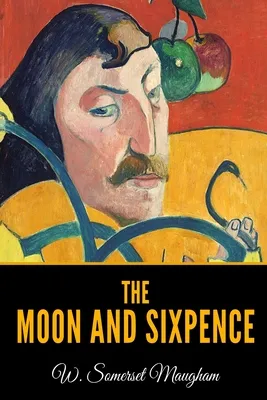
I closed the book and looked at the cover again. The moon hangs in the sky. Sixpence lies on the ground. The man with his head down will never see what’s up there. The man staring at the moon might starve to death on the road.
Which side you pick doesn’t matter. What matters is whether you can pay for your own choice.