I don’t agree with just calling The Hidden Wall a novel about survival or living off the land. I’d rather read it as a story about transformation. After a person gets stripped of everything, she finds out she wasn’t even right to begin with.
That wrongness starts with an invisible wall. A woman and her cousin go on a vacation in the Austrian mountains. The next day, the wall is there. Everything on this side is normal, but all life over there has gone still. She can’t get out. No explanation. Reading that setup, I thought: if it were me, my first reaction probably wouldn’t be fear. It would be waiting for a notice that never comes. I always feel like someone should be responsible for explaining this kind of thing.
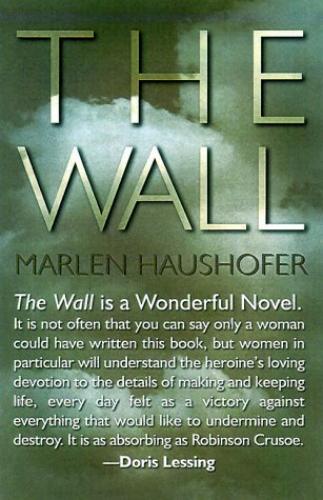
But she doesn’t wait. Learning to hunt, skin animals, store food — that comes next. She raises a hound named Lynx, and later a cow and a cat. She starts keeping a diary, not for anyone else, just to keep herself awake. If it were me, I might not even think a diary is necessary — I wouldn’t know who to write to. But her logic runs the other way. She doesn’t know who to write to, so she has to write. Otherwise she won’t even exist. That idea stopped me cold for a long time.
What touched me most wasn’t the survival skills but her attitude toward Lynx. At first Lynx is just a dog. Then she finds herself talking to him seriously, explaining her decisions, falling into real panic when he gets sick. It’s not anthropomorphism. It’s just that the line between human and animal gets blurry. I once had a cat. In the first month after he died, I realized I would lower my voice when I came into the apartment, afraid of waking him up. Some words have to be said, or they just stay stuck inside you. Whether the other side understands is secondary.
She watches Lynx sleep in the sun, his belly rising and falling, his paws twitching sometimes. She says that if Lynx died, she would have no reason to keep writing this diary. Reading that, I suddenly understood why people give up everything after losing their last companion. It’s not that they’re weak. It’s that there’s no receiver for the voice anymore — even if that receiver is just a dog chasing a rabbit in a dream.
Haushofer writes with extreme restraint. The first time the protagonist kills a cow, she just stands there watching its eyes lose their light, then starts skinning and cutting the meat. No breakdown. No howling. That kind of restraint is more powerful than any melodrama. She’s not acting strong. She just can’t afford to cry — the cow won’t get back up after she does.
None of this comes from her own free will. From an urban woman to a hunter, a butcher, a diarist — the wall just cancels every other option. This reminded me of the feeling I had when I moved to a new city a few years ago and had to completely rebuild my daily routines. Of course it’s not one ten thousandth as hard as this wall, but the structure is a little similar. You have to first admit that you can’t do anything, and only then can you start doing something. Get discouraged first, then work. The order can’t be mixed up.
The book rejects both cheap hope and complete despair. The protagonist says: I don’t know how long this wall will stay. I only know that today I have to chop firewood. Lynx needs to eat, and the apples in the yard are ripe. I read that sentence over and over. It’s not compromise or numbness. It’s something hard to name. Neither accepting fate nor fighting fate. It’s deleting the word “fate” from your mind altogether. All that’s left is today, firewood, the dog, and apples.
After closing the book, I lay in bed thinking for a long time. About what things in my life are my own walls, about the small things I do inside those walls, about whether they are truly mine. Then I thought of a question I had never considered before. We always feel like we need to break the wall down and get to the other side. But what if there’s nothing on the other side? What if the point of the wall is to let you grow into the person you already are, right where you stand?
