I know a person who lives in a house in the suburbs with her husband. She cooks, cleans, and waits for him to get off work every day. Everything seems normal to outsiders. One day, out of nowhere, she told me she wanted to crush sleeping pills into his porridge. Not out of hatred—she said that—but just to see if the house would be quieter after he fell asleep.
Of course, she never did it. But the thought stayed with me for a long time. After reading Mauriac’s Thérèse Desqueyroux, I couldn’t stop thinking about her.
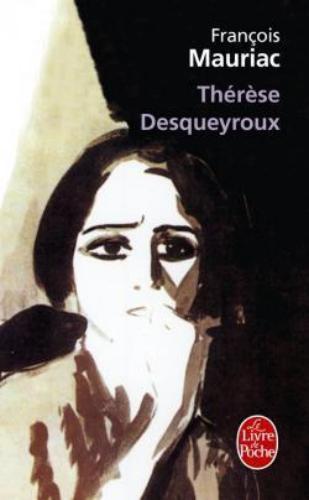
The story of Thérèse is painfully simple. A woman goes to court for poisoning her husband, gets released for lack of evidence, is put under house arrest by him, and eventually leaves. That’s it. Mauriac doesn’t turn it into a thriller. He focuses on what comes after. How does someone, declared innocent, face each day?
What fascinates me isn’t the act itself—it’s the lack of motive. Thérèse couldn’t explain why she did it. She didn’t hate her husband. She didn’t want his money. She had no lover. Nothing. That ambiguity is the part that sticks, the part that unnerves me.
If her motive were clear, she’d be an avenger or a madwoman. We could categorize her and feel safe. But Mauriac refuses. She is just swallowed by a sense of nothingness. And that emptiness… it’s more lethal than any tyrant’s oppression. If her husband had been cruel, she could have fought back, maybe even with satisfaction. But he is ordinary, decent, boring. His greatest crime is making her life so… empty. Nothing to look forward to.
The pine forest of Landes shows up again and again. Its resin smells strong, clinging to every corner. Reading about it, I remembered a town where I spent three days. By the third night, I wanted to run. Thérèse has been trapped there for years.
Mauriac isn’t just describing a forest. It’s her judgment. Not the kind with gallows or drama. It’s the same tree outside my window every morning. The air smells the same. There’s a man nearby I have nothing to say to. Life like that—it’s crueler than a cell, because you have to act normally.
Later, Thérèse leaves the forest and lives alone in a small Paris hotel. But it’s not freedom. It’s just another suspended state. Her daughter visits, like a stranger. Mauriac gives her no awakening, no epiphany. She just keeps living. Doesn’t understand herself. And that… that feels honest. Far more than a neat ending where “she finally finds herself.”
I remembered the woman who once wanted to put sleeping pills in the porridge. She divorced, moved to another city, took an ordinary job. She posts occasionally online: dinner, cats. Nothing else. I don’t know if she has found herself. After reading Thérèse, I think maybe… “living on, living unclearly” is an answer in itself. Mauriac doesn’t judge or save her. He just leaves her in the pine forest. It’s not warm. But it’s real.
This book taught me something strange. Not how to escape the cage, but that even when cages open, people may not know where to go. Leaving the pine forest isn’t cheering or rebirth. It’s just a new view from the window. Mauriac dared to write this inexplicable story—not for perfect characters, not for us readers. What I take from it isn’t a truth, it’s an admission: some lives face dilemmas with no way out. Acknowledging that is braver than pretending there is a solution.
