Have you ever had this kind of experience? Obviously, there are a bunch of facts in front of you, and everyone seems to be right, but you just feel that something is wrong. Every time you think you have found the truth, what another person says makes you start to doubt. Hernan Díaz’s Trust seems to be constantly challenging you: what on earth can you believe?
At the beginning, the framework of the story seemed very simple. A wealthy financial tycoon’s family, whose members are all accomplished, seems to be the kind of American Dream-style success that we often see. But as the plot unfolds, you will gradually find that behind the brilliance of this family, there are many stories that we cannot see. When you look at these characters, you will slowly understand that those seemingly perfect appearances hide too many secrets, and the truth is not so simple.
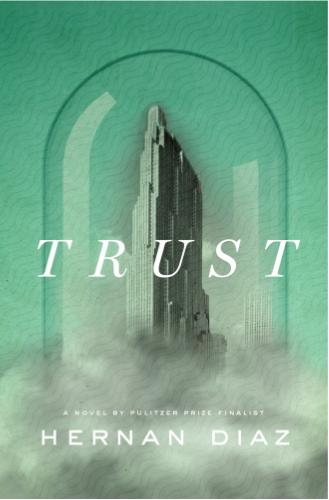
What attracts me most is that the book does not present the truth to you in a simple way, but gradually pieces together the story through four completely different perspectives. These four perspectives correspond to four completely different styles: a best-selling novel, a draft memoir of the tycoon himself, his wife’s private diary, and a seemingly objective investigation report. The novel is full of ups and downs, the memoir is full of rational defense, the diary is fragmented and private, and the investigation report is cold-eyed. Everyone tells the truth they understand from their own perspective and in their own style.
Give an example and you will understand. As for whether the tycoon’s wife is really crazy, in the best-selling novel, she is a tragic supporting role. In the memoir, she is a weakling who cannot bear the pressure of the financial world. In her own diary, you find that she actually participated in the tycoon’s early trading strategies. Her collapse is more like an angry resistance to the erased contribution. The same thing, three versions— which one do you believe?
As a reader, you may feel that you are gradually approaching the mystery at first, but suddenly you will be completely subverted by another perspective, and you feel that you have grasped nothing.
And in these intertwined narratives, I suddenly realized that this book is actually reminding us that the truth has never been so simple.
Each of us builds a story about others and the world according to our own judgment in life, and this story shapes us in return. Perhaps true trust is not about finding the truth, but about learning to move forward in uncertainty and accepting the imperfection of the world.
For example, the father in the story, the financial tycoon of the family. At first, you may think that he is an indestructible person—successful, rational, and courageous. But slowly, you will find that he is actually a completely lonely person. His success and wealth have become his strongest shell, but they have also separated him from his family and true emotions.
In fact, what makes me think the most about the whole story is trust itself. Looking at these characters, the trust in each other has been collapsing. The trust between parents and children, husband and wife, and even friends always seems to be disintegrating step by step. You look at their stories and suddenly realize that we always take trust for granted, but how fragile it is. Under the influence of time, lies, and betrayal, trust can be easily torn apart. Have you ever thought that you would doubt a person because of a small misunderstanding? Just like the characters in the book, they built a seemingly strong trust with each other, but lost it little by little in a series of games of lies, choices, and interests.
The narrative of each character seems to be telling us a truth, but these truths have never completely converged. You may see a part of yourself in their stories, and you may also begin to reflect that each of us is weaving stories for ourselves, and these stories may not be as complete and true as we think. Every time I try to figure out who is right and who is wrong, the narrator in the book makes me realize that no one is completely right or completely wrong.
One question that comes to my mind from Trust is: Is it really so easy to know the truth? In life, is it possible for us to truly understand everything about a person, or can we fully understand our own hearts? Is the trust and understanding of others, society, and ourselves always limited? This book makes me keep asking these questions in my heart, but the answers I get are not complete every time.
I think the reason why Trust is fascinating is that it does not give a simple answer. It doesn’t tell you that this is right, nor does it tell you that that is wrong. It shows you that in the complex network of human nature and intricate relationships, the truth has never been fixed.
So, in the end, you find that this book is more than just a story about wealth and power. It tells how each of us can piece together a story about the world, others, and ourselves through trust, doubt, betrayal, and understanding.
Perhaps, true trust is not to find the truth, but to learn to move forward in uncertainty and accept the imperfection of the world.
