After flipping through Vigil in the middle of the night, I lay in bed. The darkness wrapped me tightly like a thick quilt, but my heartbeat was unusually clear. Sanders can always find unusual details in ordinary days, and make daily scenes tense and realistic.
The story is very simple: a family, a spirit guard, and a night watchman. The watchman travels between the dead, their relatives, and himself. But under his pen, every moment carries weight, which makes people unconsciously touch the most hidden emotions in life.
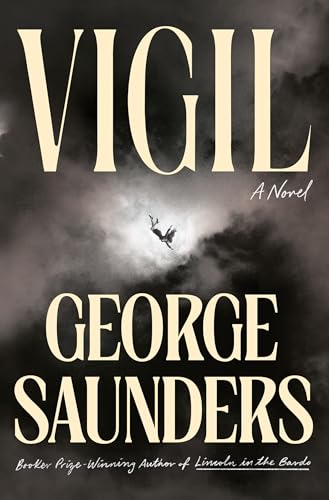
The night watch amplifies every trace of uneasiness in the protagonist’s heart. Every silence, every hesitation, every pause in the eyes is not an exaggeration, but it gives people a nervous, astringent feeling. There are no thrillers or ups and downs in the book, but you will still be caught by every action. Guarding the spirit seems to be a ritual, but in fact it is like a mirror, which makes people calm down and observe themselves and the world.
I remember the night watchman walking around the room and gently touching the belongings of the dead. The action is so small that it is almost invisible, but it seems to ask one: what is the real responsibility? What is respect for the deceased? Is it just to comfort yourself? Sadness, fear, curiosity, and a strange tenderness are intertwined in my heart. I can even imagine the smell of paper and dust in the air. This subtle discomfort makes me have a wonderful resonance with the night watchman in the book.
Time is long in the book, and the past and the present, memory and reality, faith and doubt are intertwined. I followed the protagonist and found that my familiar life was slowly becoming strange. Sanders didn’t tell you how to face death, family or responsibility. He just put you in the same night and let you feel the weight of every breath and heartbeat. This kind of quiet power is more touching than any great truth.
Some small details particularly impressed me. The night watchman’s movements are clumsy but careful. His silence is not repressing, but a kind of power, which makes people stop and observe. He wanders in the room. I think that maybe everyone is keeping vigil at night, but the object is different. Sometimes it is the shadow of his past, and sometimes it is unspeakable fear.
Sanders’ words always have a gentle sense of humor. It does not make the story lighter, but makes the heavy more real. The seemingly ordinary little things in the book actually reveal the inner anxiety and contradictions of the characters. This makes me think that the most unbearable thing in life is often not big things, but small uneasiness day after day. The vigil not only accompanies the dead, but also shows us the vulnerability of the living.
When I read the end of the book, I felt a faint hope. It is not a twist of the plot, nor an epiphany, but a possibility that grows quietly in daily life. The persistence of the night watchman is like a small lamp, reminding me of tenderness and admitting vulnerability. When I closed the book, I realized that although this hope was small, it really existed and slowly accumulated in daily choices.
These tiny movements, subtle emotions and seemingly bland moments make me re-understand human nature. Kindness and humor themselves are a kind of salvation. The weight of life lies in every silent companionship, every small choice, and every recognition of vulnerability. In the process of reading, I began to pay attention to the moments that were ignored in life and learned to find light in the ordinary.
Late at night, I still think about the night watchman walking around the room. His every pause and every touch seemed to remind me that the real strength is not to control life, but to admit one’s imperfection and remain sensitive and gentle in uncertainty. There is no answer in the book, but it shows me the truest temperature of human nature.
After reading this book, I was no longer in a hurry to summarize or explain, but just stopped in a kind of thinking. The night watch is not only a behavior in the book, but also a metaphor for life.
In silence and small choices, human nature can change quietly. The real salvation is not in the roar, but in the small persistence and sensitive awareness. This feeling is very clear. Even if the light goes out, it will echo gently at night.
