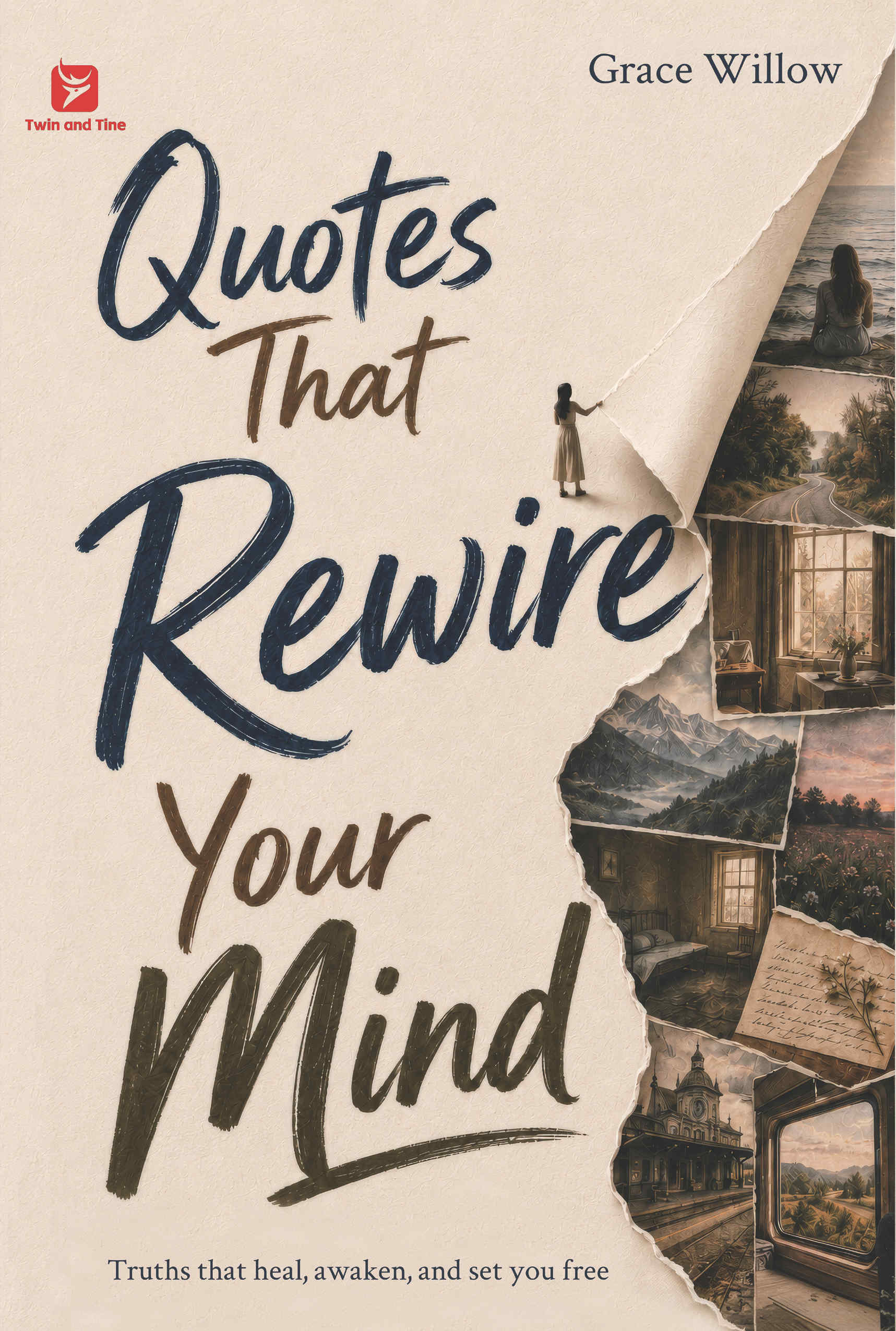
Quotes That Rewire Your Mind
Grace Willow600 truths to break old patterns, challenge your thinking, and see people, love, and yourself differently.
You can’t rewrite the past. But you can rewire how you see it.
This book moves through seven chapters: healing and letting go, growing into yourself, awakening your mind, human nature, love and regret, emotional regulation, and family of origin. It doesn’t rush you toward fake positivity. It helps you name what hurt, what shaped you, and what you’re finally ready to release.
A quieter mind. Stronger boundaries. A deeper relationship with yourself.
Healing and Letting Go
Letting go isn’t losing. It’s taking your future back from your past.
Healing isn’t about becoming perfect. It’s about coming home to yourself in small, honest steps. This chapter explores the endings you didn’t choose, the people you couldn’t keep, and the version of yourself you’ve been grieving.
You don’t have to force anything. You can breathe, soften, and let what’s already leaving leave.
In this chapter, you’ll learn how to:
- Make peace with the past without denying what you felt
- Accept endings without blaming yourself
- Let go of what you cannot change
Grow Into Myself
You don’t need to become someone better. You need to become more honest about who you already are.
This chapter is about self-worth, boundaries, independence, and the courage to move before you feel ready. It’s for anyone who has spent too long proving their value to people who were never going to see it.
You are not behind. You are on your own timeline.
In this chapter, you’ll learn how to:
- Trust yourself even when you feel uncertain
- Stop seeking approval to feel worthy
- Set boundaries without guilt
- Make choices based on what you want, not what others expect
Awaken Your Cognition
Change the way you see the world, and the world you see changes.
This chapter explores perception, silence, wisdom, and inner calm. Not everything you think is true; sometimes it’s simply an old way of seeing.
The more clearly you see, the less you need to react.
In this chapter, you’ll learn how to:
- Stop letting other people’s opinions shape your inner world
- Question your assumptions and first impressions
- Separate what is happening from how you interpret it
- Pause before reacting
Real Human Nature
Watch what people do when they’re disappointed, not what they promise when it’s easy.
This chapter looks at the patterns that reveal people more clearly: what they do when they are disappointed, what happens when they don’t get what they want, and when promises begin to cost them something.
Seeing people clearly doesn’t make you bitter. It helps you become more careful about who you trust.
In this chapter, you’ll learn how to:
- Protect your boundaries without becoming cynical
- Pay attention to actions instead of promises
- Recognize patterns that reveal a person’s intentions
- Notice warning signs earlier
Love & Regret
Real love doesn’t hold on tighter. It respects the other person enough to let them choose.
This chapter explores love, loss, one-sided longing, and the grief of almost. It doesn’t ask you to hate someone who hurt you or wait for someone who didn’t choose you.
You deserve to be chosen—not tolerated, not almost chosen, not kept as an option.
In this chapter, you’ll learn how to:
- Put your future back in your own hands
- Recognize when love has become one-sided
- Stop chasing someone who won’t choose you
- Let go without turning love into regret
Emotion Regulation
You can’t stop the storm, but you can learn to ride the waves.
This chapter is about becoming steady without becoming cold. It looks at the moments when one sentence lights you up, your mind starts spinning, or staying silent feels impossible.
Your feelings are not the enemy. The space between feeling and reacting is where your power begins.
In this chapter, you’ll learn how to:
- Stop giving other people control over your inner state
- Pause before reacting
- Calm yourself when emotions take over
- Respond instead of explode
Family of Origin
You didn’t choose where you came from, but you can be where the cycle ends.
This chapter explores the stories we inherit from our families: old wounds, early maturity, and the child who learned to be strong too soon.
Going back isn’t about blaming. It’s about understanding. You can honor what shaped you without letting it define you.
In this chapter, you’ll learn how to:
- Build healthier patterns for the life you choose now
- Recognize patterns you inherited from your family
- Understand how childhood experiences can shape your relationships
- Grieve what you didn’t receive
