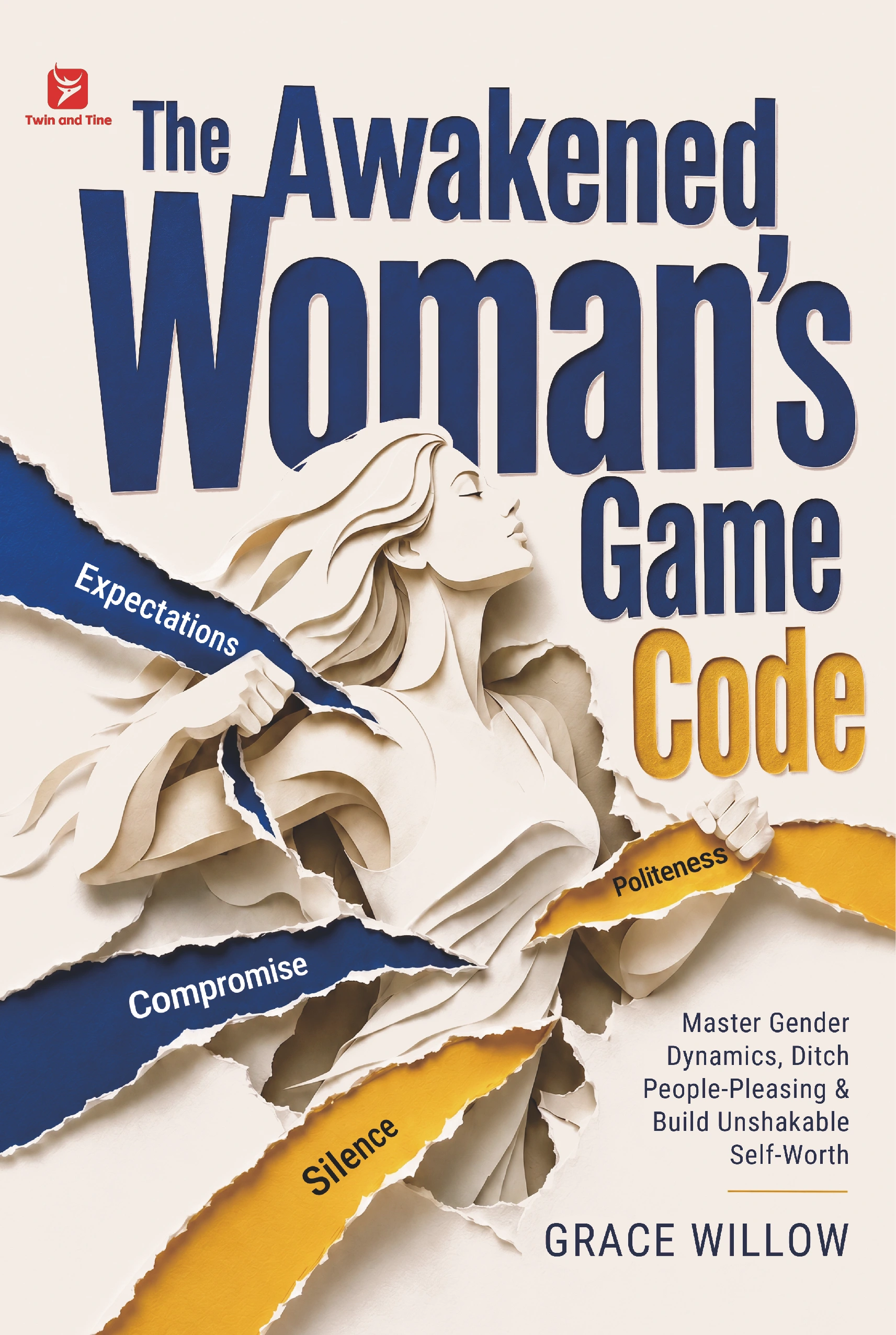
The Awakened Woman’s Game Code
Grace WillowBeing loved isn’t enough if you’re not respected.
Learn the hidden rules of attraction, boundaries, and relationship dynamics, and stop making yourself easy to take for granted.
You can be attractive, successful, kind, and still end up being taken for granted.
Maybe you reply too quickly. Give too much. Forgive too easily. Keep explaining yourself to someone who already knows what they’re doing. At some point, you have to ask a harder question: Are you being valued, or simply being useful?
The Awakened Woman’s Game Code looks at the patterns behind attraction, respect, relationships, marriage, work, and self-worth.
Start reading and see what changes when you stop trying so hard to be chosen—and start deciding what deserves access to you.
Seeing Through Men
Being there for him is not the same as being valued by him.
A woman can give her time, loyalty, and support to a relationship and still wonder where she stands. Being needed doesn’t necessarily mean a man is serious about her or willing to offer the same commitment she gives.
This chapter examines the difference between being wanted and being chosen, the expectations placed on women who try to be the “good woman,” and the risks of making a relationship the center of your future.
You will learn to look beyond attention and promises, recognize when giving too much has become an expectation, and keep your own ambitions from getting lost in a relationship.
Attraction & Boundaries
Attraction isn’t always about trying harder to impress someone.
Many women focus so much on getting a man’s attention that they overlook the small interactions and personal qualities that can make attraction develop.
This chapter looks at flirting, creating butterflies, speaking softly, and the appeal of independence. It also explores why personal space matters and how stepping away from the need to constantly pursue attention can change your approach to attraction.
You will learn to express interest more naturally, create engaging interactions, and understand the role of independence and personal space in attraction.
The Gender Game
You cannot convince someone to treat you differently simply by explaining yourself again and again.
When a relationship becomes frustrating, it is tempting to keep arguing your point, trying to make him understand, or doing more to regain his attention. But repeated explanations do not always lead to changed behavior.
This chapter examines distance, jealousy, cheating, and control in relationships. It considers when actions may communicate more than words and challenges the habit of spending too much energy trying to change another person’s behavior.
You will learn to recognize unproductive relationship patterns, respond more deliberately to difficult behavior, and stop trying endlessly to convince someone who is unwilling to listen.
Marriage With Clarity
Wanting a future together and being ready to build one are two different things.
It is easy to become attached to the future you imagine with someone. But affection and romantic promises don’t necessarily mean the relationship is moving in the direction you want.
This chapter challenges the idea of treating a man as a source of lifelong security. It explores how to distinguish a romantic ideal from reality, assess whether a man wants marriage or simply enjoys the relationship, and question the belief that love must be earned through suffering.
You will learn to look beyond romantic expectations, pay closer attention to a man’s intentions toward marriage, and question the belief that your happiness and security must depend on a partner.
Workplace Strategies
You can do your job well and still encounter people who try to undermine you.
A toxic coworker, a bully, a false accusation, or an inappropriate advance can put you in a difficult position. You may know something is wrong but struggle with how to respond.
This chapter covers commanding respect, dealing with toxic coworkers and workplace bullying, handling false accusations and sexual harassment, and responding to disrespect in a composed way.
You will learn to approach difficult workplace situations more confidently, respond to disrespect without losing your composure, and stand up for yourself when your professional dignity is challenged.
Becoming a High-Value Woman
You don’t have to keep criticizing yourself to become a better version of yourself.
The pressure to be better can come from the way you judge yourself, the approval you seek, or the habit of making yourself smaller to avoid disappointing others. Over time, these patterns can affect how you see your own value.
This chapter turns inward, exploring emotional intelligence, inner work, people-pleasing, self-criticism, and the idea of becoming an alpha woman. It invites you to stop making other people’s approval the measure of your worth.
You will learn to recognize people-pleasing and self-critical habits, develop greater emotional intelligence, and stop letting the need for approval dictate how you see yourself.
