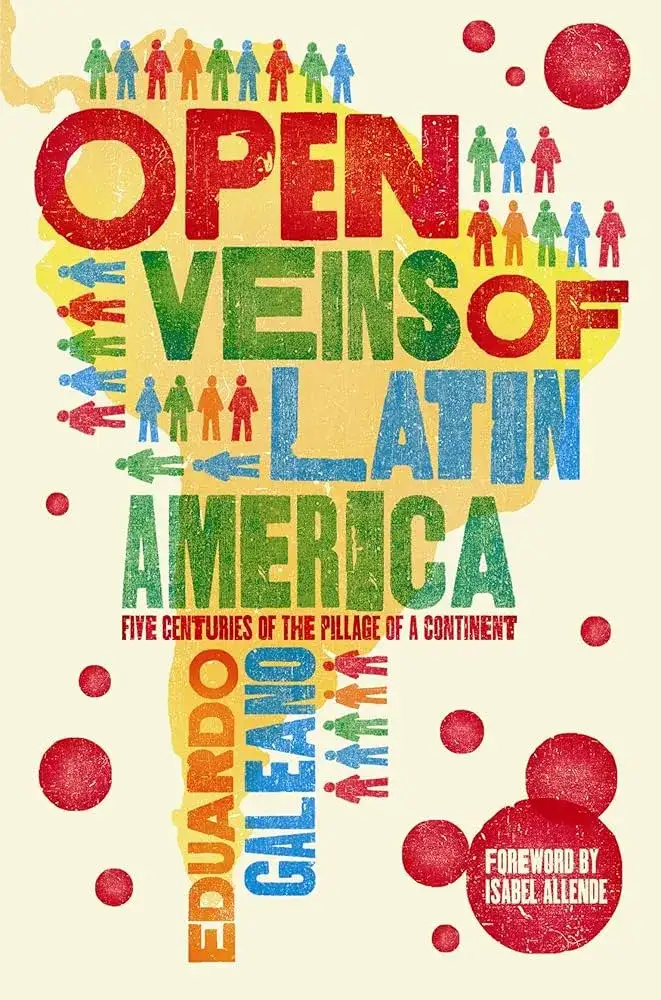
Before opening this book, I thought it was an economics text. The book contains dense data, complicated trade models, and cold, analytical charts. A few pages in, I realized this was a bloody collection of stories. Author Eduardo Galeano lays five hundred years of Latin American history on the table. He dissects the gold mines like a surgeon cutting through flesh, silver mines, rubber forests, and banana plantations, layer by layer.
He shows me: behind every piece of ore shipped away, there’s a body. On every cut stalk of sugarcane, there’s a stain of blood that won’t wash off. He doesn’t explain economic laws. He just keeps asking one question: between the rich man’s table and the poor man’s wound—which vein is actually connected?
Every diamond’s price outweighs a human life
The book keeps coming back to a contrast that makes you squirm. The Potosí silver mine in the sixteenth century. They dug out an entire mountain. Eight thousand Indigenous miners were buried inside. That silver traveled to Europe—became the Spanish king’s palaces, became the Dutch merchant’s fleets, became the London banker’s ledgers. And the city of Potosí? It didn’t even have a proper sewer.
I think I’ll always remember one detail the author wrote. He said a diamond at an auction house in Amsterdam sells for more than an Indigenous laborer who worked in the diamond mines his entire life ever earned. That laborer soaked in muddy water twelve hours a day. Sifted the mining sand with his own hands. Picked out diamonds the size of rice grains. The diamonds he touched in his lifetime could fill an entire box. But he never saw what a polished diamond looked like. All he knew was that the thing was expensive. So expensive that his own life wasn’t even enough to cover the loose change.
The first half of this book is titled “The Earth’s Wealth Creates Human Poverty.” Galeano doesn’t put a question mark after that phrase. Because he’s already seen the answer. Latin America’s underground holds the most valuable things in the world. But from the moment they’re dug up, they were never meant to belong to this land.
The colonizers departed, but the exploitative pipeline remained
The second half of this book is even more chilling. The old colonial era ended. Flags changed. Governors left. Statues of independence heroes went up in every city square. But Galeano says the plunder never stopped. It just changed its face.
The new blood-sucking tubes are called free trade. International loans. Structural adjustment programs. Latin American countries borrowed money, built roads, built factories, thinking they were moving forward. But those roads led to ports. Those factories made things that got sold overseas. Those loans—principal and interest—kept growing like a snowball. Money flowed in. But more money flowed out. Profits went back to bank accounts in New York and London. What stayed behind was clear-cut rainforests, hollowed-out mountains, and bent spines.
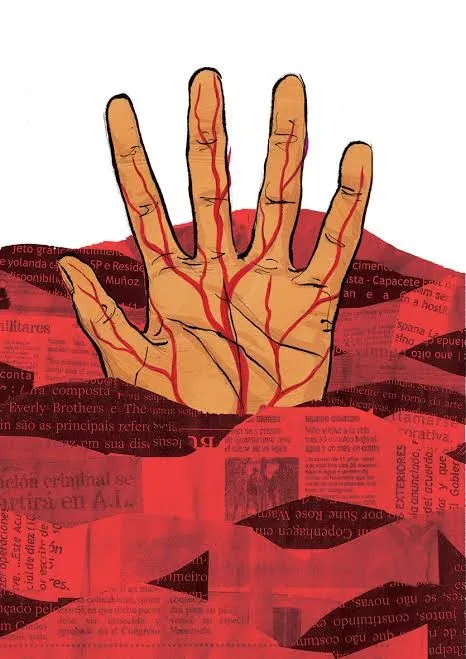
He describes it as “a voyage in which the shipwrecked outnumber the sailors.” That sentence reads like poetry. But it describes a shipwreck that has lasted five hundred years. On every voyage, someone announces that they will sail Latin America toward prosperity. But every time the ship docks, the bodies lying on the deck always outnumber the living standing up.
Is globalization really win-win?
After finishing this book, I started reexamining things I used to take for granted. The coffee in my hand. The silver necklace around my neck. The lithium battery in my phone. Whose hands have they passed through before reaching me? Did the owner of those hands receive fair pay—or just enough small change for one meal?
Galeano doesn’t answer these questions directly. But with his pen, he makes me see some things. Merely seeing means that the bodies lying underground…are no longer silent.
Over five hundred years, the Spanish came and left, the English came and left. The English came. The English left. The Americans came. Flags changed, one after another. But the ore kept leaving in trainload after trainload. The profits continued to flow out, amount after amount. The vein is still bleeding.
Seeing the color of blood is the first step to stopping the bleeding. That’s what I believe.