Children learn to accept failure when parents stop treating mistakes like personal flaws and start treating them as normal parts of learning. This guide explains practical, everyday ways parents can help children handle failure, reduce fear of mistakes, and build emotional resilience in daily life.
To help a child handle failure better:
- Normalize mistakes as part of learning.
- Praise problem-solving instead of talent.
- Avoid rescuing too quickly from frustration.
- Model calm reactions to setbacks.
- Create low-pressure opportunities to practice failure safely.
Key Takeaways for Parents
- Identity vs. Error: Shift them from “I am bad” (identity flaw) to “I made an error” (temporary state).
- The Power of “Yet”: Frame struggles along a timeline rather than as a permanent character trait.
- Stop Over-Rescuing: Let them experience small frustrations to naturally build emotional regulation.
- Low-Stakes Loss: Build true confidence by practicing small, predictable moments of losing.

1. Why Some Kids Take Failure So Personally
When children deeply fear making mistakes, it is usually because they fall into the trap of thinking a mistake makes them a “bad kid” instead of just a kid who made an error. Between the ages of 4 and 9, many kids struggle to separate what they do from who they are. Many kids start believing that being good at something is something you either are or aren’t. Carol Dweck calls this a fixed mindset.[1]
A lost board game, a wrong answer on a quiz, or a crooked line on a drawing can instantly trigger crying, rage, or complete shutdowns. To them, a mistake feels personal, as if getting something wrong means something is inherently wrong with them.
Sometimes this fear doesn’t look emotional or fragile at all. Some kids become fiercely argumentative or oppositional the second they feel corrected. Everything turns into a heated debate because admitting a mistake feels completely unbearable to them. I wrote more about navigating that specific defensive pattern in another piece about kids who always disagree with you.
2. Signs Your Child Is Afraid of Making Mistakes
When kids are terrified of failing, it doesn’t always look like a loud meltdown—frequently, it shows up as quiet, sneaky avoidance.It’s not always about big tantrums. Sometimes, fear looks like this:
- The “I Don’t Care” Defense: Suddenly losing interest in a game or sport the moment they start losing.
- Bending the Rules: Constantly trying to change the rules mid-game to ensure a win.
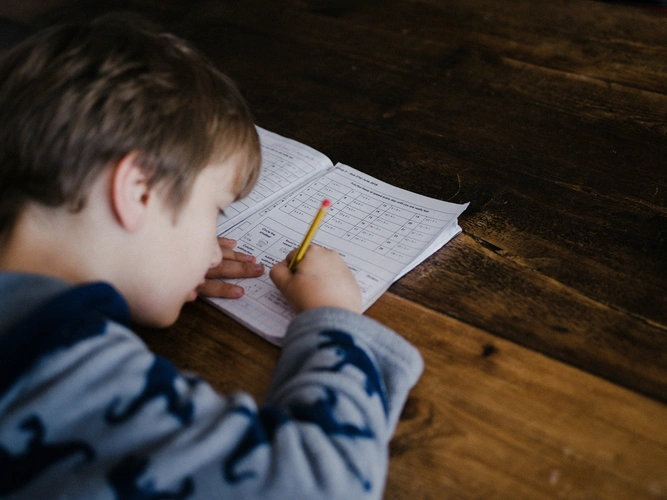
- Procrastination: Putting off drawings or school projects because they are terrified the final product won’t be perfect.
- Extreme Compliance: Only choosing activities they know they are already flawless at.
3. What to Say When Your Child Says “I Quit”
The way we respond to kids during small failures quietly shapes how they learn to handle hard things later on. Resilience is built in the tiny gaps of daily life. By changing how we talk about mistakes in the moment, we can help kids separate their worth from their work.
Add the Word “Yet”
When your child gets stuck, anchor their struggle to a timeline instead of their character.
× Skip this: “You’re so smart, don’t worry about it.”
√ Try this: “That specific fraction problem is tricky. You haven’t figured it out yet.”
Point Out What They Actually Did
Kids calm down when they realize mistakes are fixable things, not proof of personal failure.
× Skip this: “Good job trying your best!”
√ Try this: “You tried turning that block three different ways before it fit. That was a smart shift.”
Let Them Hear You Recover
Kids need to see adult recovery in real time. I started intentionally talking to myself out loud when I messed up at home:
“I burned the toast. Annoying. I’ll turn the toaster dial down next time.”*
“I forgot the grocery list. Frustrating. I’ll leave it right by my car keys tomorrow.”*
Drop the Well-Meaning Phrases That Backfire
When a kid is in a failure meltdown, common reactions can accidentally make their anxiety worse:
“It’s no big deal.” → To a 6-year-old, it is a big deal. Minimizing it makes them feel lonely in their frustration.
“You’ll win next time!” → You can’t promise that. If they lose again, they’ll stop trusting your reassurance.
“Look how well your sister did!” → Comparison immediately turns failure into a shame spiral.
4. Case Study: Fixing the Line, Not the Child
Last Saturday, my six-year-old was sketching a rocket ship. His marker slipped, making the engine line too wide. He went rigid, ripped the page out, and screamed: “I’m bad at drawing! I’m never doing this again!” I panicked and did what most parents do — I tried to erase the feeling immediately: “No, honey, it’s beautiful!” He glared at me.
The Lesson: Forced encouragement always lands like pity.
So I stopped, sat on the floor, and just stated the mess: “That line went too far to the left. Frustrating. Want to try a lighter stroke on the next sheet?” He stopped crying. The next morning, he asked for another piece of paper.

5. Why Letting Kids Struggle Builds Long-Term Resilience
Children don’t learn resilience when they’re told to calm down, true emotional resilience develops naturally when children are allowed to experience managed frustration rather than immediate adult intervention.[3]Children don’t learn resilience when they’re told to calm down. They learn it when frustration shows up—and nothing gets fixed immediately.
Sliding that final puzzle piece in because dinner is ready saves fifteen minutes of chaos, but it robs your child of sitting in frustration long enough to learn they can handle it. Rescuing them too fast leaves them empty-handed.
The same goes for rigging board games. Constantly playing poorly so your child never experiences a loss feels like protection, but it’s a trap. If your household treats failure like a radioactive monster that must be intercepted, your child will be defenseless the second they step onto a real school playground.
6. Places Where Mistakes Don’t Feel So Loaded
Building a child’s frustration tolerance is easiest when we intentionally create low-stakes, low-consequence environments for mistakes. You cannot teach a child to handle setbacks during high-pressure moments like school exams. You need small situations where losing doesn’t feel catastrophic, and errors are just part of the normal loop.
- Making the Tower Crash on Purpose: Build towers from plastic cups with a pre-established rule: “Let’s see how high we can go before it crashes. When it crashes, we yell ‘Boom!’ and see who cleans it up fastest.” After a few rounds, the collapse stops being a disaster. It becomes the punchline.
- Micro-Doses of Losing: Play short, two-minute card games with a very fast win/loss cycle. The losing happens so fast that the emotion doesn’t have time to build into something huge.
7. Real Questions Parents Ask
1.Why does my child get so upset when they make a mistake?
At this stage, mistakes don’t feel like behavior errors — they feel like identity threats. The goal isn’t to stop the emotion, but to stay steady enough that the child learns: nothing is actually breaking.
2.Is it normal for a 6-year-old to cry every time they lose?
Yes. And it usually isn’t about losing — it’s about what losing means to them. At this age, “I lost” often translates into “I am not good enough.” That gap is what you’re teaching them to close over time.
3.Should I let my child win sometimes to build their confidence?
Occasionally, yes — but only if it doesn’t become the pattern. A child who never loses at home often meets real-world failure unprepared for the emotional impact. Confidence doesn’t come from winning more — it comes from recovering after losing.
References & Resources
[1] Mindset Works — growth mindset research and learning theory developed from the work of Carol Dweck
[2] Child Mind Institute — clinical guidance on childhood anxiety, perfectionism, and fear of failure
[3] Harvard Center on the Developing Child — research on resilience, stress tolerance, and emotional development in children
