How should we live in today’s world? With myths vanishing and life in shambles, I all too easily taste the fragmentation, division, greed, and lack of imagination in my daily life—brought about by the internet. The world can seem vast or tiny; it all depends on the perspective from which we view it. How can we find that intersection—both familiar and foreign—amidst these nooks and crannies?
In Czuły Narrator, Tokarczuk offers an answer: the holistic view. This is the core concept she repeatedly emphasizes at the beginning and near the end of the book. It describes an ability to perceive reality and its complexity; without it, our view of everything would be fragmented and one-sided. Moving from the dazzling realm of the virtual to a gaze within reach, the “holistic view” is an ability to synthesize issues by seeking order within the narrative itself, as well as in the details and various parts of the whole. This concept permeates every essay in the book.
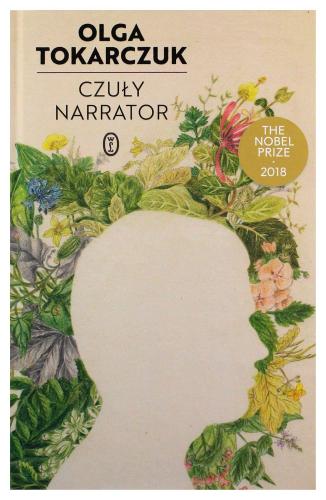
Please do not mistake this for a dry theoretical treatise. Czuły Narrator will undoubtedly bring a smile to your face with its humorous touch, allowing you to experience the world’s chaos and interconnectedness through reflection. She invites us, as she writes in the book—
- “Let us build a library of new concepts, filling it with unconventional, sensational, and bizarre ideas.”
If the holistic view is a lens through which we perceive the world, then gentleness is the way we touch it. In the final chapter, she writes: “Literature is an art of personification, built upon gentleness, for it is a spontaneous and selfless act that transcends empathy as mere projection.” It is more like a message conveyed through words to those who have not yet been born, or to friends stumbling along the path of life. “Gentleness is the most humble form of love.” The storyteller gathers fragments and weaves them into a universe. The author’s reflections offer universal insights.
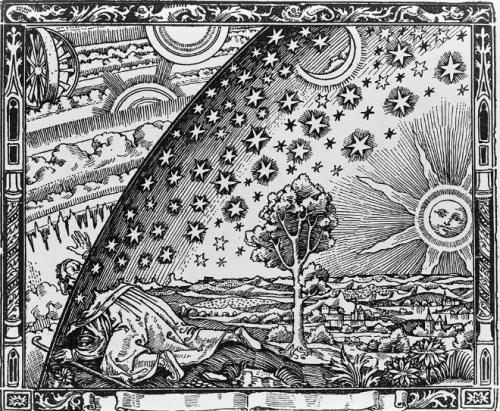
In the final chapter, which shares the book’s title, she writes: “Storytelling is the endless act of giving life, of granting existence to all the fragments of the world—which are human experiences, situations, and memories. Tenderness humanizes everything it refers to, giving it a voice, space, and time, allowing it to exist and express itself. It is tenderness that makes the teapot speak.”
Behind these imaginative stories, rich with metaphor, lie her deeply sincere observations and feelings, as well as her candid reflections on real life.
Tokarczuk is precisely such a “gentle storyteller.” Like a witch dwelling in an ancient forest, she unveils her private magic, revealing to me a perspective that transcends anthropocentrism—an encyclopedic, fantastical world that crosses all boundaries. With a narrative style that transcends boundaries, she refuses to confine literature to a single dimension, instead moving freely between myth and reality, dreams and wakefulness, the living and the dead. This is the perfect embodiment of “holism” and “gentleness” in her writing: using the broadest possible perspective to attend to the smallest, most fragile beings.
This gentle energy becomes most tangibly felt when reading her words: “Gentleness is a profound concern for another form of existence—a concern for its fragility, its uniqueness, and its helplessness in the face of pain and time.” It is as if my fingers have touched the soft pistil within a flower, with pollen gently settling on my fingertips; my heart takes on the same texture as the petals, equally radiant with the glow of life.
This is, in fact, a book for those of us who possess sensitivity and courage. Sensitivity allows us to cherish the chaos and confusion within our hearts; courage enables us to shift our perspective on the world. And Tokarczuk tells us that the ultimate form of this sensitivity and courage is tenderness—the most humble of loves. It prevents each of us from fracturing; on the tapestry of life, with focus and awareness, we complete this gentle weaving.
