I still remember the scene at Kabul Airport in 2021: hundreds of Afghans clung to the taxiing U.S. military transport plane like a flock of ants, while others fell from high altitudes.
To be honest, sitting in front of the TV back then, I only vaguely thought the scene was sheer madness. This shallow perception lasted until I saw weary-eyed Afghan immigrants on the streets of Australia. It was not until I picked up Khaled Hosseini’s A Thousand Splendid Suns that I truly realized: when one’s living environment deteriorates into a desperate living hell, climbing onto plane wings is no longer an insane act, but the only instinct for survival.
Hosseini never wrote about that plane, yet he reveals why people would cling and climb so desperately.
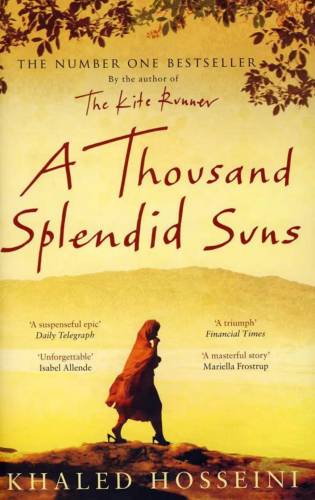
The most suffocating moment in the book lies not in the Taliban’s stoning scenes, nor in the lashes Rashid inflicts with his belt, but in Mariam being forced into marriage with the shoemaker Rashid by her father at the age of fifteen. In that instant, I came to understand: when a woman cannot even control her marriage, her body, or her whereabouts, life becomes nothing but an absurd drama cast upon her at random. Her mother once said that women ought to learn to endure, yet when endurance reaches its breaking point, women are left with only three paths: to die, to resist violently, or to flee desperately by climbing onto planes. These seemingly distinct choices are, at their core, sparks of survival ignited in utter despair.
Reading these pages, I can almost feel the fates of Afghan women being stripped away layer by layer. First, their dignity is torn away; then their freedom becomes a butterfly with broken wings, fluttering weakly before collapsing to the ground. Overnight, bodily autonomy vanishes, and eventually, even basic human rights are taken away. They cannot walk the streets alone to buy bread. They cannot seek medical care when ill. They must hush their voices even in sorrow. Thinking of this, I finally comprehended: caesarean sections without anesthetics, bruised welts from cruel beatings, and lonely days confined behind a burqa, forced to smile in secret are these suffocating hardships the very flames pushing Afghans to risk everything at the airport?
Yet what strikes me most throughout the book is not unending suffering, but the splendid suns referenced in its title. A poignant verse reads: One could not count the moons that shimmer on her roofs, or the thousand splendid suns that hide behind her walls.
I once believed the splendid suns referred only to the redemptive bond between Mariam and Laila. But after finishing the book, I realized true light is not a single act of sacrifice, but a flame passed from one generation to the next. Mariam’s quiet death after killing Rashid with a shovel left a deep impression on me. Deprived of genuine love her whole life, she still sacrificed herself to help Laila flee with her children. In the end, Laila chooses to return to Kabul, to teach, to raise a new life, and to keep Mariam’s story alive. The light of the sun never fades in an instant, even in death, one’s warmth and courage can live on in another’s heart.
When I read that every snowflake is a sigh from a sad woman in the world, I closed the book and looked out of the window. I really seem to see sighs floating all over the sky.
At that moment, I had to face a disturbing fact: I sat in a safe and warm room and cried for what happened to Mariam, but I knew in my heart that my tears could not change the fate of any Afghan woman at all.
With a narrative in fluent English and in line with Western aesthetics, Husseini wrapped the suffering of Afghanistan into a book that could be read with tears in a café. This is actually not wrong in itself, but I hope I can always remember that those who climb the wings are not performing a tragedy for us to consume. They just, like Mariam, tried their best to get a little air in the living hell.
And this much I can promise: I will never trivialize their sorrows as pure, fleeting snow.
