Rereading Middlemarch after turning 30, the more I read, the more I thought—isn’t this exactly me?
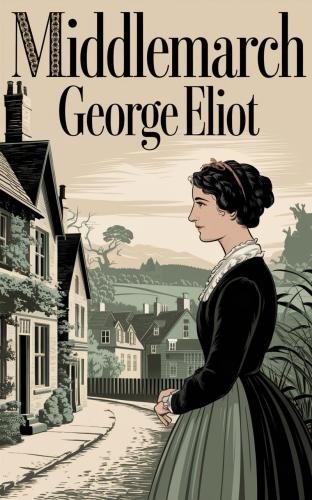
Dorothea, educated and ambitious, longs to realize her ideals through marriage, yet finds herself trapped in spiritual desolation; the brilliant Dr. Lydgate, eager to make his mark, is gradually worn down by reality, debt, and marriage. These two storylines, however, reflect the same fundamental question: When ideals collide with the mundane realities of life, what should we do?
This book does not glorify romance or romanticize marriage; it simply tells you, with calm clarity: The person you choose is the life you choose. Passion fades, but values and character endure.
It wasn’t just the main characters who moved me. Mary, Reverend Philbrough, Mr. Goss… These supporting characters don’t perform earth-shattering feats; they simply carry their own flaws while supporting one another, using sincerity to resolve misunderstandings and kindness to ward off darkness.
The fairy tale ends at the wedding; Eliot’s story begins here.
This book contains no earth-shattering events, only everyday struggles: choosing the wrong partner, having dreams worn down, and being held hostage by expectations. The deeper I read, the more I felt its greatness—because it is honest.
Every character once believed they were special. Dorothea believed she was born extraordinary; she married Cassupen, who “seemed very learned,” fantasizing about finding a connection through academia. Lydgate arrived in the small town with ambition, hoping to revolutionize medicine with new technology, only to be dragged into a quagmire by marriage and debt.
Sound familiar? Full of ideals in our youth, only to discover later that we haven’t lived up to the “special” we imagined. At seventeen, I thought I’d change the world; in my twenties, I thought I could at least write something different; in my thirties, I realized… that we’re all pretty much the same.
But that’s not a bad thing. Because if everyone is struggling, then you’re not alone.
Eliot doesn’t portray marriage as a fairy tale where “finding true love equals a fulfilled life”; instead, she sees it as a part of life, a choice. Dorothea’s marriage is like a cage, but she isn’t broken by it; she finds her own path through the pain. Lydgate’s marriage is a disaster, but his life doesn’t end because of it. Marriage can bring freedom, or it can be a shackle—Eliot refuses to oversimplify it.
Some say Middlemarch is a novel about shattered ideals, but I don’t see it that way. It’s about how to move forward in reality while holding onto idealism. Dorothea didn’t become a “great woman,” but she found her own way to make a difference in the world; Lydgate didn’t become a legendary doctor, but he still saved lives and treated the sick. This isn’t surrender, and it certainly isn’t defeat. It’s growth—it’s truly living.
Most people’s lives will not become legends, but that does not mean they are meaningless. Ideals are hard to achieve, reality is disappointing, and love does not always go smoothly—but none of this prevents us from becoming people worthy of love and respect.
Eliot also provides two contrasting examples. Celia, Dorothea’s younger sister, is pragmatic and gentle. She married the wealthy Lord Chatterham, and her marriage is stable and peaceful. She lacks her sister’s lofty aspirations, yet she has found worldly happiness.
Mary, meanwhile, rejected the immature Fred until he transformed from a prodigal son into a pragmatic farmer. She is level-headed and resilient, guiding her lover’s growth with her principles.
While the main characters represent the intense clash between ideals and reality, these two couples embody the survival strategies of ordinary people operating within the constraints of worldly conventions. There is no hierarchy here; it is simply a matter of what suits each individual.
To be honest, this book is not an easy read. It starts slowly, and when the narrative shifts from romance to politics, it can even feel a bit tedious. But only upon reaching the end does one realize that Eliot is meticulously weaving a complete portrait of the era—every stitch has its place.
Middlemarch portrays five married couples, each female character embodying a distinct way of life: Dorothea’s nobility, Rosamond’s vanity, Mary’s clarity, and Celia’s pragmatism. It is not merely a guide to avoiding marital pitfalls, but it does serve to awaken women immersed in romantic fantasies—helping you discern what you truly desire before entering marriage.
Middlemarch is a book about choices. Bulstrode’s mistakes nearly destroyed himself and others; Fred proved that a reformed rogue is worth his weight in gold; Lydgate compromised with life, gave up his dreams, yet still saved lives; Dorothea broke free from the shackles of public opinion, followed her heart, and ultimately found her own happiness.
Isn’t that what life is like after 30? We can’t control the cards fate deals us, but we always have the right to decide how to play them. This book isn’t meant to make you give up on your ideals, but to help you approach the act of “living” with a touch more clear-eyed tenderness.
You’re not alone. We’re all on this path, stumbling along, but we haven’t stopped.
There’s a line from the book I’ve always remembered: “You say there’s nothing worth striving for—that’s not true. If we lose our own well-being, there is still the well-being of others worth striving for.”
