Some books can only be truly understood once you reach the very end. Die Wand is one such book.
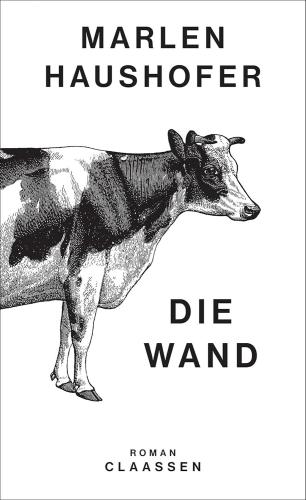
While reading the first hundred pages, I thought this was a “female Robinson Crusoe” story—a woman isolated in a valley by an invisible wall, living alongside cats, dogs, and cows, learning to milk, chop wood, and deal with that unruly cow, rebuilding the order of her life in solitude. Humans and nature coexist in harmony; life is simple and peaceful.
It wasn’t until I reached the end—the moment the lynx was ruthlessly killed by that man—that my heart felt as if it were being squeezed by an invisible hand. Only then did I realize: from beginning to end, this book was never about survival.
“Chaos is the world’s natural state; humanity should have grown accustomed to it long ago. Even the apocalypse would not be spared.”
“If time exists only in my mind, and I am the last human being, then time will come to an end with my death. Perhaps I can kill time with my own hands.”
“I have spent the vast majority of my life dealing with the everyday troubles of humanity. Now, with almost nothing left, I can finally sit peacefully on a bench and watch the stars, watching them dance across the pitch-black sky.”
On the final two pages of the story, everything collapses. The lynx dies—mercilessly killed by a stranger who appears out of nowhere. This is the book’s sole climax, coming completely out of the blue and standing in stark contrast to all the calm, everyday moments that preceded it. Even though there were subtle hints in the preceding text, we still cannot accept it.
The protagonist and the lynx depend on each other, building a warm little world of their own. But the stranger’s intrusion shatters this tranquility—his wanton killing is a microcosm of anthropocentrism and humanity’s violent nature.
In the end, the protagonist ends the abuser’s life in self-defense, defending her world. Yet she loses her beloved companion. She is ultimately destined to return to solitude.
Closing the book, I began to reexamine my own heart. There is no need to fear solitude, nor to be constrained by the gaze of others. Just as the heroine learned within the hidden walls—to live is not to be seen, but to remain true to one’s own existence.
