When I opened Woolf’s “To the Lighthouse” before, I also deliberately did psychological construction. I always felt that the narrative of the stream of consciousness was too fragmented, and it was likely that I would be trapped in her fragmented text maze for a long time. As a result, what I couldn’t let go of and tossed over and over again after reading it was James Ramsey’s minimalist clue, which was actually quite unexpected.
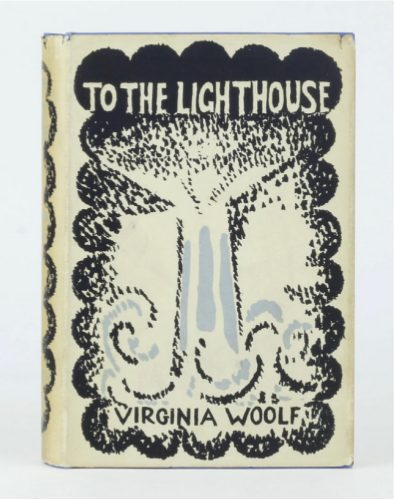
When I read it, I felt very deeply about this plot. A child hid his resentment against his father for so many years that he almost forgot how this emotion took root. As a result, in the silent voyage with no dialogue ten years later, there was no quarrel, and there was no deliberate reconciliation and confession. Unexpectedly, Di began to loosen so quietly.
I want to emphasize here that Woolf’s writing about the folds of people’s hearts is really accurate. In many cases, the dissolving of the gap between people is never a dramatic showdown. It is a moment that is nothing special. You suddenly don’t want to hold on to the emotions of the past.
When James was ten years old, his mother said to him, “If the weather is fine tomorrow, we’ll go to the lighthouse.” But his father, Mr. Ramsay, interrupted coldly, “It won’t be a sunny day tomorrow.” At that moment, this child silently buried his resentment deep in his heart – I think he hated his father because he was always so pessimistic, always spoiling the fun, and always forcing others’ expectations into the cold reality.
In fact, I am very familiar with this feeling of resentment. I have also encountered such elders: You said you wanted to learn to draw, but he said, “You can’t draw any famous paintings.” You said you wanted to change jobs, but he said, “Stability is the most important thing, and everything else is not important.” Many years later, I gradually understood that this was not true malice, but rather an instinctive self-protection reaction under the heavy pressure of life.
What truly touched me in this book was not that Mr. Ramsay suddenly became gentle – in fact, he didn’t change. On the day of departure, he was still that stubborn and selfish old man, always needing others’ sympathy. It was actually James who changed. He was looking at his father’s profile on the ship, suddenly realizing that his father had been struggling all his life with that kind of mediocrity. He always lost his temper with others because he had been severely criticizing himself all his life. At that moment, James did not choose to forgive or take any intimate action. He simply stopped looking at his father with hatred.
“There is a wide gray area between love and hate.”
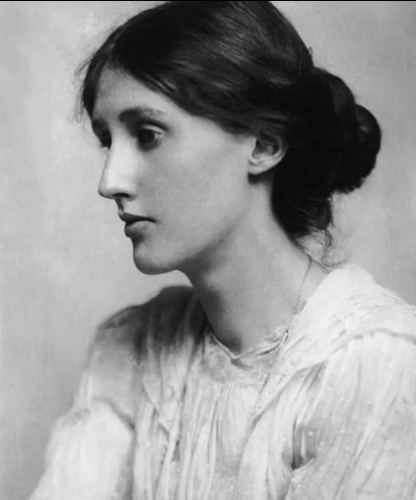
I paused for a long time when I read this passage. The education we have received since childhood always seems to make interpersonal relationships a choice question: either completely let go of the past, or simply tear our face apart. But what Woolf wrote here is not like this at all. I realized that there was a third option: you can let go of your hatred for others, but you don’t have to force yourself to pretend to love each other at all. I would like to emphasize here that the gray area in the middle, which is not so absolute, is actually the real “understanding”. There is no magic in understanding. You can’t change the nature and practices that others have formed at all, but you can pull yourself out of the resentment cage that you have held for many years. You see, James finally arrived at the lighthouse. In my opinion, the lighthouse is not a physical coordinate at all. It is the moment when his heart finally relaxes and is really calm.
In my opinion, the real protagonist of the whole book is actually not someone, but the surging emotions in the bottom of people’s hearts. Woolf’s brushstrokes with so many streams of consciousness are actually telling a truth: whether it is an ordinary dinner, an unfulfilled promise, or even a ten-year voyage, these trivialities fall into the hearts of different people, and the waves stir up are completely different, and even subtly rewrite a person’s life.
This is why I especially want to recommend this book to readers today. Our generation is tired. We are always staring at results and desperately chasing external achievements. But Woolf woke me up. What really shapes us is never the winning or losing at the moment of “arriving at the lighthouse,” but the real, complex, and even chaotic thoughts on the way to it.
After closing the book, I thought that perhaps everyone has a “lighthouse” in their hearts—an unfinished promise, a twisted relationship, or an obsession that refuses to let go. You don’t need to forgive anyone, and you don’t need to be forgiven. You just need to step onto the boat calmly one day, like James, and let the waves wash away the resentment accumulated over the years, little by little.
Before arriving at the lighthouse, we have to reach ourselves first.
