At the age of 25, Bulgakov, fresh out of medical school, was sent to a rural hospital in the frozen Russian countryside. He was the only doctor there. Before performing his first surgery, his hands trembling, he opened a medical textbook to study on the spot.
Reading Bulgakov’s THE MASTER AND MARGARITA, I was captivated by its boundless imagination and magical realism. Yet this little book, A Young Doctor’s Notebook, also by Bulgakov, nearly made me laugh out loud. It’s humorous, funny, authentic, and bittersweet. I never imagined that the great writer Bulgakov had such an extraordinary experience—and what struck me most about this book wasn’t the absurdly humorous medical anecdotes, but the crueler truth it revealed: there are paths you can navigate well, but that doesn’t mean you want to keep walking them.
The most moving parts of this book aren’t the high-flying moments of medical mastery. Bulgakov writes about silently praying, “Please don’t come,” during his first solo consultation; discovering midway through a surgery that the situation doesn’t match the textbook; being questioned by villagers, “You’re so young—do you really know how to treat patients?”; and riding out on a horse during a blizzard to make a house call, all the while wondering, “Why did I choose this profession?”
Isn’t this the true portrait of every newcomer to the workforce? A profession is forged through repeated cycles of “screwing up” and “making amends.” This “imperfect perseverance” strikes a chord with every working professional.
If it were merely a matter of thematic resonance, Bulgakov’s writing style would still be what truly leaves readers in awe. He tells these heavy, even cruel stories with a touch of absurdity and humor. When he writes about an amputation, he depicts the completely mismatched dialogue between the doctor and the drunken patient; when he writes about a birthing complication, he captures the absurdity of the doctor suddenly feeling the urge to laugh amidst a pool of blood. The patients’ absurd misunderstandings and the doctors’ inner monologues intertwine, transforming what should be a suffocatingly tense medical setting into something with a touch of dark comedy.
You can’t help but laugh, but as you laugh, a wave of bitterness washes over you. Because you know that behind those absurd exchanges lies a real human life. Bulgakov never deliberately plays on your emotions—he uses humor to lower your guard, then quietly slips the truth to you. As he writes in the book: “Our whole life is made up of such jokes.” But humor is merely the surface of this book. Peel away that layer of laughter tinged with tears, and beneath lies something deeper—loneliness.
He is lonely when saving a dying life; the inner panic and dread he feels while pretending to be experienced are loneliness; even after taking off his clothes, he still cannot bring himself to bathe—that, too, is loneliness. The villagers do not understand him, his superiors have no time for him, and his peers do not exist. Thus, he was trapped in a spiritual wasteland, treading on fear day after day, gradually becoming a self-reliant “expert.”
As you read, you might think this is a “rags-to-riches” story—a young man overcoming his fears to achieve greatness.
But Bulgakov’s later life tells you: it is not. What is most moving about the book is that, even when faced with countless unprecedented challenges and moments of regret over his career choice, he never abandoned his patients. Yet, in the end, he left the profession for good. We may have the grit and courage to grit our teeth and persevere through difficult times, but life is long, and being worn down by the minutiae of day-to-day existence makes swimming alone far too difficult.
This dilemma—of doing well yet not wanting to stay—still resonates deeply today. As I read this book, I kept wondering: If Bulgakov were alive today, what kind of working professional would he be?
Probably a highly capable young doctor who never stops complaining. He’d write “Why did I study medicine?” during late-night shifts and pen “The world is vast; I want to see it” in his resignation letter. Yet he’d never show the slightest impatience in front of his patients.
This is the timeless magic of A Young Doctor’s Notebook. In that snow-covered village, the mutual redemption between doctor and patient became the most precious light in a turbulent era. No matter how times change, a doctor’s kindness and steadfastness will always be the courage to pierce the darkness. The nervousness and resolve of a doctor just starting out have never changed.
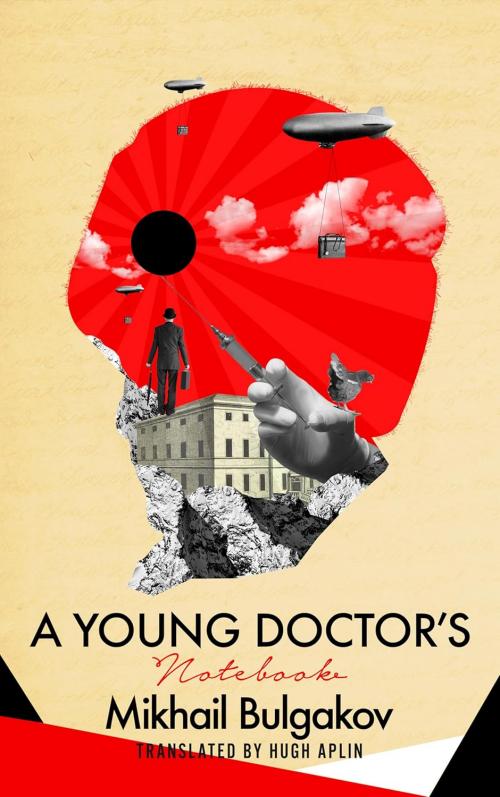
Closing this book, the silhouette of that 25-year-old doctor remains unforgettable. He rides off on horseback into the blizzard, heading toward his next unknown house call. He doesn’t know if he’ll be able to save the patient this time, doesn’t know if the villagers will understand, and doesn’t know how much longer he can hold on.
Someone was waiting for him outside, but he went anyway.
In a daze, the clatter of hooves in the snow and the moans of the sick still seemed to echo in my ears. The ultimate romance of a doctor is not omnipotence, but knowing full well that one may be powerless, yet never failing to show up.
