During that time, I happened to pay attention to the issue of feminism. I saw many people recommending Herland, a feminist utopian classic, so I came to read it. Before reading it, I thought I would see a cool article about the gender reversal of female supremacy and male inferiority. After reading it, I found that this book was not giving answers, but dismantling questions.
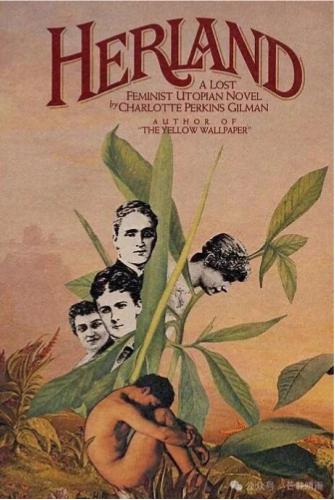
The novel is about three men breaking into a country with only women. Terry is a typical conqueror. When he heard that it was all women, his eyes lit up and he felt like he had entered the harem. Jeff is a romantic protector. He always wants to help women with things. He feels that women naturally need to be pampered. Van Dyck is a seemingly neutral bystander, responsible for recording and narrating. The author uses these three people to disassemble the patriarchal mentality into three aspects. I’m most annoyed by Terry. It’s not because he’s bad, but because he’s too real to treat alien civilizations as prey and women as trophy. This kind of face is everywhere in reality. And what makes me a little uneasy is that I find that I occasionally have the idea of wanting to protect like Jeff, but this kind of gentle prejudice is more difficult to identify.
But what really touched me was the way women in this country treated love. All three men fell in love with local women, but they found that each other’s feelings were always friendship, not the possessive love they expected. They have no tradition of love or the concept of family, only a broad fraternity that can be elevated to national responsibility. This makes men “always enjoy all the happiness of love, but without the feeling that can be called possession”. After reading this, I stopped for a moment. It turned out that our usual love = possession is not natural. We always feel that if we love someone, we need to have them and include them in our family, surname and life trajectory. But behind this model, is there a shadow of private property and patriarchal logic? Women in this land show me that love can not point to possession, but to respect and completeness.
Some people criticized her for promoting motherhood and worrying about strengthening the stereotype that women = mothers. I don’t think so. Motherhood in this country has long been not a physiological instinct, but a universal value that creates and cultivates life. The book says that they are “rational human makers” and regard raising children as the most intelligent undertaking. The whole society participates together and will not let any mother stand alone. This spirit of “all mothers in the four seas” is more like a civilized attitude than a gender role. Care about the next generation and how life can be brought into the world better. I think men can also have this kind of spirit.
Some people also question that Herland is too perfect and too closed. For example, they actually raised cats that can’t meow, and everything comes first in the interests of the ethnic group. To be honest, I was stunned when I read that detail and felt a little uncomfortable. But later I thought that this was originally the author’s ideological experiment, not for us to copy the blueprint. Herland is like a mirror, reflecting our own problems. For example, why do we always feel that the whole women’s country should be gentle and charming? Why is the first reaction when they see a group of independent women that they must lack men? These reactions reveal that we have been disciplined for too long.
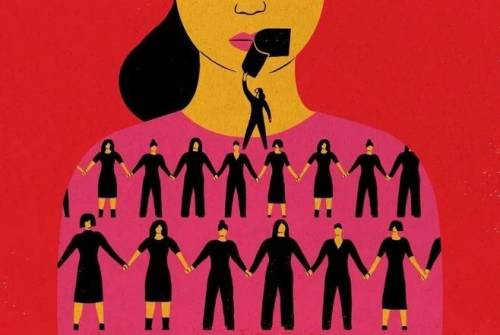
There are many more fragments in the book that impressed me. For example, a woman in Herland asked the question about milk: “Do you want to feed the calf and give the milk to you to drink?” A simple question exposes the arrogance of anthropocentrism. For example, they asked “Why don’t men wear feather hats?”, which lightly turned the gender norms upside down. In the whole book, they never get angry, but calmly ask questions, record and think. Actually, this attitude itself makes me feel ashamed. We are too used to debating and quarreling, but we rarely listen to each other’s logic like them, and then ask “why” gently.
After closing the book, I was thinking that real gender equality is not about who overwhelms whom, nor about women becoming men to compete, but that everyone can grow without being defined by labels. Herland may not be built, but it at least shows us clearly that many things we think are natural, such as love must be possessed, women should have long hair, and men should conquer, are just habits.
Finally, I would like to extract a few words from the book that made me stop and think:
“They are mothers, but not the kind of mothers we think—forced to give birth to many children to fill every piece of land.”
“Do you want to feed the calf with milk and give it to you?”
“They don’t know how to be modest… They have no patience, refuse to tame, and don’t seem to be naturally soft at all. That’s the greatest charm of women.”
This book was written in 1915. Now, more than a hundred years have passed, and Herland has not been built yet. But every time we question a natural gender rule, we are adding a brick to another possible country
