I could never understand why a woman would choose to move to desolate, backwater Wyoming after losing a loved one. It wasn’t until I found myself besieged by work stress—filling my space with material possessions only to discover my heart remained hollow—that I picked up this book. I came across this line: “The way we fill space is as if it were a pie crust, using heavy objects to block our view of what was already there.” In that moment, I felt as though I had been awakened by the wind of the wilderness.
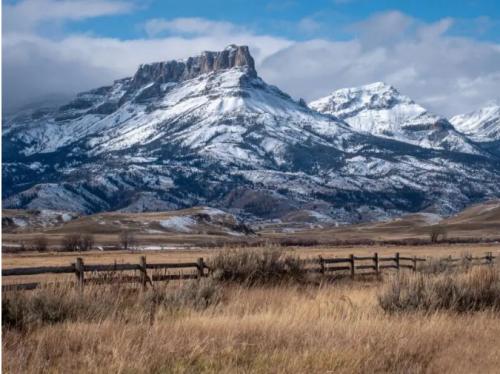
“True solace is finding no solace at all—in other words, solace is everywhere.” This is not the tranquility that comes from escape, but rather throwing oneself into the raw texture of life itself, and hearing one’s own heartbeat still strong after utter exhaustion. Wyoming did not heal her; rather, it allowed her to finally dare to look directly at her wounds, and through long hours of labor and the changing of the seasons, to coexist peacefully with them. As she wrote: “The resilience I know is not a martyr’s stubbornness, but an art of adaptation. Resilience is fragility; gentleness is true ferocity.”
Does nature offer nothing but warmth and healing? Every page of The Solace of Open Spaces provides the opposite answer: winters last half a year, with temperatures dropping to minus thirty or forty degrees; a single fall from a horse could cost one’s life due to gangrene; insects and snakes are everywhere.
Yet Gretel does not lament this cruelty. She speaks of “impermanence”—we have long known that nothing in this world is eternal, yet we often forget it. It is through loss that we come to understand what wholeness is, and true sorrow often becomes the starting point for our renewed love of life. Here, nature’s cruelty and impermanence find reconciliation: because everything will fade away, the existence of the present moment is all the more precious.
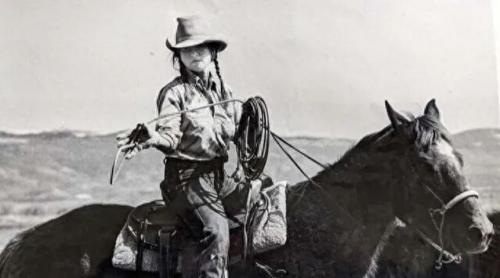
Her writing is profound, not only because of the subject matter—Wyoming has traditionally been the domain of Western fiction, typically belonging to rugged cowboys and ranchers—but also because she shows us that women are equally capable of doing this arduous work. Working alongside the women of the Wyoming plains, she reveals that women have never been absent from the world of ranching. Equally profound is her redefinition of nature. The theme of humanity and nature has long been common in literature, but Gretel weaves “nature” into the very fabric of her writing in a new way. In her hands, nature is not merely a backdrop but a “weaver”—landscapes and weather are forces of order; sunlight reveals the truths hardest to face, while the wind carries away all that is superfluous. We must all yield to nature, and in moments of pain and confusion, our perception of nature becomes all the more acute. When we finally learn to let go and allow nature to speak for itself, the answers emerge.
The book’s portrayal of and response to loneliness is equally thought-provoking. In mainstream narratives, loneliness is often viewed as an ailment to be cured, but Gretel offers the opposite answer: “Loneliness may be the cure for loneliness.” In the wilds of Wyoming, loneliness is no longer a void to be filled with noise; physical isolation, on the contrary, fosters a “gentle resilience.” The cowboys’ silence stems from a reverence for the vast land, and the author’s unspoken grief throughout the book finds dignity in that silence.
This book offers equal insight to office workers trapped in KPIs and children shuttling between after-school classes. When we cannot truly immerse ourselves in nature, we can at least open a book like this—“Everything in nature constantly invites us to become ourselves.” Through her descriptions of her encounters with nature, Gretel transforms the energy of the natural world into the energy of her writing, allowing readers to feel as though they are conversing with the wilderness.
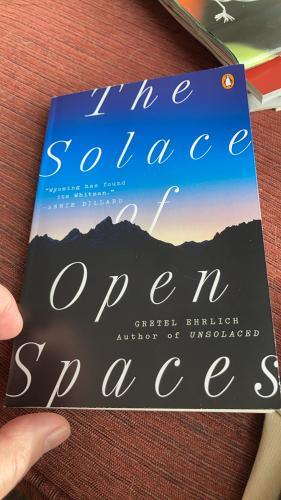
The book’s biting cold and ruggedness seem to sweep over you, carrying rain, snow, and wind, making you feel as if you were standing in the wilderness of Wyoming. Gretel’s prose possesses a rare texture: poetic imagination coexists with precise expression, capturing rich insights within the limited expanse of the wilderness. I take a deep breath, as if doing so might draw in Wyoming’s dry, howling wind to exchange it for the dull, stifling air of the city within me, leaving behind a completely renewed body—though a book, of course, lacks such magic. Her observations of nature are vivid, objective, and passionate, like crisp, hard-to-swallow spring water. She writes that winter is a smooth skull, both stinging and poetic, with the emotions of humanity’s interaction with the world lingering amidst the desolation… I am, of course, still here, yet I have indeed been transformed, as if my body had been thoroughly cleansed by a blizzard from the inside out.
