This delicate and exquisite volume delivered a powerful blow right at the start of the new year!
Just as spring blossoms bloom beyond the walls, the bright yellow on the cover seems to answer spring’s call, leaping off the page with unprecedented vigor and bursting forth!
Written by Gilman in 1890, it remains vivid and stunning more than a century later.
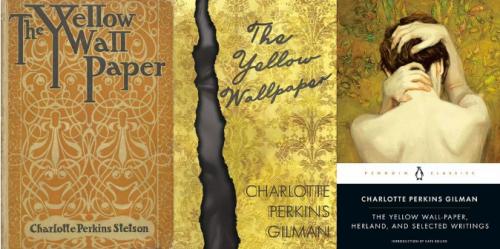
The literary trope of the “rational man” and the “madwoman” hits hard right from the opening.
Throughout the narrative, Gilman exudes intense restraint and self-control, creating a rollercoaster of emotions for the reader; the unexpected twists deliver a profound jolt.
Yet, a question emerges—“What is a woman?”
In 1890, this question was not given sufficient attention, let alone answered. It is even possible that the question itself was unconscious; Gilman left it for us to ponder.
Lucid and resilient.
The metaphor of “wallpaper” pervades this story: respectable marriage, the instinct of motherhood, the shaping of femininity, the threat of the “madwoman” stigma—it appears to offer decoration and protection, but in reality, it is a cage that weakens and restrains a woman’s vitality.
Beneath the wallpaper, women’s own names and faces grow increasingly blurred.
This story does not merely recount suffering; it also explores a way forward.
What is most refreshing about Gilman is that she does not romanticize men. She exposes the male psyche with sharp yet objective clarity—her husband John’s “it’s for your own good” is patriarchy’s gentlest yet most impenetrable cage.
The women in her writing are never defined by fair skin or a slender figure. The adjectives she prefers are: intelligent, tall, strong, and upright.
Virginia Woolf said that a woman must have a room of her own. Gilman put it more bluntly: a woman must have her own money and spend it as she pleases.
In The Yellow Wallpaper, the husband, under the guise of “it’s for your own good,” ultimately seeks only to transform his wife into a “normal person” who conforms to societal expectations and feminine duties. Meanwhile, the wife, harboring helpless doubts and uncertainties, remains trapped in a mental crisis of hesitation and suspicion—mysterious yet subtle, sensitive yet desperate—resembling the author’s own inner monologue during postpartum depression.
Reading this, I am reminded of my childhood visits to relatives in the countryside.
The walls were covered with mottled cracks and stains of various shapes. I would sometimes spend an entire afternoon in bed, staring at them, imagining a tiny figure navigating the lines like a maze, never knowing where the exit lay, starting over whenever it hit a dead end, endlessly fascinated.
That is why reading The Yellow Wallpaper feels so deeply familiar. The minds of children and women are both like roses—delicate, fresh, soft, non-rigid, and non-rational. But a child’s world has its own peculiar logic; I never became withdrawn, nor did I go mad.
Yet “I” went mad. Though both were lost in thought before a wall, a child could leave that room at any moment, while “I” could not.
Where lies the difference? It is not a difference in mindset, but the presence or absence of freedom.
Deprived of freedom, what else could “I” do but go mad?
Thus, madness is not a random plot device, nor merely a projection of personal experience—it is the inevitable consequence of patriarchal violence.
Gilman survived that agonizing period when her body and mind were bound within a cage, but the “I” in the story did not—she descended into ultimate mental collapse.
This is precisely the power of women’s writing—women writing about themselves, women writing about women. It tears at the heart, tender yet profound. Gilman dissects the details of her past with brutal honesty, emerging from the nightmare only to force herself back into the darkness. This honesty is what ensures the enduring artistic appeal of The Yellow Wallpaper.
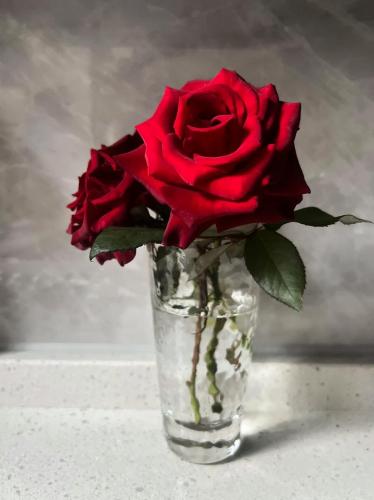
When will the rose cease to be the wolf’s plaything, so that she may truly stand shoulder to shoulder with him to view the world?
Only then will “we” not go mad, and only then will there be no more women trapped beneath piles of yellow, red, and white wallpaper—unable to cry out, caught between a rock and a hard place.
The wolf and the rose will find their way. I believe it.
And until then, at the very least, we can begin by tearing down the wallpaper.
