I was sorting through old boxes in my parents’ attic last winter when I found a letter my grandmother never sent. She wrote it in 1945, describing something that happened in a town I’d never heard of. She sealed the envelope but never mailed it. I sat on the dusty floor and wondered: what makes a story stay hidden for decades? What makes someone write the truth and then put it in a drawer?
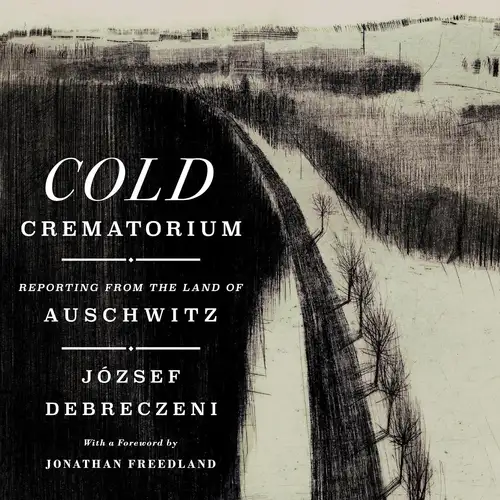
That question followed me into József Debreczeni’s “Cold Crematorium: Reporting From the Land of Auschwitz.” The book was finished in 1950. It was published in Hungarian. Then it disappeared. For seventy years, this manuscript sat in archives, unread by the wider world. Only in 2024 did an English translation finally appear, and when it did, the New York Times called it one of the year’s ten best books. I picked it up with a strange feeling. I knew that feeling. It was the same one I had in the attic, holding my grandmother’s unsent letter.
What Debreczeni Does With His Eyes
Debreczeni was a Hungarian Jewish journalist. He survived Auschwitz. He wrote this book five years after liberation, while the memories were still raw but his mind had already found a kind of stillness. He does not scream. He does not beg for your pity. He describes what he saw with the precision of a reporter filing a dispatch from a place where normal language has broken down.
There is a moment early in the book where he describes the arrival platform at Auschwitz. Other survivors have written about the chaos, the shouting, the dogs. Debreczeni notices something else. He notices how quiet it is. The prisoners do not scream. They have already learned that screaming changes nothing. He writes about the cold. He writes about the smell, which he calls “a smell that has no name in any language.” That sentence stopped me. I realized he was not just describing a place. He was describing the failure of language itself. What do you call something that has no word?
The core conflict of the book is not between prisoners and guards. It is between memory and silence. Debreczeni wants to tell us everything. But he also knows that some things cannot be told. He circles around the unspeakable, approaching it from different angles, like a man walking around a hole in the ground. The suspense is not about whether he survives. We know he does. The suspense is about whether he can find words for what he witnessed. I will not tell you how the book ends. But I will say this: the final pages made me put the book down and stare at a wall for a long time.
Images That Refuse to Leave
The central image of the book is the cold crematorium. It is not just a building. It is a machine that runs on human bodies. Debreczeni describes it with the same flat tone he uses for everything else. The crematorium is efficient. It is well-organized. There is a schedule. There are workers who do their jobs and then go home for dinner. That is what makes it so horrifying. The horror is not in the violence. It is in the ordinariness.
The core theme is the banality of evil, but that is not quite right either. Debreczeni shows us something more specific. He shows us how bureaucracy becomes a form of cruelty. The camp has forms to fill out. There are quotas. There are shift changes. The guards are not monsters. They are clerks with guns. Debreczeni’s craft lies in his refusal to dramatize. He gives us the facts, and the facts are enough.
I kept thinking about my grandmother’s letter as I read. She never mailed it. She kept it in a shoebox. Debreczeni’s book was kept in a similar kind of shoebox, an archive in Budapest. Some truths are so heavy that no one wants to carry them. But they wait. They wait until someone is ready to pick them up.
What We Owe to the Unread
This book is not for everyone. It is difficult. It is quiet. There are no heroics, no dramatic escapes, no moments of triumph. Debreczeni survives, but survival itself feels hollow. He writes about the days after liberation with a flatness that almost hurts. There is no joy. There is just exhaustion.
The book’s weakness, if you can call it that, is its refusal to explain. Debreczeni does not tell you what to feel. He does not offer lessons. He simply reports. Some readers might find this frustrating. I found it honest. The truth is that some experiences cannot be turned into wisdom. They can only be witnessed.
What you will take from this book is a new understanding of what it means to wait. Debreczeni waited seventy years to be heard. My grandmother waited her whole life. Maybe your family has a story like that too. A letter never sent. A story never told. A truth that sat in a drawer, waiting for someone to pick it up.
What are you waiting for?
