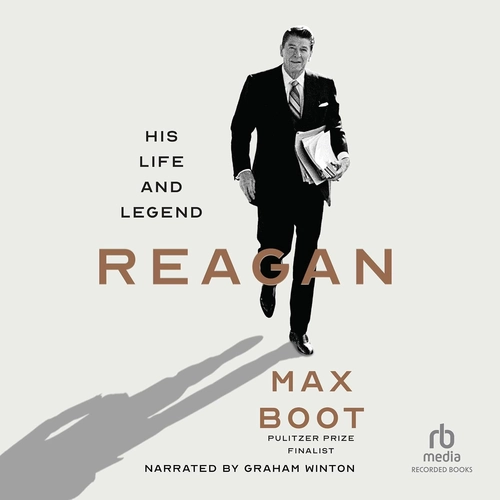
I was at a dinner party recently, and someone brought up Ronald Reagan. The room split instantly. Half called him a saint who ended the Cold War. Half called him a villain who gutted the middle class. I sat there, quiet, because I wasn’t sure what I thought anymore. That’s when a friend handed me Max Boot’s new biography, “Reagan: His Life and Legend.” She said, “This might help. Or it might make things worse.” I laughed. But she was right.
What This Book Is Really Asking
Boot doesn’t write a hagiography or a hit piece. He writes a question. Can we admire someone’s vision while cringing at their blind spots? Reagan, for Boot, is not a statue. He’s a man who walked into the White House with a sunny optimism and left behind a country more divided than ever. The book asks: What do we owe a leader who changed the world, but also left it colder, richer in some ways, poorer in others? I found myself asking the same about people in my own life.
The Protagonist: A Man of Contradictions
Reagan comes across as a puzzle. He was an actor who learned to read a script but not a room. He believed in small government, yet tripled the national debt. He championed family values while barely speaking to his own children. Boot shows these contradictions without judgment, almost like a scientist observing a strange species. The core conflict of the book isn’t with Gorbachev or Congress. It’s inside Reagan himself. The man who could charm a nation but couldn’t hold a conversation with his own son. I think that’s what makes this biography feel so human. It’s not about politics. It’s about the gap between what we say and what we do.
The Craft: How Boot Builds the Argument
Boot uses a quiet, almost forensic style. He doesn’t shout. He layers evidence like bricks. The key imagery is a mirror. Reagan, the actor, spent his life in front of mirrors, perfecting his image. But Boot holds up a different mirror. He shows us the backstage: the Alzheimer’s that was hidden, the Iran-Contra affair that was denied, the tax cuts that helped the rich but hurt the poor. The theme here is legacy. What do we leave behind when the cameras turn off? Boot suggests that Reagan’s real legacy isn’t the end of the Cold War. It’s the template for modern politics: style over substance, optimism over honesty. I found myself wondering if we’ve been living in Reagan’s shadow ever since.
Why This Book Matters Now
I read this during a week when the news felt like a circus. Every leader seemed to be performing. And I realized Boot’s book isn’t just about Reagan. It’s about us. How we choose our heroes. How we forgive their flaws. How we live with the consequences of their choices. The book has one weakness: it’s long, almost too detailed. I skimmed a few sections on budgetary debates. But that’s a small price for a book that made me rethink an entire era.
Final Verdict
I recommend “Reagan: His Life and Legend” to anyone who has ever loved a flawed person. A parent who let you down. A boss who inspired you then betrayed you. Boot doesn’t tell you what to think. He shows you a man, messy and magnificent, and trusts you to decide. I closed the book feeling less certain about Reagan, but more certain about the complexity of being human. Maybe that’s the best a biography can do.
