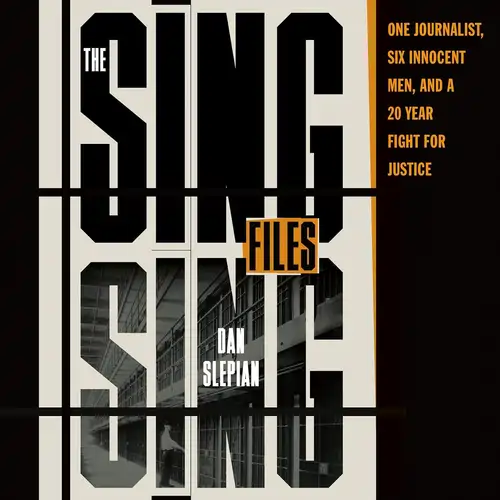
I was sitting in a coffee shop last week, scrolling through my phone, when I saw a headline about a man freed after 25 years in prison. I felt that familiar twinge of outrage. Then I caught myself. How many times have I felt that same outrage, only to move on to the next story? That’s the uncomfortable space Dan Slepian’s The Sing Sing Files forces you to sit in. It’s not a book about six innocent men. It’s a book about the rest of us. About the systems we trust, the certainties we cling to, and the stories we tell ourselves to avoid looking too hard. What happens when the people we count on to get it right get it terribly wrong, and nobody notices for a decade?
The uncomfortable company of a good man
Slepian doesn’t present himself as a hero. He comes off as a man who is slightly embarrassed by his own persistence. He is an Emmy-winning journalist at NBC, a man who has access and power. But the book opens with him feeling like a fraud. He is looking at a stack of old case files, and he is tired. He has been chasing these cases for years. One of them belongs to a man named Johnny Hincapie, who was convicted for a murder on a subway platform in 1990. The evidence was thin. The eyewitness testimony was a mess. But the system had its man. Slepian starts talking to Hincapie’s family. Then he starts talking to Hincapie himself, from inside Sing Sing prison. He visits. He calls. He reads the trial transcripts until his eyes hurt. He does not have a eureka moment. He has a slow, grinding realization that something is deeply wrong. The book follows six such men, each with their own heartbreaking story. There is the man who took a plea deal for a crime he didn’t commit because he was afraid of the death penalty. There is the man whose alibi was ignored because he looked suspicious. Slepian shows us the grinding machinery of the legal system, how it chews up people who are poor, who are Black, who are just unlucky. He does not reveal the final outcomes of all cases until the end. He makes you wait. He makes you feel the weight of that waiting, the ten years of letters and phone calls and dead ends. It is not a thriller. It is something more uncomfortable: a slow, patient refusal to look away. And that refusal, Slepian suggests, might be the only thing that actually works.
The light in the machine
The core theme here is not just wrongful conviction. It is the psychology of certainty. Slepian spends a lot of time talking to the prosecutors, the detectives, the judges. They are not monsters. They are people who believed they were right. And that is the scariest part. The book shows how once a prosecutor decides a man is guilty, every piece of evidence gets bent to fit that story. An unreliable witness becomes a solid one. A missing alibi becomes proof of guilt. A confession that was coerced becomes a confession that was voluntary. Slepian is a gentle writer. He does not scream. He just places one fact next to another. He shows you the subtle light of a man’s humanity breaking through the institutional darkness. There is a moment where Hincapie’s mother, a tiny woman with a fierce love, calls Slepian every week for years, just to say thank you. She never asks for anything. She just needs someone to know her son exists. That small, stubborn light is what keeps Slepian going. The imagery in the book is quiet. Prisons are gray. Courtrooms are beige. But the images that stay with you are the small ones: the way a man’s hands shake when he hears a judge say “not guilty,” the way Slepian feels the cold metal of the prison gate when he walks out, the way a mother’s voice breaks on the phone. This is not a book about heroes. It is about the slow, boring, heartbreaking work of being right when the whole world is certain you are wrong.
The cost of being wrong
I finished this book and felt something I did not expect. I felt a kind of shame. Not for the system, but for myself. How many times have I read a story about a crime and felt a flash of certainty? How many times have I assumed the police got the right person? Slepian’s argument is not that the system is broken. It is that the system is working exactly as it was designed. It was designed to be certain. It was designed to move fast. It was designed to protect itself. And that design requires a cost. The cost is six men, or sixty, or six hundred, who spend decades in a cage for something they did not do. The book is not perfect. It is a little long. Slepian sometimes gets lost in the procedural details. But that is also its strength. He forces you to sit with the boredom of justice, the paperwork, the phone calls, the waiting. There is a quiet wisdom here that applies far beyond the courtroom. It is about how we treat people we have decided are guilty, in our jobs, in our relationships, in our lives. If you care about justice, about the human cost of certainty, about the slow work of truth, read this book. But be warned. It will make it harder for you to feel sure about anything. And maybe that is exactly what we need.
