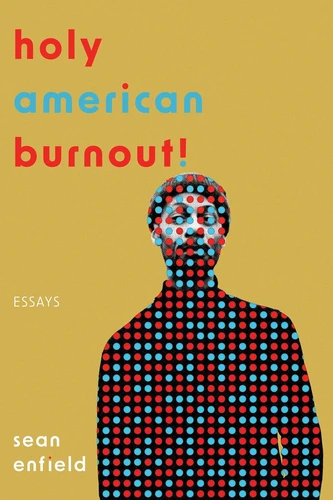
I stood in my kitchen last week, staring at the open refrigerator. I wasn’t hungry. I was just tired. Not the kind of tired that sleep fixes. A deeper tired. The kind where you feel like you’ve been carrying something for so long you’ve forgotten you’re carrying it at all. That’s when I picked up Sean Enfield’s Holy American Burnout! again.
The book asks a question I hadn’t dared to voice: What if my exhaustion isn’t mine alone? What if it’s a borrowed weight, passed down through generations, pressed into my bones by a country that never meant for me to rest?
What This Book Is Really Asking
Enfield does not give you a plot. He gives you a series of essays, sharp and personal, that circle the same wound. He writes about growing up Black in America, about the classroom, about history lessons that feel like erasure. He writes about the way the country tells you to work harder while quietly moving the finish line.
I found myself nodding in places I didn’t expect. He describes the moment you realize that your exhaustion is political. That the burnout isn’t just from your job or your bills. It’s from the constant calculation of how much of yourself to show. It’s from the math of survival.
He does not offer easy answers. That is the book’s honesty. He offers companionship instead. He says, in effect, I see you. I feel it too.
The Craft and the Weight
Here is what Enfield does beautifully. He takes a small moment, something ordinary, and cracks it open. A conversation at a family dinner. A walk through a neighborhood that used to be different. A memory of a teacher who said something that stayed.
He builds an argument through these fragments. The key imagery is the burn itself. The slow, consuming fire of expectation. The heat of being seen and not seen at the same time. The char of trying to explain yourself to people who will never quite get it.
The core theme is inheritance. Not of property or money. Inheritance of trauma, of vigilance, of a particular kind of tiredness that becomes a kind of knowledge. Enfield shows how this exhaustion is not weakness. It’s evidence. It proves you have been paying attention.
Is the book perfect? No. Some essays feel like they end too soon, as if he ran out of breath. But maybe that’s the point. Burnout leaves you unfinished.
What You Take Away
I finished the book and sat still for a while. Not because I was moved to tears. Because I was moved to quiet. Enfield’s argument stayed with me: the burnout is not a flaw in you. It is a response to a flawed system. You are not broken because you are tired. You are tired because you have been asked to carry too much.
Who is this book for? Anyone who has ever felt that bone-deep exhaustion and wondered if it was just them. Anyone who has tried to explain their tiredness and given up. Anyone who needs permission to stop pretending that hard work alone will save them.
Enfield does not tell you to fight harder. He tells you to recognize the fight for what it is. And maybe, after that recognition, to set something down.
The question the book leaves me with is this: What would it mean to live as if your exhaustion was not a shameful secret, but a shared language spoken by the people who came before you?
