Last Tuesday I drove across town to buy embroidery floss for my six-year-old. She’d been begging to learn stitching. In the store, she grabbed bright pink and turquoise, her face glowing. The moment we clicked seatbelts, her voice shifted. “It’s not fair, he got more screen time,” she whined, gesturing at her four-year-old brother. No thank you. Just complaint. I felt my chest tighten. Was I failing? I’d tried so many strategies to make my 6 year old feel loved, yet here we were, drowning in ingratitude. I had no idea the deepest need wasn’t a gratitude lecture. It was something far simpler.
Quick Ways to Make Your 6 Year Old Feel Loved Today
If you’re feeling disconnected from your child, try these:
- Stop the car and just listen before correcting.
- Say “I’m so glad you’re my daughter” with no strings attached.
- Notice one thing she did right and thank her genuinely.
- Create 10 minutes of sibling-free, screen-free time today.
- Put away your phone and get on the floor with her.

Why Does My 6 Year Old Act So Ungrateful When I’m Trying Everything?
I used to replay that dollar-store scene in my head. My youngest chirped “thank you,” and my daughter raged about her brother’s cooler toy. The contrast stung. For months I thought she needed more reminders about manners. More talks about how hard I worked. What I didn’t see was the quiet jealousy underneath. At six, she was old enough to remember being my one and only. Her brother’s easy charm felt like a spotlight she couldn’t outshine. I wasn’t raising an ungrateful kid. I was raising a kid who felt her place was slipping.
Development plays a huge role, too. Six-year-olds still struggle with perspective. They can say please and thank you, yet grasping what gratitude really means, understanding someone else’s effort, takes years. So her complaints weren’t about the floss. They were clumsy signals asking, “Do you still see me?” When I stopped hearing defiance and started hearing disconnection, everything shifted. That’s the starting line for learning how to make my 6 year old feel loved.
How to Make My 6 Year Old Feel Loved So She Can Finally Say Thank You
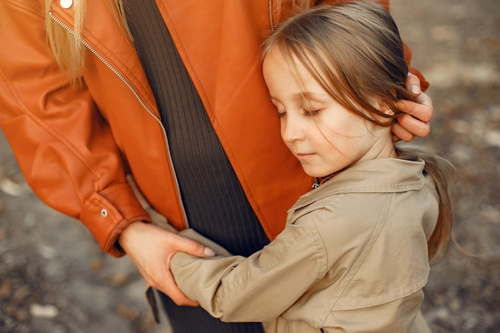
One evening, after a particularly loud meltdown about who got the last granola bar, I crouched in front of her. Instead of “you should be grateful,” I whispered, “I think you’re feeling left out.” Her tears came fast. I held her. No speech. Just presence. A few days later, she surprised me. She handed her brother the bigger half of her cookie. Zero reminders. That’s when I understood: gratitude flows from being filled up first.
Here’s what I learned to do, over and over again. Real moments, not perfect parenting.
Hold space before you teach. In the car after the fabric trip, I learned to wait. I’d say, “You sound upset. Want to tell me about it?” Let the complaint spill. Nod. No fixing. When she finished, I’d name her feeling. “You wish you had what he had. That’s so hard.” Connection came before correction. Only after that emotional exhale could I add, “I loved watching you pick colors. It made me happy to do that for you.” That planted the seed without force.
Give her one-on-one time where she calls the shots. I started what I quietly called my “love offensive.” Ten minutes. No brother. No phone. She chose the activity. Sometimes we drew. Sometimes we just lay on the floor and told silly stories. In that bubble, she didn’t need to compete. She relaxed. Within a week, an uncoached “thanks for the snack, Mom” slipped out. My jaw nearly hit the floor. She wasn’t being trained. She was feeling safe.
Model what you want to hear, loudly. I got intentional about thanking her for tiny things. “Thank you for putting your cup in the sink. That helped me.” “Thank you for telling me about your bad dream. I’m glad you shared.” I also thanked her brother openly, without comparing. She started mirroring. Not instantly. Not every time. But the ratio shifted.
Let her earn some of what she wants. This might sound counter to love. But love also means teaching capability. I set up a simple chore chart with two non-essential jobs she could do to earn a small coin. She saved for three weeks to buy a set of mini animal figurines. When she finally paid for them herself, she clutched that little bag like treasure. The “thank you” was silent but felt in her careful handling. She understood the weight of waiting.
A Simple Ritual That Changed Everything
After weeks of trial and error, I landed on a ritual I call the Sunshine Minute. Every afternoon, right after school snack, I set a timer for one minute. During that minute, I look only at her. I might say, “What was one good thing about today?” or “I noticed you helped your brother. That was kind.” The rule is simple: no criticism, no instructions. Just a beam of attention that says, “I see you.” That one minute rebuilt a bridge I didn’t know had crumbled.
Why does this work? At six, kids still live in a concrete world. Sixty seconds of pure, positive attention can feel more filling than an hour of distracted care. It tells them, “I am worth stopping for.” When that message sinks in, the desperate reach for fairness softens. The whining quiets. The thank yous start showing up, small and genuine, because they’re no longer bracing for loss.
What If My Younger Child Is Naturally More Thankful?
I need to say this: I had to stop comparing my kids’ temperaments out loud. My four-year-old was a people-pleaser by nature. My daughter wasn’t. That didn’t mean she loved me less. It meant she expressed security differently. When I stopped labeling one as “the grateful one,” I gave her space to find her own voice. If you have a child who’s quick with thanks, celebrate that while still noticing your six-year-old’s quiet ways of connecting. A picture she drew. An unprompted hug. She might be saying thank you without words.
When to Step Back from Giving
In my desperation to fix the ingratitude, I had been over-giving. Surprise trips, little gifts. But I was drowning her in things while she was starving for connection. I started saying “no” to extra trinkets and “yes” to time. The shift felt scary, but it worked. She stopped expecting treats and started requesting snuggles. That’s when I knew we were on the right track.
FAQ: How to Make My 6 Year Old Feel Loved
Q: My 6 year old seems ungrateful no matter what I do. Am I doing something wrong?
A: Not necessarily. At six, gratitude is still a developing skill. What looks like ingratitude is often a signal that your child is feeling disconnected, jealous, or unsure of their place. Focus on filling their emotional cup first. Gratitude often follows feeling secure.
Q: How much one-on-one time does a 6 year old really need?
A: Even 10 minutes of undivided attention daily can make a significant difference. The quality matters more than the quantity. Put away your phone, get on their level, and let them lead the activity.
Q: Should I punish ungrateful behavior?
A: Punishment often backfires with young children. Instead, address the feeling underneath the complaint. Name it: “You sound upset.” Connection before correction works better than punishment alone.
Q: What if my 6 year old only seems grateful when other people are watching?
A: That’s normal developmentally. At six, children are still learning that gratitude matters even when no one is watching. Keep modeling genuine thanks. Over time, internal motivation develops.
Q: How do I handle sibling jealousy without making it worse?
A: Acknowledge each child’s feelings separately. Avoid comparisons. Carve out individual time for each child. And remember that jealousy is often a sign of feeling disconnected, not a character flaw.
One Last Thing
Last night, my daughter handed me a shakily sewn heart with a note: “I love you mom.” I keep it in my pocket. She’s learning. So am I.
References
- Faber, A., & Mazlish, E. (2012). How to Talk So Kids Will Listen & Listen So Kids Will Talk. Scribner.
- Siegel, D. J., & Bryson, T. P. (2012). The Whole-Brain Child: 12 Revolutionary Strategies to Nurture Your Child’s Developing Mind. Bantam.
- American Academy of Pediatrics. (2022). Building Resilience and Gratitude in Children. HealthyChildren.org.
