I know that moment. The dinner table has gone from “what’s for dessert?” to a full-on shouting match. Your 9-year-old just told you “you can’t make me” and you’re gripping the edge of your chair, heart pounding. In our house, it was our middle child. He’d find a reason to complain about every single meal, then call me names when I asked him to stop. I’d send him to his room. He’d say, “Come and make me.” So I’d physically move him. And then came the insults. We tried taking away screens, playdates, birthday parties. Nothing worked. I started to dread the next explosion. I’d lost count of the ruined evenings. What I didn’t know then was this: I wasn’t dealing with a discipline problem. I was dealing with a connection problem in disguise.
Quick Fixes for Backtalk Today
If your child is talking back right now, try these:
- Pause before you speak. Your calm is the only thing that can stop the spiral.
- Lower your voice. A whisper cuts through anger faster than a shout.
- Say “I’ll talk with you when we’re both calm” and walk away for 5 minutes.
- Later, ask: “What was really going on when you snapped at me?”
- Invite them to help fix the problem, not just face a consequence.
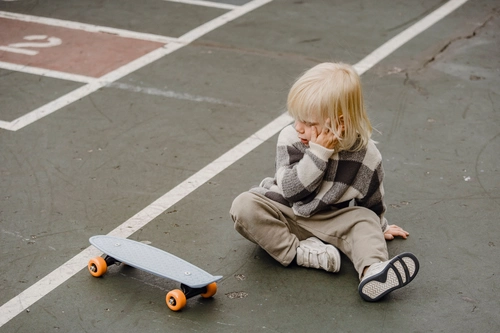
Why Does My 9 Year Old Talk Back So Much?
Here’s what I wish I’d known sooner. When a 9-year-old fires off “whatever” or “you’re not the boss of me,” he’s not just being rude. He’s showing you that his brain is flooded. At this age, the part of the brain that handles impulse control is still under construction. Add in a bad day at school, a fight with a friend, or feeling like the forgotten middle child, and you’ve got a ticking time bomb.
Our child could be so sweet. He’d cuddle on the couch and then, 20 minutes later, explode because his pasta was “too cold.” Back then, I saw a kid who was ungrateful and defiant. Now I see a kid who didn’t know how to say, “I’m exhausted and I feel like no one listens to me.” The talking back was the cover, not the core. He’d figured out that negative attention was faster and more reliable than positive attention. Every “make me” was really a test: will you still love me when I’m at my worst? When I started answering that question with yes instead of with a punishment, everything shifted.
How to Discipline a 9 Year Old for Talking Back Without Escalating the Fight
For a long time, I thought discipline meant having the last word. If he said something rude, I had to correct it right there, harder and louder. But all that did was turn our home into a courtroom where we both kept losing. The turning point came when a parenting coach gave me a sentence: “You can’t teach a swimming lesson in a hurricane.”
So I stopped trying to discipline in the storm. When he’d snap, “I hate this dinner,” I’d take a breath and say, “I hear you’re really upset right now. We’ll talk about it after you’ve had a chance to cool down.” Then I’d leave the room. The first few times, he followed me, trying to re-ignite the fight. I’d repeat my boundary calmly and go fold laundry. It felt wrong. Passive. But within a week, the duration of our battles had shrunk by half. He was learning that his angry words couldn’t buy him a power struggle anymore.
The real discipline happened later, over a board game or at bedtime. I’d say, “Earlier, when you told me to shut up, you sounded really mad. What was going on?” And I’d shut my own mouth and listen. Often, it had nothing to do with the dinner. It was about a kid who’d embarrassed him at recess, or feeling like his younger sibling gets away with everything. When he felt heard, he didn’t need to fight me. He’d offer his own apology. It was genuine, not the hollow “sorry” I’d forced out of him a hundred times before.
A Weekly Ritual That Changed Our Home
I needed something predictable, so I created a weekly ritual I started calling “Talk It Out Tuesday.” The point is that it’s scheduled, not squeezed in after a blow-up. Every week, my child and I take 15 minutes. We sit in his room, and I start with one question: “What’s one thing I could do differently as your parent?” The first time, he stared at me like I’d grown a second head. Then he said, “You could not yell at me about food.” Ouch. But fair.
From there, we built a simple, three-step process that we still use:
- Share a Win. Each of us tells one thing that went well that week, no matter how tiny. It shifts us out of “problem” mode.
- Name the Hardest Moment. We each describe a recent conflict from our own point of view. I say, “When I picked you up from school yesterday, I felt hurt when you ignored me.” He might say, “When you told me to do my homework, I felt like you don’t trust me.” No arguing allowed.
- Make a Honest Plan. Together, we choose one small thing to try for the next week. One week it was, “I’ll give you a 5-minute warning before screen time ends, and you won’t call me a name when I turn it off.” We’d fist bump on it. If it failed, we’d tweak it next time. This wasn’t about me laying down the law. It was about us building a system where we both had a stake.
At first, it felt like more work than just sending him to his room. But after a month, the backtalk didn’t disappear—it just lost its power. He started to believe I was on his team, not out to control him.
What to Say When Your 9 Year Old Says “Make Me”
“Make me” is a trap. It’s designed to pull you into a physical or verbal wrestling match you can’t win. The first time my child dropped that phrase and I instinctively reached for his arm, I knew I’d handed him the victory. What I say now is: “You’re right, I can’t make you. But I’m asking you to go to your room because we both need space to calm down. I’ll check on you in 10 minutes.” Then I walk away. If he refuses, I don’t force it. I let him sit in the hallway fuming while I go do something else. It’s the most uncomfortable, radical thing I’ve ever done as a parent. And it works. He’s no longer fighting me. He’s sitting alone with his own anger, and that’s a powerful lesson.
Rebuilding the Relationship After the Storm
After the fire dies down, don’t just move on. That teaches kids that explosive anger gets a free pass. I learned to circle back with phrases like, “Can we try that conversation again? I’d like to hear what you needed, but this time without the name-calling.” Or I’d simply say, “I love you too much to let that be how we talk to each other. Let’s fix it.” It’s not about extracting an apology. It’s about modeling repair. Real respect isn’t demanded. It’s cultivated in these small, quiet moments after the volcano has stopped erupting.

FAQ: How to Discipline a 9 Year Old for Talking Back
Q: Why does my 9 year old talk back so much?
A: At this age, the impulse control part of the brain is still developing. Talking back often signals that your child is flooded with emotion—not that they’re trying to be disrespectful. It’s a cover for something deeper like exhaustion, frustration, or feeling unheard.
Q: What’s the best way to respond when my child says “make me”?
A: Don’t take the bait. “Make me” is designed to pull you into a power struggle. Respond with calm: “You’re right, I can’t make you. I’m asking you to take a break because we both need space. I’ll check on you in 10 minutes.” Then walk away. Refuse to wrestle.
Q: Will ignoring backtalk make it worse?
A: Ignoring the behavior entirely can backfire. The key is to respond to the feeling underneath, not the disrespectful words. Name the emotion: “You seem really frustrated right now.” Then address the behavior later when everyone is calm.
Q: What if consequences don’t work for backtalk?
A: Consequences alone often fail because they don’t address the root cause. Pair consequences with connection. Repair after the storm. Ask what was really going on. When your child feels heard, they have less need to act out.
Q: How long does it take to see improvement?
A: Every child is different. Some parents notice shifts within weeks. For deeper patterns, it may take months. The key is consistency. Every time you stay calm instead of escalating, you’re building trust that eventually changes the dynamic.
One Last Thing
There was a night, about two months into this new approach, when my child had a familiar meltdown over a homework timer. He yelled, threw a pencil, and called me “the worst mom ever.” I didn’t bite. I sat on the floor near him, not too close, and just breathed. After a minute, he crawled into my lap and sobbed. He didn’t apologize right away. He just cried. And I held him. The next morning, he made his own breakfast without being reminded and left a note that said “I’m sorry about last night.” It wasn’t dramatic. It was just real. That’s when I knew we were going to be okay. Your 9-year-old isn’t a problem to be fixed. He’s a person learning how to be human. You get to do that together.
References
- Greene, R. W. (2014). The Explosive Child: A New Approach for Understanding and Parenting Easily Frustrated, Chronically Inflexible Children. Harper Paperbacks.
- Faber, A., & Mazlish, E. (2012). How to Talk So Kids Will Listen & Listen So Kids Will Talk. Scribner.
- Markham, L. (2012). Peaceful Parent, Happy Kids: How to Stop Yelling and Start Connecting. Perigee Books.
