I was sitting on my porch last summer when a squirrel stopped mid-scamper, stared at me, then deliberately dropped a half-eaten acorn onto my shoe. It wasn’t random, I swear. It was a message. But what kind of message? That moment came back to me while reading Brandon Keim’s “Meet the Neighbors: Animal Minds and Life in a More-than-Human World.” The book asks a question that feels both ancient and urgent: What happens when we stop seeing animals as objects and start seeing them as neighbors?
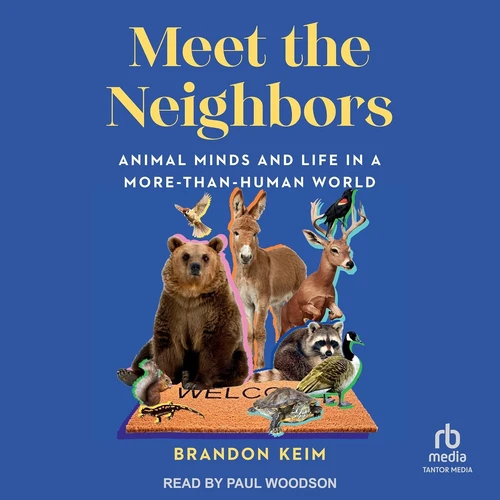
How the Book Builds Its Case
Keim doesn’t start with dramatic stories of chimpanzees using tools or dolphins recognizing themselves in mirrors. He starts small. He watches a pigeon navigate a city street. He observes a rat pause at a curb. The genius of this book is that it refuses to make animals exotic. Instead, it makes them familiar. You know, the way you know the barista at your local coffee shop.
The author builds his argument through careful, patient science. He interviews biologists who study what animals actually do, not just what we assume they do. A key concept here is “umwelt” — the idea that every creature experiences a different sensory world. A dog lives in a universe of smells we can’t imagine. A bird sees ultraviolet patterns invisible to us. Keim suggests that our moral failure toward animals isn’t just about cruelty. It’s about ignorance. We harm them because we don’t know who they are.
The Core Theme and Its Craft
The central theme is connection. Not sentimental connection, but practical, lived connection. Keim writes about a woman who leaves her back door open so a family of raccoons can visit. He profiles a man who learns to recognize individual crows by their calls. These aren’t cute anecdotes. They are evidence for a different way of being.
There is a subtle light that runs through the book. It’s not a bright, triumphant light. It’s more like the soft glow of a lamp in a window, the one you see when you’re walking home late and someone is still awake. Keim argues that paying attention to animals is a form of hospitality. It’s an act of welcome. And that act changes us. I found myself, after reading, looking at the sparrows on my fire escape differently. Not as pests, but as tenants.
What This Book Offers and Its Limits
“Meet the Neighbors” is for anyone who has ever felt uneasy about how we treat the other creatures on this planet. It’s for people who want to live more ethically but don’t know where to start. Keim doesn’t give you a ten-step plan. He gives you a new lens.
The book has one weakness, and I’ll be honest about it. It occasionally leans too hard on scientific jargon. I found myself re-reading a few paragraphs about hermit crab neurology, feeling lost. But that’s a small price. What you get in return is a genuine shift in perspective. You finish the book and look at your cat, or the pigeon on the windowsill, and you realize: I have been living next to strangers my whole life. And they have been trying to talk to me.
The real emotion here is not pity or guilt. It’s wonder. Keim shows us that the world is far more alive, far more sentient, than we allow ourselves to believe. Maybe that squirrel dropping the acorn wasn’t a message. But maybe it was. The book’s final gift is uncertainty. It leaves you with a question you can’t shake: What if they are thinking, and we are the ones not listening?
