I was sitting in a museum last month, staring at a diorama of hairy figures huddled around a fire. A child next to me whispered, “Thats how we started.” I nodded. But later, walking home, I felt uneasy. Did we really start that way? Or did someone decide we did, for reasons that have nothing to do with bones or tools?
Stefanos Geroulanoss “The Invention of Prehistory” asks this exact question. It is not a book about cave paintings or ancient DNA. It is a book about the people who invented those stories. And it made me wonder: How much of our shared past is actually a weapon dressed as science?
The Characters Are Not Cavemen. They Are the Scientists.
Geroulanos does not write about prehistoric humans. He writes about the men who defined them. Think of 19th-century explorers, colonial administrators, Victorian anthropologists. They dug up a skull in Java or a flint in Kent, and then they built entire civilizations out of the gaps.
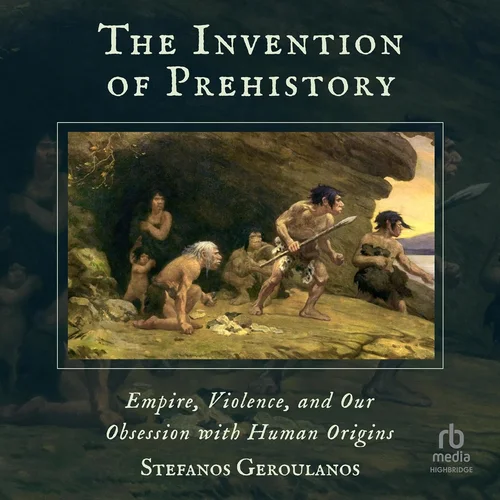
The book introduces us to figures like John Lubbock, who coined the terms “Paleolithic” and “Neolithic” while also defending British colonialism. Or the French scholar who used prehistoric art to argue that white Europeans were the original artists, everyone else just copycats. These men were not neutral. They were citizens of empires, carrying assumptions about race, progress, and gender.
What struck me most is how Geroulanos shows this without shouting. He lets the contradictions sit. Lubbock, for instance, believed prehistoric people were savages, but he also thought modern “savages” were stuck in prehistory. You see the pattern, right? The past becomes a mirror for the present. We do not discover origins. We invent them, to justify who we are now.
The core conflict is not between scientists and creationists. It is between evidence and narrative. Geroulanos reveals that many origin stories collapsed under new data, but they survived anyway because they served a purpose. I will not spoil the specific cases, but one involves a famous hoax that fooled experts for decades. The suspense comes from watching smart people cling to a beautiful lie.
The Deeper Pattern: How We Use the Past to Control the Present
The books central theme is that prehistory is a political tool. Geroulanos uses powerful imagery: the “savage” as a blank screen, the “caveman” as a cartoon of masculinity, the “first artist” as a European man. These images are not innocent. They taught generations that some people are more evolved than others.
One image stays with me. Geroulanos describes how 19th-century scientists drew prehistoric families with light skin and noble features, even though the skeletons they found suggested darker skin. They literally whitewashed the past. The author does not need to say “this was racist.” The evidence does the work.
The book covers many periods and thinkers. Sometimes it feels dense, like a graduate seminar. But Geroulanos writes with clarity. He shows how the “savage” was used to justify colonization: if these people are stuck in prehistory, we are doing them a favor by dragging them into modernity. Same logic, century after century.
If you read this book, you will not learn about Neanderthals or mammoths. You will learn about the human need for a clean origin story. That is its value. It is not a book for everyone. It is for people who are suspicious of grand narratives. People who have felt, in their bones, that the stories we tell about the past are too neat, too convenient.
The Final Question: Can We Imagine Origins Without Violence?
Geroulanos does not offer an alternative origin story. He does not say “here is the real prehistory.” Because his point is that there is no single real one. Every story we tell is filtered through our present anxieties.
I finished the book feeling unsettled. I grew up believing that science slowly reveals the truth. But Geroulanos argues that science is never separate from power. The tools, the funding, the questions we ask, all come from somewhere specific. He respects science, but he respects history more.
Maybe that is the books limitation. It diagnoses the disease, but it does not prescribe a cure. You put it down and think: So what do we do now? Stop studying prehistory? Start studying the people who studied prehistory? Geroulanos seems to say: Yes, start there. Be honest about your own biases. Admit that every origin story is also a political statement.
The book leaves you with a question you cannot shake: If the stories we tell about human origins are built on empire and violence, can we ever tell a story that is free? Or is every origin, by definition, a claim to power?
