Last Tuesday, I stood in my kitchen holding a half-eaten granola bar that had just been weaponized. My six-year-old was crying because his older sister “looked at him funny.” She was hollering back that he breathed too loud. I stared at the ceiling and wondered if it was too early to go to bed.
Does this sound familiar? That constant bickering that turns your living room into a battlefield? You try time-outs, you try talking it out, you try bargaining with screen time. Nothing sticks. I’ve been there. And I’ve found that the secret to reducing sibling rivalry isn’t about making them love each other every second. It’s about building a few simple habits that stop the escalation before it starts.
Quick Ways to Reduce Sibling Rivalry Today
If you’re tired of being a referee, try these:
- Remove the item they’re fighting over — calmly, without taking sides.
- Give each child ten minutes of your undivided attention every day.
- Never compare your kids, not even casually (“look how fast your brother got ready”).
- Teach one phrase: “I need space right now” instead of screaming.
- Separate them physically when things get too heated.
Why Do My Kids Fight Over Every Little Thing?
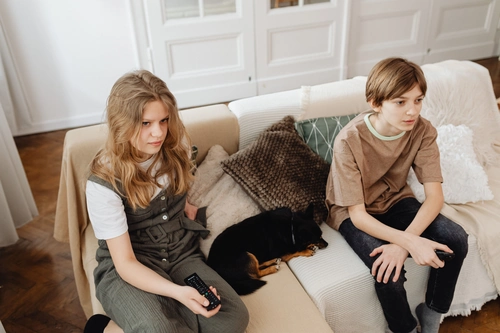
They’re not broken. They’re just little people competing for the same limited resources: your attention, the front seat, the last cookie. It’s primitive. When my son would scream “that’s not fair!” I used to launch into a fairness lecture. Then I realized he wasn’t complaining about the cookie distribution. He was saying, “Do you see me? Am I as important as her?”
Kids often bicker because they feel unseen. The rivalry is rarely about the toy. It’s about who gets the bigger piece of you. Hungry, tired, or bored kids fight more, sure. But the real fuel is the unspoken question: “Do you love me as much as you love them?” And when that question goes unanswered, even the way someone chews a carrot becomes a declaration of war.
One mom I know started tracking the fights in a notebook. After three days, she saw a pattern: nearly every meltdown happened right before dinner, when everyone was hangry and she was rushing to cook. She started putting out a small plate of apple slices and cheese at 5 p.m. without a word. The fighting dropped by half. Sometimes the fix is that simple.
How Do I Reduce Sibling Rivalry When I’m Not a Referee?
I used to jump into every argument like a firefighter. Bad idea. It taught my kids that yelling brings mom running, and that someone always wins and someone always loses. Now I use what I call the “Three-Minute Listen.” When a fight breaks out, I sit them both down and say, “You each get one minute to talk. No interrupting. Then we figure out what to do.”
My daughter might say, “He hit me with the granola bar because I wouldn’t let him watch my tablet.” My son says, “She wouldn’t share and she always gets to pick the show.” I don’t judge. I just listen. Then I ask, “What idea do you both have to fix this?” It’s messy at first. They might suggest taking turns watching separate stuff. I help them write it down. The solution isn’t perfect. But the real win is that they solved it. They own it.
This approach works because it removes you from the role of judge. Kids stop performing for a verdict and start actually hearing each other. Some days all I do is listen. Other days I say, “You know the rule: if you can’t figure it out, the thing you’re fighting over goes away for the afternoon.” And then I calmly take the tablet or the treat. They learned quickly that negotiation beats losing everything. That’s a life skill.
So when should you step in? If there’s hitting, biting, or real cruelty, stop the action immediately. Separate them. Comfort the victim first, completely ignoring the aggressor for a minute. That sends a clear message: we protect the hurt one, and violence gets zero attention. After everyone’s calm, you do the Three-Minute Listen.
The “Fair Doesn’t Mean Equal” Rule
My kids weaponized the word “fair” before they could tie their shoes. “He got more sprinkles!” “She sat in the front last time!” I used to measure things with a kitchen scale, I swear. Then I read a line in a book that rewired my brain: “Children don’t want to be treated equally. They want to be treated uniquely.”
So we created the “Fair Doesn’t Mean Equal” rule. When someone yells “that’s not fair,” I take a breath and ask, “What do you need right now?” Not, “Well, you had the front seat on Tuesday, so…” Just, “What do you need?” My son might say, “I want more grapes.” I give him more grapes. My daughter might say, “I need a hug.” She gets a hug. The focus shifts from what the sibling got to what this child actually desires. It’s disarming. And it teaches them to identify their own needs instead of measuring their lives against each other.
This rule takes practice. At first, they’ll still compare. But if you consistently redirect to their own wants, something beautiful happens. Last month, my son saw his sister get a new book. He said, “Hey, I want one too. Can I pick one?” He didn’t shout “unfair.” He asked for what he wanted. I almost cried.
Handling Age Gaps Without Constant Battles
My oldest is eight, my youngest is six. Two years apart but worlds in capability. The big one wanted to boss, the little one wanted to push boundaries. I used to force them to play together. That was a mistake. Now I protect their separate time. Every day after school, they get 30 minutes alone in their own spaces. No sharing. No “include your brother.” Just solitude. This small distance rebuilt their tolerance for each other. They’d come out of their rooms actually curious about the other’s day.
If you have a wider gap, say five years or more, the dynamic changes. The older child can become a mini-parent, which breeds resentment. I heard a teenager once snap, “You’re not the boss of me!” at her nine-year-old sister. The mom realized she’d been using the big one as a babysitter too often. She pulled back and reclaimed that authority. The fighting eased.
What If They Just Can’t Be Friends Right Now?
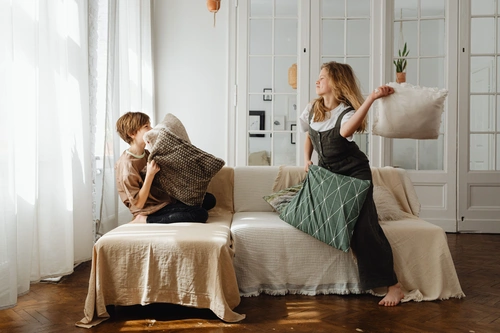
I remember a family who separated their kids for nearly a year. Different after-school programs, staggered bedtimes. They barely saw each other except at meals. It sounded extreme, but the constant physical fights were scaring everyone. After months of distance, the kids started asking for time together. And when they got it, they were kind. The space taught them to miss each other. I’m not saying do that tomorrow. But consider this: if constant togetherness is fueling the fire, give them a break. A day apart. A separate playdate. You’re not failing if they need space.
FAQ: How to Reduce Sibling Rivalry
Q: How do I stop my kids from fighting over the same toy?
A: Remove the toy calmly without taking sides. Say, “This toy is causing problems. It’s going to take a break.” Then redirect each child to a different activity. Over time, they learn that fighting leads to losing the item, not getting their way.
Q: What if one child is always the aggressor and the other always the victim?
A: Look beneath the roles. Sometimes the “victim” provokes in subtle ways. Sometimes the “aggressor” feels powerless elsewhere. Avoid labels. Address each child’s behavior separately and look for patterns. Both need to learn different skills.
Q: How do I handle sibling fighting when I’m already overwhelmed?
A: Start with one small change. Even separating toys or adding a daily ten-minute cooperative activity can reduce battles. You don’t need to fix everything at once. Small shifts accumulate.
Q: Should I punish my kids when they fight?
A: Punishment alone rarely teaches conflict resolution. Instead, focus on teaching. Use calm separation, name the feelings, and guide them toward solutions. Consequences can be useful, but they work best when paired with teaching.
Q: Is it normal for siblings to fight every day?
A: Some squabbling is normal, especially with young children who are still learning to share and regulate emotions. But if fights are constant, physically aggressive, or causing someone to feel unsafe, it’s worth stepping in with more structure and separate time.
One Last Thing
One night, after a particularly brutal day of yelling over who got the blue cup, I sat on the stairs and looked at a photo of them holding hands as toddlers. I missed them. But the next morning, my daughter walked over to her brother and offered him the very same blue cup without being asked. She said, “You can have it. I got purple yesterday.” He took it and smiled. It wasn’t a promise of eternal peace. It was a small miracle. And maybe, with the right habits, those small miracles start to outnumber the battles. That’s enough for me.
References
- Faber, A., & Mazlish, E. (2012). Siblings Without Rivalry: How to Help Your Children Live Together So You Can Live Too. W. W. Norton & Company.
- American Academy of Pediatrics. (n.d.). Sibling Rivalry. HealthyChildren.org.
- Coulson, J. (2017). 10 steps to reducing sibling conflict. Happy Families.
