I still remember flipping the last page of my manga Bible one late night, eyes wide. The red dragon, the seven bowls, the city of gold so big an angel measured it with a rod. When I closed the book, I just sat there. What did I actually just read? If you’ve ever stared at a passage in Revelation and felt like you were decoding someone else’s dream, you’re in good company. I needed a Bible study guide for Revelation that spoke to a normal reader, not a scholar. Maybe you do too.
Quick Start: 3 First Steps for Understanding Revelation Today
If you’re feeling lost, try these:
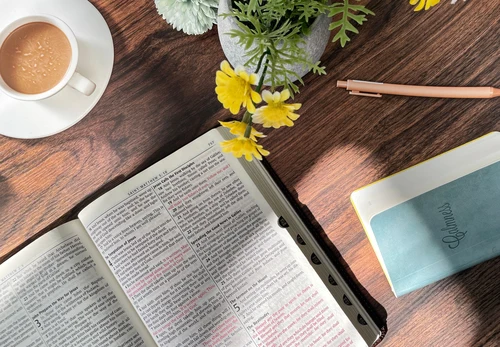
- Grab a study Bible that shows cross-references in the margins.
- Watch The Bible Project’s Revelation overview videos on YouTube.
- Read the book of Daniel alongside it. Those two books talk to each other.
Why Is the Book of Revelation So Hard to Understand on Your Own?
I thought I could muscle through Revelation like a novel. Bad plan. The book breaks all the rules of modern storytelling. It’s not a linear timeline. It’s not a news forecast. It was written to a group of oppressed house churches who were under Roman pressure, and it used a coded symbolic language they understood better than we do. That’s why any decent Bible study guide for Revelation will remind you: this is apocalyptic literature, not a diary.
When John wrote his vision, Christians in Asia Minor were being squeezed. Worship Caesar or lose your business. Worship the gods or face suspicion. John couldn’t just write, “Rome is going down.” So he painted a beast with seven heads, labeled the seven hills of Rome in the margin of a loyal reader’s mind, and let the believers decrypt it at home. Modern readers miss those Old Testament footnotes. We see a red dragon and wonder if it’s a literal creature. The original audience thought, “Ah, that’s the same serpent from Genesis, the accuser from Job, and the sea monster the prophets warned about.” They had a mental concordance. We need one too.
What’s the Best Bible Study Guide for Revelation’s Symbols Like the Red Dragon?
You don’t need a secret decoder ring. You need cross-references and a couple of solid resources. The red dragon? Revelation 12:9 flat-out says, “that ancient serpent, who is called the devil and Satan.” So the Bible itself gives a Bible study guide for Revelation’s most alarming symbol. It’s not a literal dragon. It’s a picture of spiritual evil. But the same chapter also shows the dragon sweeping stars from the sky, a direct nod to Daniel 8:10, where a little horn grows great and throws stars down. So the dragon represents both Satan and, at times, the earthly powers that mimic him—like an empire that persecutes the faithful.
I learned this the slow way, flipping backward every time I saw a strange image. When I got to the four horsemen in chapter 6, I found colored horses in Zechariah 6, doing the same patrol work. When a beast rose from the sea with ten horns, I backtracked to Daniel 7 and saw the four beasts representing kingdoms. That’s the closest thing I’ve found to a free Bible study guide for Revelation: the rest of Scripture. The symbols aren’t random. They’re retreading ground the prophets already plowed.
A Simple Filter for Any Revelation Passage
I eventually gave up trying to memorize every interpretation. Instead, I made a little routine that turns panic into a quiet exercise. Grab a notebook, pick a passage, and ask:
1. Where does this image show up in the Old Testament?
If a lamb, a scroll, a trumpet, or a temple appears, chances are Isaiah, Ezekiel, or Exodus already primed it. A quick search on a free Bible app can connect the dots.
2. Does Revelation itself explain the symbol anywhere?
Often, it does. The seven stars are the angels of the seven churches (1:20). The bowls of incense are the prayers of the saints (5:8). You just have to be patient and read the whole scene.
3. What would this have meant to a first-century church reading it in secret?
This question keeps you grounded. If a passage would have comforted believers fearing Rome, you’re on the right track. If your explanation only works if you read modern newspapers, be cautious.
This isn’t a rigid rule. It’s more like a gentle spine for a Bible study guide for Revelation that doesn’t pretend to crack a code. It won’t answer everything. But it calmed my brain enough to stop worrying about whether I was reading it “right” and start noticing how God talks through pictures.
How to Approach the New Jerusalem — A City on Earth or in Heaven?
I used to ask exactly what you might be asking: is the New Jerusalem a physical city in heaven or something coming to earth? The final chapters of Revelation describe a cube-shaped city made of precious stone, coming down out of heaven from God (21:2). It doesn’t stay in the sky. It lands. John hears a loud voice say, “Behold, the dwelling place of God is with man.” That’s the point. The whole arc of the Bible bends toward God and his people living together on a renewed earth, not escaping to a cloud.
I used to picture New Jerusalem as a giant gold condo suspended in a spiritual dimension. But the angel measured it in real measurements—12,000 stadia in length and width and height, which is absurdly huge and yet tangible. The measurement suggests it’s a real space, built to a divine blueprint, big enough for all nations to walk its streets. For me, the New Jerusalem became less a riddle and more a promise. It’s the place where creation is finally healed, and there’s no more sea of chaos, no more temple because God himself fills everything. That’s not just a Bible study tip. That’s hope.
What Resources Other Christians Actually Use (and Which to Avoid)
After weeks of head-scratching, I started asking around. A friend pointed me to The Bible Project’s overview videos, which are free and visually stunning. Another recommended The Lamb’s Supper by Scott Hahn, a gentle introduction that connects Revelation to early Christian worship. I tried one verse-by-verse commentary on YouTube and found it helpful, though I needed to pair it with the Old Testament reading it constantly referenced. A print study Bible, like a good cross-reference edition, saved me more than once.
Avoid resources that promise to decode Revelation with current-events timelines. The book was written for the seven churches first, and its core message is about loyalty to Jesus, not about identifying specific historical figures. If a guide spends more time on today’s headlines than on the Old Testament, I’ve learned to close the tab. The most reliable Bible study guide for Revelation ultimately points you back to Scripture itself, not to a spreadsheet of predictions.
FAQ: Bible Study Guide for Revelation
Q: Where should I start if I’ve never studied Revelation before?
A: Start with an overview. Watch The Bible Project’s Revelation videos (about 15 minutes total). Then read Revelation 1-3 to understand the letters to the seven churches. Those are the most accessible chapters. From there, move to chapter 4 and ask the three questions above.
Q: Is Revelation meant to be read literally?
A: Not entirely. Revelation uses symbolic language drawn from the Old Testament—dragons, beasts, numbers, colors. The book itself tells us it’s a “revelation” (unveiling) given through “signs” (1:1). Reading it literally misses the point. The question isn’t “will this happen?” but “what does this tell us about God and his faithfulness?”
Q: What’s the best study Bible for Revelation?
A: Any study Bible with solid cross-references and historical notes will help. The ESV Study Bible, MacArthur Study Bible, and NIV Study Bible all have good Revelation sections. The key is to use the cross-references to Old Testament passages.
Q: How do I know if a Revelation resource is trustworthy?
A: Check if it sends you back to Scripture or to the news. Trustworthy resources root Revelation in the Old Testament, in first-century history, and in the person of Jesus. Avoid resources that try to predict dates or identify specific modern figures.
Q: What’s the main message of Revelation I should hold onto?
A: Jesus wins. That’s it. Revelation isn’t meant to scare you. It’s meant to sustain you. The book was written to persecuted Christians who needed to know that their suffering wasn’t the end of the story. The Lamb who was slain is also the Lion who conquers.
One Last Thing
I still don’t understand everything in Revelation. I’ve accepted that some parts are sealed for good reason. But now when I read about the red dragon falling defeated, or the city whose gates never close, I don’t feel lost. I feel like I’m overhearing a conversation between heaven and history. And sometimes, in the stillness after reading, that conversation sounds a lot like hope.
References
- The Bible Project. (n.d.). Revelation Overview Videos. Retrieved from bibleproject.com.
- Gorman, M. J. (2011). Reading Revelation Responsibly: Uncivil Worship and Witness. Cascade Books.
- Hahn, S. (1999). The Lamb’s Supper: The Mass as Heaven on Earth. Doubleday.
