I used to wonder why I had anxiety for no reason at night. All day, I could keep it together. Meetings, deadlines, small talk. I’d push every nagging thought into a corner. But the second the house went quiet, my brain would turn into a radio stuck between stations. Static, then a sudden blast of every fear I’d ignored since morning. Bills. That weird look from a coworker. A regret from ten years ago. All of it. I’d lie there staring at the ceiling, heart thumping, knowing nothing was actually wrong, yet feeling like everything was about to collapse.
Sound familiar? I found a Reddit post once. Someone asked, “Why does my anxiety get 10x worse at night?” The comments section was a mirror of my own life. One person wrote, “As soon as it hits 8pm I start going downhill. All of my panic attacks happen at night.” Another said, “I think there is a subconscious feeling of low key panic happening at night.” Hundreds of people shared the same ghost. They were fine during the day and completely undone by midnight. I read every word and realized this isn’t a personal failure. It’s a pattern with a reason, and that reason is simpler than you think.
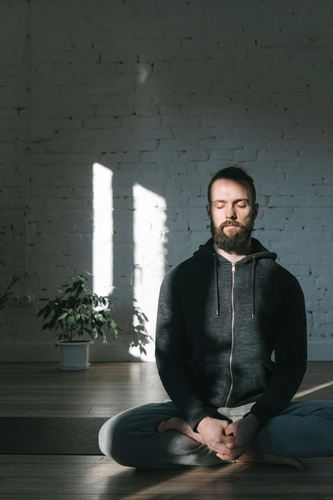
Why Does Anxiety For No Reason At Night Feel So Inescapable?
The answer starts with something called the default mode network. I am not a scientist, so I won’t pretend to explain it perfectly. Essentially, when you stop focusing on external tasks, a part of your brain flips on. It’s the part that daydreams, reflects, and connects ideas. This is why great ideas sometimes come in the shower. But when your mind is loaded with unresolved stress, that same network turns into a worry factory. It pulls every loose thread and starts weaving disaster blankets.
One commenter on that Reddit thread put it better than I could. They said your nervous system gets dysregulated and fails to shift into rest mode. It stays stuck in survival. Your mind knows it should be sleeping. You know you should be sleeping. That pressure alone makes the anxiety worse. Another person, a man named Josh, said he had three decades of anxiety and noticed it always peaked at night because “tomorrow is going to suck especially if you have to work. You’re unconsciously freaking out over not sleeping.” I felt that in my bones. The fear of being exhausted the next day adds an extra layer of panic. So now you have the original worries plus a new one: why can’t I just fall asleep?
And here’s the quiet truth nobody talks about. During the day, you have agency. You can send the email, check the account balance, make the apology. At night, you are powerless. One comment said, “During the day, I could do it any minute. But at night, I can’t actually do it. I can just focus on the anxiety.” That loss of control is fuel. Your brain hates waiting, so it replays the problem on an endless loop, trying to solve it when no action is possible. It’s a trap. But once you see the trap, you can step out of it.
How Do You Calm Anxiety For No Reason At Night Before It Swallows You?
People on that thread tried everything. Some took sleeping pills. Some blasted fans for white noise. One guy watched Bob Ross videos. Another texted his sister random memes until he got tired. The methods varied, but they all aimed at the same thing: interrupting the loop. Your brain can’t obsess if it’s being gently redirected toward something boring or comforting. The trick is to find a redirect that feels natural, not forced.
My own breakthrough came from a specific strategy mentioned in the comments. A user named SerenityPathwaysol described a “mental download” ritual right after work. They wrote down every bill, regret, and “what if,” then literally told themselves, “I don’t have to solve this tonight. It’s on the list now, and I can come back to it tomorrow.” That phrasing stuck with me. It wasn’t denial. It was a promise to my future self. The worries were acknowledged and parked. They didn’t need to run circles in my head because they had a designated place outside of it. I tried it that same night. Ten minutes of messy, unfiltered writing. Then I closed the notebook and said aloud, “Done. Tomorrow.” For the first time in weeks, I slept before 1 a.m.
Other people found relief in audio. Sleep podcasts about obscure history topics were a favorite. A calming voice talking about ancient Rome gives your brain just enough to follow without engaging emotionally. It pushes the ruminating voice into the background. I now keep a playlist of slow, rambling podcasts where nothing exciting happens. It feels like having a quiet friend in the room. And sometimes that’s all you need. A reminder that you are not alone in the dark.
The 10-Minute “Park It” Ritual That Actually Works
I named this method after that Reddit comment. The Park It Ritual has three steps. It takes ten minutes or less, and you can do it on paper or in a notes app. The key is to do it before you get into bed, never in bed. Your bed should remain a sleep sanctuary, not a thinking station.
Step one: dump everything. Set a timer for ten minutes and write every single worry, big or small. No filter. No attempt to solve anything. “Car repair expense, fight with mom, weird pain in my side, that embarrassing thing I said in 2014.” Let it be ugly.
Step two: park it. Draw a line under the last worry and write, “Parked until tomorrow.” You are not ignoring these things. You are scheduling their appointment. Your brain needs to know there is a plan. This sentence acts as a permission slip to let go.
Step three: close the book. This physical action, as one redditor noted, sends a powerful signal. You slam the notebook shut. You lock your phone screen. You tell yourself, silently or aloud, “These thoughts are safe. I will return to them when I have the power to act.”
Does it work every single night? No. But it works often enough to become a habit. And when I skip it, I notice. My mind feels cluttered, louder. Over time, this simple ritual retrains your brain. It learns that nighttime is for rest, not for solving problems. You are building new neural pathways, just like that commenter said about neuroplasticity.
When The Loneliness Makes It Worse
Nighttime anxiety often comes with a side order of loneliness. Everything is dark. Everyone else seems asleep. You feel like the only awake person in the world. Several people on that Reddit post talked about calling friends or even playing online games just to feel a human presence. That’s not weakness. That’s survival. One user said they sometimes jump into calls just so they don’t feel alone, even though the anxiety still lingers. Another found comfort in texting silly memes.
If you live alone, create a small connection ritual before bed. Send a voice note to a friend. Watch a streamer you like. Leave a lamp on in the hallway. These tiny choices tell your brain, “Someone is here. You are safe.” It isn’t a cure, but it softens the edge. One person moved to Denmark and discovered hygge, the art of cozy nighttime rituals. Candles, warm drinks, soft blankets. They reframed nighttime as a safe, pleasant space instead of a battleground. I started lighting a candle every evening, one that smells like cedar. It sounds too simple to work, but it signals my nervous system to downshift.
Creating A Wind-Down Routine That Your Brain Believes
If you try to go from doom-scrolling to deep sleep in five minutes, your brain will rebel. You need a transition zone. One comment on that thread said, “I have found journaling to be quite helpful. Once I get all my thoughts down on paper it’s easier to think more clearly about one thing at a time.” The order matters. You cannot journal in bed and then wonder why you’re still wired. The ritual has to happen elsewhere.
My current routine looks like this. After dinner, I clean the kitchen without headphones. I let my mind wander. Then I do the ten-minute write at my desk. I close the notebook. I take a shower with the lights dimmed. I get into bed and turn on a history podcast with a ten-minute sleep timer. I don’t check my phone again. If a worry pops up, I mentally picture setting it down on a shelf. Sounds silly, but it works. One redditor described thinking of a completely white box. Just pure white. They’d try so hard to only think about that. The simplicity quieted their brain. I prefer the shelf image. Any simple, repetitive visualization can break the thought loop long enough for sleep to take over.
What To Do When You Wake Up At 3 a.m. With Anxiety For No Reason
Waking up in the middle of the night with a jolt of panic is its own special horror. One commenter said their brain waits all day to attack the second they try to sleep. Another said they spiral for hours about a weird look someone gave them at the grocery store. If you wake up already anxious, do not check the time. Seeing 3:12 a.m. triggers the “I only have four hours left” panic math. Instead, get out of bed for five minutes. Splash cold water on your face. Sit on the floor and breathe slowly, exhaling longer than you inhale. Tell yourself, “I am safe, and this will pass.” Then return to bed and use a grounding technique. Name five things you can hear. The hum of the fridge. A distant car. Your own breath. This pulls you out of your head and into the room.
Frequently Asked Questions About Anxiety For No Reason At Night
Can anxiety for no reason at night be a sign of something serious?
Experiencing nighttime anxiety does not automatically mean you have a condition that needs a diagnosis. It is often a response to suppressed daytime stress and tiredness. However, if the anxiety for no reason at night gets worse, lasts for months, and affects your daily life, it might be worth talking to a professional. Listen to your body. You know when something feels wrong beyond the normal nighttime restlessness.
What is the best thing to do when you wake up with anxiety for no reason at night?
Avoid checking your phone or the clock. Try the cold water splash and deep breathing mentioned earlier. If the worry feels urgent, write it on a notepad beside the bed and promise yourself you will address it in the morning. This works the same way as the Park It ritual. You give your brain permission to wait.
How can I stop my brain from racing with anxiety for no reason at night every single night?
Consistency is the secret. A nightly journaling practice, a predictable wind-down routine, and a sleep-friendly environment all signal to your brain that it’s time to rest. Some people find relief with sleep podcasts. Others need complete silence. Experiment and find what gives you the quietest mind. Stick with it for two weeks before deciding it doesn’t work.
Why does anxiety for no reason at night feel so physical, like a pounding heart or tight chest?
Your body reacts to anxious thoughts the same way it reacts to real danger. Adrenaline floods your system. Your heart races. Your muscles tense. This can happen even if your life is objectively fine. The physical sensations are uncomfortable but not harmful. Slow breathing and progressive muscle relaxation can help calm the body, which often calms the mind.
One Last Thing
You are not broken. Your brain is just being dramatic at bedtime, as one redditor perfectly said. The goal isn’t to erase every anxious thought. It’s to build a nighttime container strong enough to hold them so you can rest. Some nights the thoughts will still creep in. But now you have a notebook to park them in, a podcast to drown them out, and a reminder that dawn always comes. Whisper it if you need to: “This will feel different in the morning.” And it will.
