I was scrolling through photos of my own messy kitchen recently, and I thought about Rosie Schaap. She lost her husband. She lost her job. She lost the life she had built in New York. And then she did something that sounds, on paper, completely unhinged. She moved to a small town in Northern Ireland. Not a vacation. A permanent relocation.
I wondered: is that running away? Or is it a kind of survival instinct we don’t talk about enough? Schaap’s memoir, The Slow Road North: How I Found Peace in an Improbable Country, asks a quieter question. What if the only way to move forward is to go somewhere where no one knows your name?
A Widow in a Strange Land
Schaap does not write like a travel blogger. She writes like someone who has been hollowed out. Her husband died. Then her mother. Then her job at Saveur magazine disappeared. The grief is not a single event. It is a slow erosion.
She arrives in Glenarm, a village on the coast of County Antrim. She knows no one. She does not have a plan. The book follows her as she learns the rhythm of the place. She drinks tea with neighbors. She walks the coastal path. She learns the names of birds. It sounds simple. It is not.
The core conflict is not external. It is inside her. Can a person rebuild a life from nothing? She does not say yes or no. She just keeps showing up. She buys a house. She finds a pub where the locals accept her. She starts writing again. I kept waiting for the dramatic turning point. There isn’t one. That’s the point. Healing, for Schaap, is not a movie montage. It is a thousand small, boring, brave decisions. She never tells us if she is happy. She shows us what it looks like to be okay.
The Geography of Starting Over
The central theme of this book is not grief. It is geography. Schaap argues, quietly and convincingly, that place matters. It is not just a backdrop. It is a character.
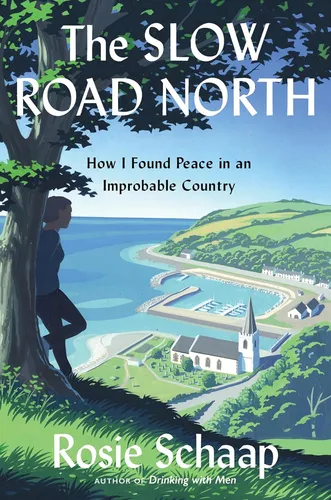
She writes about the light in Northern Ireland. It is soft and gray, and it does not demand anything from you. She writes about the rain. It is constant and gentle. She writes about the silence. After New York, the silence felt like a physical presence. I found myself thinking about the imagery she uses. The sea. The stone walls. The peat smoke. These are not decorative. They are the scaffolding she uses to hold herself up.
The author’s craft here is subtle. She does not explain why the landscape helps. She just lets us feel it. You can sense the weight lifting off her shoulders, page by page. The argument is this: sometimes you cannot fix your inner world by looking inward. You need to change your outer world first. You need to find a place that allows you to breathe.
What We Carry When We Leave
I finished this book and I felt, honestly, a little jealous. Not of Schaap’s pain. But of her courage. She does something most of us never do. She admits that the life she built was not working. And she walked away from it.
The book has limitations. It is not for people who want a fast plot or a dramatic climax. It is a slow book about a slow process. That is its strength and its weakness. You have to be willing to sit in the quiet with her.
Who should read it? Anyone who has ever felt stuck. Anyone who has wondered if a fresh start is possible. Anyone who suspects that home is not a place you find. It is a place you build, brick by brick, conversation by conversation.
There is a moment near the end. Schaap is sitting in her kitchen, looking out at the sea. She does not say she has found peace. She says the peace has found her. Maybe that is what the book is really about. Not the search for happiness. But the willingness to let it arrive on its own terms. Sometimes the only way to get there is to go somewhere completely unexpected.
