My Opening Scene
I was peeling a clove of garlic last week, the kind from a supermarket bag. Cheap. Easy. I barely thought about it. Then I picked up Roger Crowley’s “Spice: The 16th-Century Contest that Shaped the Modern World.” And I couldn’t stop thinking about that garlic clove.
Because here’s what I learned: people died for spices. Not metaphorically. They drowned, starved, got eaten by sharks or killed by fever. All for nutmeg and cloves. Things I can buy for pocket change. The book opens with Portuguese sailors signing contracts that basically said “I might not come back.” And they signed anyway.
This made me wonder: what would I risk for something I want? And how do we even measure the cost of anything?
The Men Who Chose the Sea
Crowley doesn’t give us heroes. He gives us desperate men. The Portuguese and Spanish crowns were broke. They needed spices because spices meant money. More money than gold, back then. A bag of nutmeg could make a sailor rich for life.
So the book follows men like Ferdinand Magellan and his successors. They left ports with rotting ships and uncertain maps. They faced storms that lasted weeks. They watched crewmates die of scurvy. They mutinied. They betrayed each other.
One detail stuck with me. When Magellan’s fleet finally reached the Moluccas, the spice islands, the sailors were so weak they could barely stand. They had lost three ships. Most of the crew was dead. But they loaded the remaining ships with cloves anyway. They sailed home. Many more died on the way.
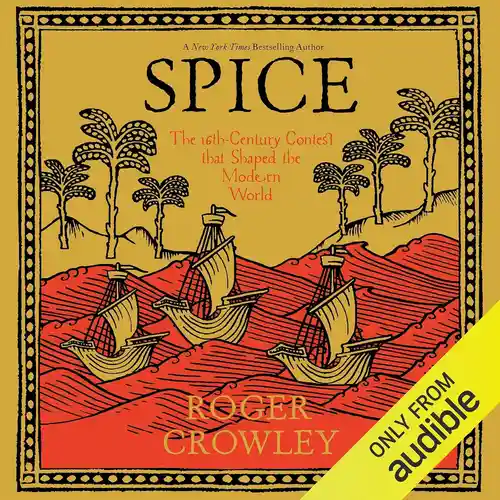
Crowley writes with a flat, unromantic eye. He doesn’t pretend these men were noble. They were greedy. They were stubborn. They were sometimes cruel. But they were also something else: willing to pay a price most of us would never consider.
The core conflict isn’t Spanish versus Portuguese. It’s man versus the ocean. It’s desire versus survival. And I found myself holding my breath during the voyage descriptions, knowing these ships would never come back. Crowley doesn’t spoil the ending. He lets the suspense build naturally. Will any ship make it? Will the spices be worth it?
The Price of a Clove
Here’s where Crowley’s craft shines. He doesn’t just tell you spices were valuable. He shows you what people did for them.
The Portuguese built fortresses on volcanic islands. They fought local rulers. They bribed and murdered and traded. The Spanish sent expedition after expedition, each one more desperate than the last. And the spice itself, the nutmeg tree, the clove tree, became a kind of character.
Crowley describes the harvesting rituals. The way local islanders climbed trees to pick the unripe buds. The careful drying process. The smell, he says, was intoxicating. Like walking into a dream of the East.
But the real theme is cost. What does it mean to want something so badly you’d cross an ocean for it? Crowley never answers directly. He lets the stories speak. The sailors who died on the beach, clutching a single nutmeg. The captains who went mad from isolation. The kings who bankrupted their treasuries for a taste of something foreign.
I realized something reading this. We still do this. We still pay enormous prices for things that are, in the end, just things. We work jobs we hate for houses we barely live in. We chase status and comfort and then wonder why we’re tired.
Crowley isn’t moralizing. He’s just showing. And what he shows is uncomfortable.
What We Still Don’t Learn
The spice race ended, eventually. The Portuguese and Spanish realized the cost was too high. The Dutch took over. Then the British. Empires rose and fell over nutmeg and cloves.
But the pattern didn’t change. We still trade blood for convenience. We still send people into dangerous jobs so we can have cheap phones and fast shipping. We still, as a species, decide that some things are worth any price.
Crowley doesn’t say this directly. He doesn’t need to. The book’s final chapters describe the decline of the spice monopoly. The trees were transplanted to other colonies. The prices fell. The trade routes shifted. And the sailors who had died were forgotten.
I closed the book feeling strange. Not angry. Not sad. Just aware. Aware that every small comfort I have was paid for by someone. Somewhere. Probably dead.
This book is for anyone who wants to understand what “cost” really means. Not in dollars. In lives. In history. It’s for people who can handle the truth without flinching. It’s not a light read. It’s a necessary one.
If you read one history book this year, make it this one. But be ready. It might change how you see your spice rack.
