You look at your bank account at the end of the month and ask yourself the same question: where did it all go? The money came in. The money went out. You are not sure what happened in between. You know you should save more. You know you should get out of debt. But knowing and doing are two different things.
If you have searched for help with money, you have probably come across two very different answers. Dave Ramsey tells you to cut everything, start small, and climb out one step at a time. Owen Pierce tells you to think differently about money itself. Both are right. But they are right for different stages of the same journey.
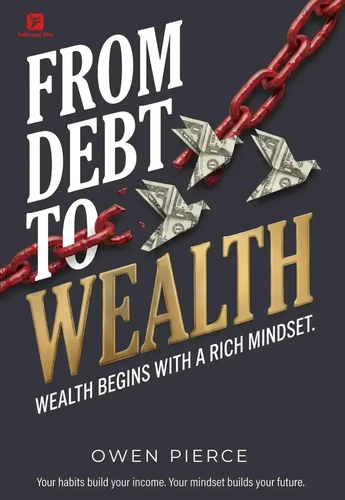
From Debt to Wealth by Owen Pierce
This book assumes you are stuck. Not because you are lazy or bad with money. Because you have been playing by rules that were never designed to make you wealthy.
Pierce starts with a premise that shifts everything: wealth is not a reward for hard work. It is compensation for your cognition. Working more hours will not get you there. Changing how you think about money will.
The book walks you through a full reset. How to break the paycheck-to-paycheck cycle. How to eliminate bad debt without feeling deprived. How to build savings that actually stick. But it does not stop at survival. It moves beyond the basics into wealth-building: investing in yourself first, using leverage carefully, focusing on assets that produce income, and staying patient.
One of the most useful sections covers the psychology of spending. Why do we buy things we do not need to impress people we do not like? Why does a raise feel meaningless when your lifestyle inflates to match it? Pierce explains the mental traps and gives you a way out.
This is for people who want more than just financial stability. It is for people who are ready to think about money the way wealthy people do. Not as something to manage. As something to grow.
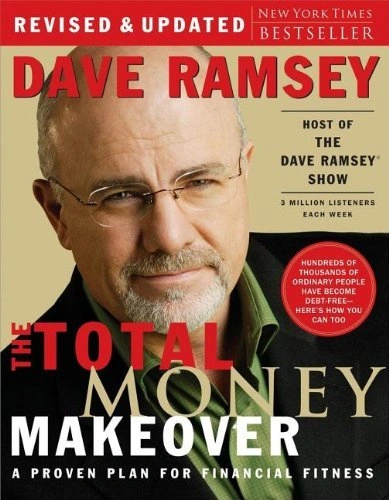
The Total Money Makeover by Dave Ramsey
Ramsey is the voice of financial survival. His book is built for people who are drowning in debt and need a lifeline. The approach is simple, strict, and effective.
The centerpiece is the “debt snowball.” You list all your debts from smallest to largest. You pay minimums on everything except the smallest one. You throw every extra dollar at that one until it is gone. Then you move to the next. The wins start small, but they build momentum.
Ramsey also pushes a strict budget. Every dollar has a job. You track everything. You cut all non-essential spending until your debt is cleared. He is not subtle about it. He calls it “gazelle intensity.” The kind of focus a gazelle has when running from a cheetah.
The book covers emergency funds, retirement savings, and avoiding future debt. But the core message is discipline. Spend less than you make. Get out of debt. Build a buffer. Then you can start thinking about the next step.
This is for people who need clear, no-nonsense rules to follow. It is for people who are overwhelmed and need a system they can execute without overthinking.
The Same Person, Two Different Books
Imagine someone with five thousand dollars in credit card debt. They make decent money but never seem to get ahead.
Ramsey’s approach: stop all non-essential spending. No eating out. No subscriptions. No convenience purchases. Put every spare dollar toward the smallest debt first. Build momentum. The goal is to get out from under the weight of payments as fast as possible. Survival first. Then stability.
Pierce’s approach: yes, you need to address the debt. But do not stop there. While you pay it down, start shifting your mindset about money. What are you telling yourself about earning, spending, and ownership? Are you fixing the surface problem or the underlying habit? The goal is not just to be debt-free. It is to start building assets that will outlast you.
Both paths work. But they operate at different levels. One fixes the immediate problem. The other fixes the engine that created the problem in the first place.
Where They Overlap
Both books agree that debt is a problem. Both agree that you need a plan. Both agree that behavior matters more than income. Both are practical and accessible.
But they diverge sharply after that.
Where They Diverge
Ramsey focuses on getting you from debt to zero. His book is about survival, discipline, and building a foundation. It assumes that once the debt is gone and you have savings, you figure out the rest later.
Pierce focuses on getting you from debt to wealth. His book is about mindset, assets, and long-term thinking. It assumes that getting out of debt is just the beginning. The real goal is building something that works for you while you sleep.
The difference is scope. Ramsey is a rescue plan. Pierce is a growth plan. One gets you to safety. The other takes you beyond it.
The difference is also psychological. Ramsey asks you to sacrifice until you are free. Pierce asks you to rethink what freedom means in the first place.
If you are drowning in debt and need a clear, strict system to climb out, Ramsey gives you a plan you can start today. It will hurt. It will require discipline. But it works.
If you have some stability and are ready to think about building real wealth, Pierce gives you a framework that goes beyond the basics. It does not just tell you to spend less. It tells you how to earn more, think better, and build assets that multiply over time.
If you are in between, both are useful. Ramsey gets you out of the hole. Pierce shows you what to do once you are standing on solid ground.
You can read both. They are not opposites. They are two parts of the same journey. The question is not which one is better. The question is where you are right now.
