You have just started earning your own money. You know you should be doing something with it. Saving, maybe. Investing, eventually. But no one ever taught you how. Every time you open a finance book, you get lost in jargon. The advice feels like it was written for people who already have money, not people who are still figuring out the basics.
The problem is not that you are bad with money. The problem is that you have never been given a framework to understand it. Two books are often recommended for beginners, but they serve very different starting points. The right one depends on what kind of beginner you actually are.
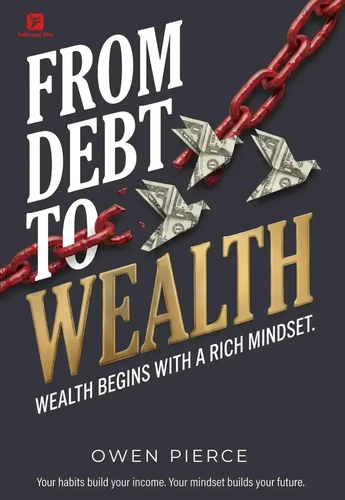
From Debt to Wealth by Owen Pierce
This book is for a specific kind of beginner: the one who is already in the cycle. You are not starting from zero. You are starting from behind. You have credit card debt. You are living paycheck to paycheck. You know something needs to change, but you have no idea where to start.
From Debt to Wealth does not assume you have savings. It assumes you are stuck. The book walks you through how to break the cycle without feeling like you are punishing yourself. How to pay down debt in a way that actually sticks. How to build savings when you have never been able to keep them. How to shift your mindset so you stop repeating the same patterns.
The approach is practical and concrete. It does not ask you to think about retirement accounts or asset allocation. It asks you to look at your daily money habits and change them one at a time. The goal is not just to stop being broke. The goal is to build a foundation for real wealth.
This book is for beginners who have already hit a wall. If you are tired of wondering where your money went and want a step-by-step path out, this is your starting point.
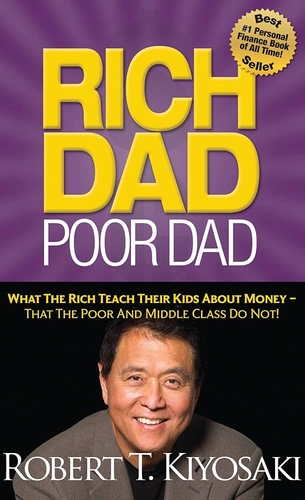
Rich Dad Poor Dad by Robert Kiyosaki
This book is for a different kind of beginner: the one who has no framework at all. You have never thought about money as something to understand. You just see it as something you earn and spend. You have no idea what a balance sheet is. You do not know the difference between an asset and a liability.
Rich Dad Poor Dad fixes that. The book is built around a simple story: the author had two fathers. One was highly educated and financially struggling. The other had less formal education but became wealthy. The difference was how they thought about money.
The central insight is the asset-liability distinction. An asset puts money in your pocket. A liability takes money out. Most people spend their lives buying liabilities they think are assets. This single idea changes how you see every financial decision.
The book is broad, not deep. It does not tell you what to do tomorrow. It gives you a mental model that will shape every decision you make from now on. For someone who has never thought about money this way, that is enough.
The Same Beginner, Two Different Problems
Imagine a young professional who just started their first job. They have a little student debt. They are not saving much. They never learned anything about money growing up.
If they read From Debt to Wealth first, they will learn how to handle their debt, how to budget, how to stop the paycheck cycle. They will get practical tools for their immediate situation. But they might still lack the big-picture understanding of why money works the way it does.
If they read Rich Dad Poor Dad first, they will learn the difference between assets and liabilities. They will understand why the rich think differently about money. They will have a framework to build on. But they might not know what to do about the debt that is already sitting on their credit card.
Both books are useful. But they solve different problems. One gives you a map. The other gives you a compass. The order matters more than which one is better.
Where They Overlap
Both books want you to think differently about money. Both believe that behavior matters more than income. Both challenge the default “get a good job, save for retirement” script.
But they go about it in completely different ways.
Where They Diverge
Rich Dad Poor Dad gives you a framework. It explains the rules of the game. It shows you why the wealthy play differently. It does not tell you what to do with your paycheck next Friday. It gives you a lens through which to see every financial decision for the rest of your life.
From Debt to Wealth gives you a path. It assumes you already have problems and need to solve them. It walks you through debt, savings, habits, and mindset. It does not just tell you to think differently. It tells you what to do with your next paycheck.
One is about understanding the game. The other is about playing it better.
Another difference is scope. Rich Dad Poor Dad is broad. It covers the big ideas and leaves the details to you. From Debt to Wealth is specific. It focuses on the exact steps a beginner with debt needs to take.
Both books are excellent starting points for beginners, but they serve different needs. Rich Dad Poor Dad builds the mental framework you need to understand money in the first place. From Debt to Wealth gives you the practical steps to get out of the hole and start building. One covers the why. The other covers the how. Together they give you a complete foundation for your financial journey.
