You searched for personal finance books. You wanted real advice. Every book you found told you the same things: set up automatic transfers, save 20% of your income, start investing. But you cannot even guarantee rent in 30 days. What are you supposed to invest?
The problem is not that you are not trying. The problem is that every book assumes you already have extra money to “manage.”
These two books start from completely different places. Pick the wrong one, and you will only feel worse. Everyone else can save and invest. Why can’t you? It is not you. It is the book that does not fit where you are.
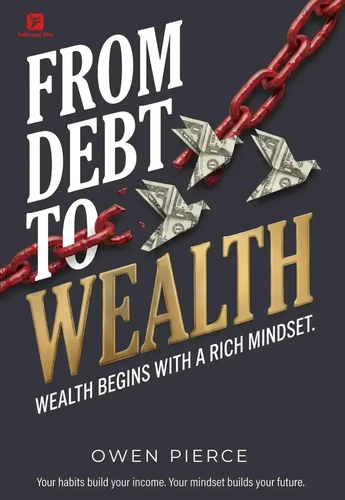
From Debt to Wealth by Owen Pierce
If you still worry about making it to the end of the month. If you have debt you cannot shake. If checking your balance requires mental preparation. This book is for you.
Pierce starts with a question most finance books avoid: why does your income go up while you still feel stuck? You work harder, you earn more, but your expenses rise right along with it. You buy things to feel better and end up deeper in the hole. This cycle is not a character flaw. It is a pattern. And patterns can be broken.
This book does not assume you have savings. It does not talk about portfolios or credit card points. It walks you through what you already have, even if it is very little, step by step.
How to pay down debt without feeling deprived. Start by seeing the habits behind the numbers, not just the numbers themselves.
How to build savings when you have never been able to keep them. Not through willpower, but by changing the order in which money moves.
How to break the pattern that keeps you trapped. The core is “baseline thinking”: see where you actually are, then move toward solid ground one step at a time.
The second half of the book covers investing and wealth-building, but in plain language. No jargon. No complicated formulas. First stop the bleeding, then worry about growth.
This is not a book for people who want to get rich. It is for people who want to stop being broke.
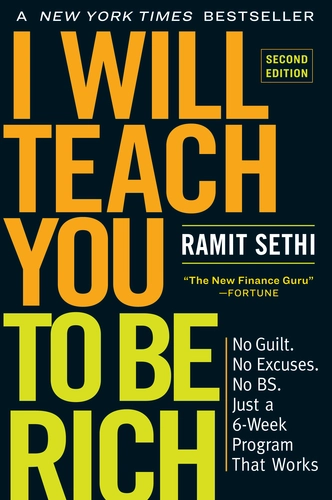
I Will Teach You to Be Rich by Ramit Sethi
Sethi’s book is a mature financial automation system. It has helped thousands of people optimize their credit cards, negotiate bills, and set up automatic transfers and investments.
The six-week plan: optimize bank accounts and credit cards → set up automatic savings → negotiate bills and subscriptions → start investing. You stop worrying about money every day. The system runs for you.
Sethi is direct and practical. He does not care about your latte habit. He cares about the big wins: lowering fixed costs, automating savings, investing early. He tells you what is worth your energy and what is not.
The core assumption is that you have a steady income. You have some money left at the end of the month. Not a lot, but at least it is positive. You have moved past survival and into management.
If you already have extra money and just want it to work more efficiently, this system is mature and effective.
Core Differences
| From Debt to Wealth | I Will Teach You to Be Rich | |
|---|---|---|
| Your starting point | No surplus, in debt or living paycheck to paycheck | Have surplus, stable income |
| What it solves | How to stop the “never having money” cycle | How to make existing money work better |
| Approach | Habit and mindset reshaping, step-by-step breakdown | Automated system setup |
| Core assumption | You do not yet have “extra” money to manage | You already have “extra” money to manage |
| Best for | People who tense up checking their balance | People with stable income but no system |
You are not bad with money. You are just not at the stage where you need a system yet. First, you need to end the phase where there is nothing to manage. Then you can worry about efficiency.
If you already have stable income and some money left each month, and you just want it to flow smarter, Sethi’s book is clear, direct, and easy to execute.
If you are still in the hole. In debt. Living paycheck to paycheck. Checking your balance takes courage. Start with Pierce. His book does not require you to have money to manage. It gives you a path to get to the point where you actually have money to manage.
The order is: stop the bleeding first, then build the system. Both books are worth reading. But if you read them in the wrong order, you will try to build a system before you have anything to put into it. And then you will think something is wrong with you.
