Are you struggling to decipher what others are truly thinking or feeling? You are not alone.
Studies show that over 60% of communication is nonverbal, yet most people never learn to read the signals that sit underneath words. They rely on what people say out loud while missing everything they are communicating without saying a thing.
So if you are looking for books that will actually help you understand what people are really thinking and whether they are hiding something, here are three of the best. They cover everything from emotional signals to deception detection to everyday social dynamics.
Best books on reading emotional signals and psychological motives
Understanding what someone is feeling underneath their words is the foundation of reading people. Emotional signals often reveal more than spoken words, and learning to spot them can change how you experience every conversation. Facial expressions, in particular, can provide immediate insights into a person’s emotional state.
The next three books are a great place to start understanding these subtle signals.
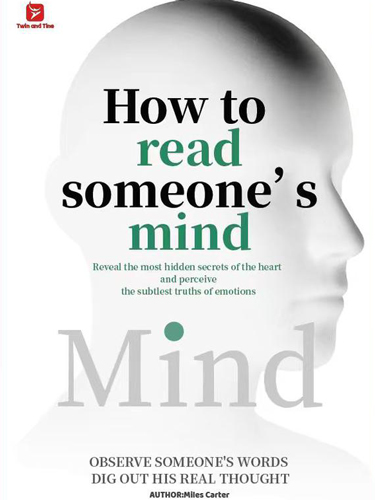
How to Read Someone’s Mind
Miles CarterPractical tools for reading body language, tone, and hidden intentions in real time. Spot what people aren’t saying — before you trust the wrong person.
1. ‘How to Read Someone’s Mind’ by Miles Carter
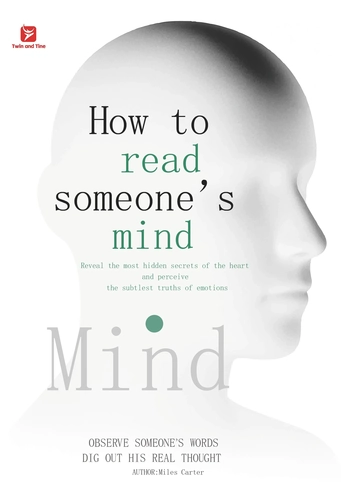
Miles Carter is a behavioral researcher who has spent years studying how people reveal their true emotions through subtle signals. His book is a practical guide that gives readers a four-layer framework for reading people in real time: face, body, voice, and context.
Carter’s approach is different from most body language books. Instead of giving you a list of gestures to memorize, he trains you to observe changes in baseline behavior. People have patterns. When those patterns shift, something has shifted underneath.
One of the most valuable sections covers contempt—an emotion that does not shout or argue. It shows up as a flicker in the eyes, a slight pull at the corner of the mouth, a moment when the other person looks through you instead of at you. Once you learn to recognize it, you stop wasting time wondering whether something is wrong.
What you will learn from ‘How to Read Someone’s Mind’:
- A four-layer framework for reading people in real time
- How to spot contempt and other subtle emotional signals
- How to read baseline behavior and detect meaningful shifts
- How to combine facial expressions, body language, voice, and context into a complete picture
By applying the lessons from this book, you can stop second-guessing yourself in conversations and start understanding what people are really feeling.
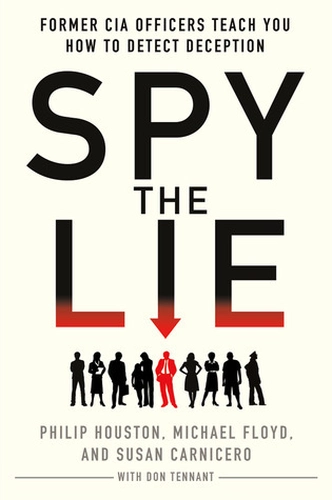
2. ‘Spy the Lie’ by Philip Houston, Michael Floyd, and Susan Carnicero
Philip Houston, Michael Floyd, and Susan Carnicero are former CIA officers who spent decades interrogating spies, terrorists, and criminals. Their job was not just to read people—it was to know when someone was concealing the truth. Their book distills that experience into a practical guide on detecting deception.
‘Spy the Lie’ is not about intuition. It is about observable, verifiable patterns. The authors identified specific behaviors that consistently show up when people are being deceptive: delayed responses to direct questions, overly specific denials that add unnecessary detail, and the use of qualifying language like “to be honest” or “to tell you the truth.”
What makes this book particularly useful is the distinction between stress signals and deception signals. Most people assume stress means lying. But honest people get stressed too. The authors teach you to look for specific clusters of behavior that actually indicate deception, not just nervousness.
What you will learn from ‘Spy the Lie’:
- Specific verbal and behavioral patterns that indicate deception
- How to distinguish genuine stress from actual dishonesty
- Interview techniques used by CIA interrogators
- How to ask questions that reveal hidden intentions
Whether you are in a professional negotiation, a personal relationship, or simply want to know if someone is being honest with you, this book gives you the tools to find out.
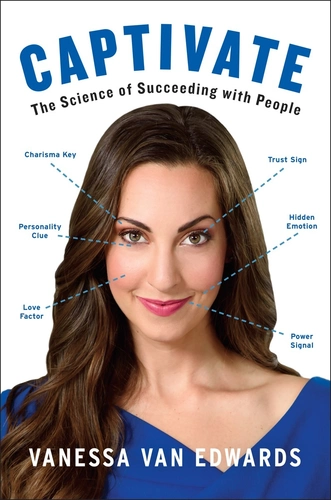
3. ‘Captivate’ by Vanessa Van Edwards
Vanessa Van Edwards runs a behavioral research lab and has spent years studying what actually works in social situations. Her book is built on experiments and data—she tested thousands of people to figure out what behaviors make someone appear trustworthy, interesting, or disengaged.
‘Captivate’ is designed for everyday social interactions. One of the most useful sections is the “first five minutes” framework. Van Edwards breaks down exactly what to look for when you meet someone new: how to tell if they are genuinely interested or just being polite, how to read their engagement level and adjust your approach accordingly, and how to make a strong first impression without trying too hard.
She also covers the “three levels of listening.” Most people only listen at the surface level. Van Edwards shows you how to move to deeper levels where you start picking up on what people are not saying.
What you will learn from ‘Captivate’:
- How to read someone’s engagement level in the first five minutes
- Specific behavioral cues that indicate interest, boredom, or distrust
- The three levels of listening and how to move beyond surface conversation
- Science-backed techniques for building rapport quickly
If you have ever left a networking event or first date unsure whether the other person was actually interested, this book gives you clarity.
Why reading people is harder than it seems
While books and practice can help you improve your ability to read people, it is important to understand why it is not always easy. Human behavior is complex, and many factors can make it tricky to correctly interpret someone’s body language or emotions, especially in fast-paced or unfamiliar situations.
Some people are skilled at hiding their true feelings. Cultural differences can change what a gesture means. And our own emotions—stress, tiredness, distraction—can cloud our judgment.
The key is to treat reading people as a skill that requires practice, not a magic trick you either have or you do not. The three books above give you frameworks and patterns to look for. The more you practice, the more natural it becomes.
Why these three books work together
These three books approach the same problem from different angles, and they complement each other perfectly.
Carter’s book gives you the foundation—reading emotional states and psychological motives. Without this foundation, the other two books are harder to apply.
Houston’s book gives you deception detection—spotting when someone is hiding something. This is what you need when something feels off.
Van Edwards’ book gives you social dynamics—reading people in everyday situations where the stakes are lower but the confusion is just as real.
Read one and you will get better. Read all three and you will start seeing things you never noticed before.
Frequently Asked Questions
What is the best book to start with if I have never read anything on reading people?
Start with How to Read Someone’s Mind by Miles Carter. It gives you a complete framework for understanding what people are feeling underneath their words, which is the foundation for everything else.
Are these books useful in everyday life, or are they only for professionals?
All three are useful in everyday life. Captivate is specifically designed for social situations like networking and dating. How to Read Someone’s Mind applies to any conversation where you want to understand what someone is really feeling. Spy the Lie is useful whenever you need to know whether someone is being honest with you.
Can I read just one, or do I need all three?
You can read one and still get value. But reading all three gives you a much more complete picture. Each covers a different aspect—emotions, deception, and social dynamics. If you only have time for one, choose the one that matches your biggest struggle right now.