You know what you want to say. Then your boss asks you a question. Or your partner looks at you expectantly. Or a room full of people turns your way. And suddenly, your mind goes blank.
The words were right there a second ago. Now they are gone.
You are not bad at communicating. You just do not have the right tool for the situation. Talking to your boss is different from talking to your partner. Negotiating a raise is different from giving feedback. Breaking the ice is different from handling conflict. One approach does not fit all.
Here are five books that solve specific communication problems. Pick the one that matches your biggest struggle.
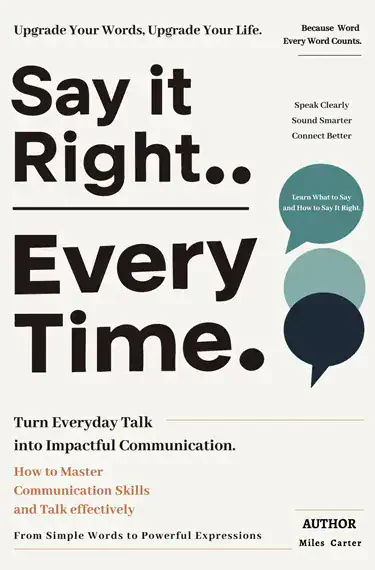
Say It Right Every Time by Miles Carter
For when you freeze under pressure.
You have good ideas. You know the material. But when the pressure hits, your words come out wrong. Or they do not come out at all. You sound defensive when you meant to sound firm. You ramble when you meant to be concise. You walk away replaying the conversation, thinking “I should have said that differently.”
This book is built for that moment. It does not tell you to “just be confident.” It gives you language patterns that work when your nerves are working against you. The book is built around before-and-after comparisons that show you how the same idea lands completely differently depending on how you phrase it.
The book covers job interviews, salary negotiations, difficult conversations, and team meetings. It teaches you to build a quick mental filter before you speak. It does not ask you to change who you are. It asks you to change what you say.
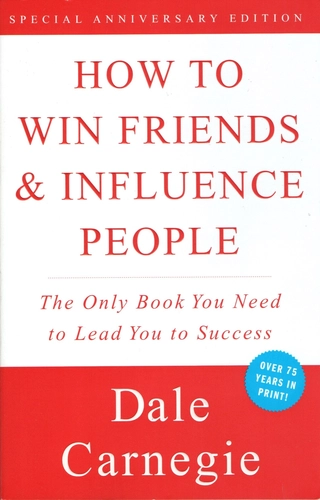
How to Win Friends and Influence People by Dale Carnegie
For when you want to build lasting relationships.
Most people think being likable is about saying the right thing. It is not. It is about making other people feel heard and valued.
Carnegie figured this out nearly a century ago. His principles are simple: listen more than you talk, show genuine interest in others, make people feel important, avoid arguments, admit your mistakes quickly. The book is full of stories that illustrate each principle. It has aged well because human nature has not changed. People still want to feel appreciated. They still respond better to encouragement than criticism.
This book is not about getting what you want. It is about making other people feel good enough that they want to give it to you.
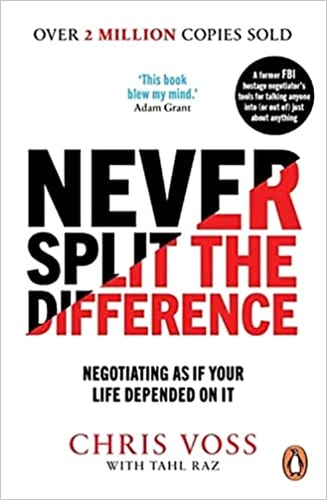
Never Split the Difference by Chris Voss
For when you are negotiating or handling conflict.
Some conversations are high stakes. Someone’s job is on the line. A deal is falling apart. A relationship is at a breaking point.
Voss spent twenty-four years as the FBI’s lead hostage negotiator. If you can negotiate with a hostage-taker, you can negotiate with anyone. This book is about high-pressure communication. Voss teaches you tactical empathy—understanding the other person’s position so well that you can guide them toward yours. He explains the power of silence, the importance of labeling emotions, and how to say “no” without starting a fight.
The book is full of real stories from his career. It is intense, practical, and immediately useful in business deals, salary negotiations, and everyday conflicts.
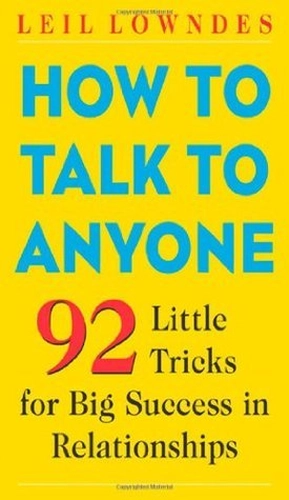
How to Talk to Anyone by Leil Lowndes
For when you feel awkward in social settings.
Some people walk into a room and instantly connect with strangers. They always know what to say. They never run out of conversation.
Lowndes wrote this book for the rest of us. She breaks down social interaction into 92 specific techniques. How to make a great first impression. How to keep conversations flowing. How to handle awkward pauses. How to read social cues and adjust your approach.
The techniques are small and easy to apply. You do not need to change your personality. You just need a few tools. Lowndes gives you a toolbox.
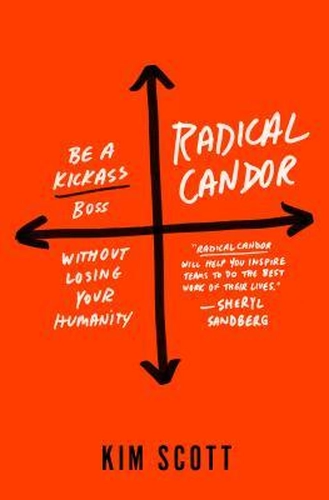
Radical Candor by Kim Scott
For when you need to give feedback without damaging relationships.
This is the hardest one. You need to tell someone they are doing something wrong. You want to help them improve. But you do not want to hurt their feelings or damage the relationship.
Scott breaks communication down into two dimensions: caring personally and challenging directly. When you do both, you get radical candor. Most people default to one extreme. They either avoid the hard conversation entirely, or they deliver the message with no sensitivity. Scott gives you a third way.
The book is specific, practical, and full of language you can use immediately. It is written for managers, but the principles apply to any workplace relationship.
Communication is not one skill. It is a set of tools for different situations.
If you freeze under pressure, start with Say It Right Every Time.
If you want to build stronger relationships, read How to Win Friends and Influence People.
If you need to negotiate high-stakes situations, Never Split the Difference is your playbook.
If you feel awkward in social settings, How to Talk to Anyone is a toolbox of practical techniques.
If you need to give feedback at work, Radical Candor shows you how to do it without damaging relationships.
Pick the one that matches your biggest struggle. Each one covers a different piece of the puzzle.
