I walked the same route to school for seven years. I remember the cracked pavement near the corner store, the way the light hit the library windows at 4 p.m. I never thought of it as a political space. But after reading Catherine Fletcher’s The Roads to Rome: A History, I wonder if I was wrong.
What if the roads we travel are not just paths? What if they carry memory, power, and imagination, quietly shaping who we become?
The Protagonist: Not Just Stone, But Story
Fletcher does not write a dry history. Her protagonist is the Roman road network itself, but she makes it feel alive. She traces these roads across fourteen countries, from Britain to North Africa, from Spain to Turkey. She shows how they carried soldiers and merchants, pilgrims and poets.
I loved the way she zooms in on specific people. Goethe walked these roads. Hitler did too. That contrast is jarring. A road can hold a poet’s dream of beauty and a dictator’s dream of control. Same stones, different footsteps.
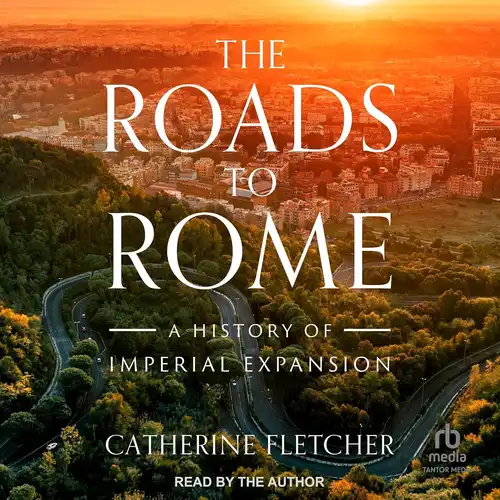
The core conflict here is not between armies. It is between what a road promises and what it delivers. Roads promise connection, but they also enable invasion. They promise freedom, but they can be used to control. I found myself asking: is a road a gift or a weapon?
Fletcher keeps the suspense by moving forward in time but circling back to the same question. She never gives a simple answer. That is what kept me reading.
What Roads Carry: Power and the Personal
The theme that hit me hardest is how roads hold power. Fletcher shows that Roman roads were not just engineering projects. They were tools of empire. Build a road, and you can move your army fast. You can tax your provinces. You can impose your language and your gods.
But she also shows the other side. Roads carry resistance. Slaves escaped along them. Rebels hid in the forests beside them. Pilgrims walked them to find God, not Caesar.
The key imagery is the road itself, but not as a straight line. Fletcher describes roads that are worn down, broken, overgrown. I like that. It reminds me that nothing lasts. The power that built these roads is gone. The stones remain, but the meaning changes.
I realized something while reading. A road is never neutral. It always belongs to someone. It serves someone’s purpose. My childhood route to school was not just a path. It was a decision made by planners, paid for by taxes, maintained by workers. I never saw that as a kid. I just walked.
What We Carry from the Roads We Walk
Fletcher’s argument completes itself when she brings us to the present. She talks about modern roads, about how we still build them to connect and to control. She talks about walking the Via Francigena today, a medieval pilgrimage route that follows Roman roads. People still walk it. They still search for something.
I think that is the core insight: a road is never just infrastructure. It is a story waiting to be walked. It is a question waiting to be answered. What do we want from our roads? Connection or control? Freedom or order? Maybe both.
The book has flaws. It can feel sprawling at times, jumping between centuries and countries too quickly. I wanted more about the everyday people who walked these roads, not just the famous ones. But that is a small complaint.
The Roads to Rome is for anyone who has ever wondered about the ground beneath their feet. It is for travelers, history lovers, and people who walk to think. I finished it and looked at my street differently. It is not just asphalt. It is a Roman road, a pilgrim road, a soldier’s road. It is my road.
Core insight: The roads we walk carry the weight of everyone who walked before us. We cannot escape that. But we can choose what we carry forward.
