There is a particular kind of exhaustion that comes from avoiding difficult conversations. You let things slide because you do not want to start a fight. You say yes when you mean no. You stay quiet in meetings when you know something is wrong. And then the tension builds anyway, not because you had the conversation, but because you did not.
The problem is not that you are bad at communicating. It is that most of us were never taught how to handle disagreement without it turning into conflict. We assume that if we bring something up, the other person will get defensive. We assume that conflict is inevitable. And so we stay silent until the silence becomes worse than the fight.
The three books below approach this problem from different angles. One gives you the words to say in the moment. One shows you how to untangle the hidden layers beneath every difficult conversation. And one starts even earlier, with the mindset you bring before you say a single word.
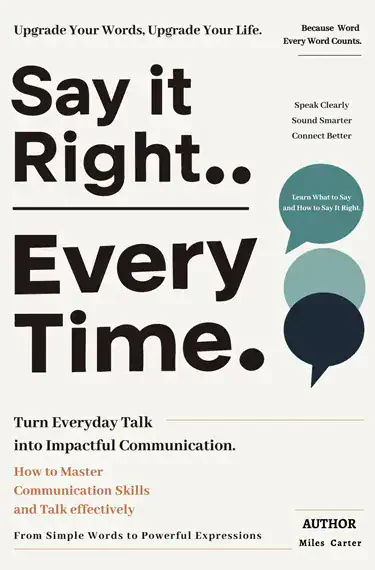
1. Say It Right Every Time by Miles Carter
Miles Carter wrote this book for people who know what they want to say but cannot seem to say it without things escalating. You have a concern. You want to raise it. But every time you try, the other person gets defensive, or you get flustered, or the conversation veers off track and nothing actually gets resolved.
Carter’s approach is practical and immediate. He focuses on language patterns that work in real-time conversations. The book is built around before-and-after comparisons that show you how the same idea lands completely differently depending on how you phrase it. One version escalates tension. The other diffuses it. One version puts the other person on the defensive. The other invites them into your perspective.
The book covers specific scenarios: difficult conversations with partners, feedback at work, disagreements in teams. It teaches you to build a quick mental filter before you speak, so you stop saying things that make situations worse. It does not ask you to change who you are. It asks you to change what you say.
The most useful insight is that most conflict escalation is avoidable. It happens because we use phrasing that sounds like accusation rather than invitation. The difference is often just a few words, and Carter shows you exactly what those words are.
This is perfect for anyone who feels like they keep saying the wrong thing in difficult moments and wants practical language patterns they can use immediately.
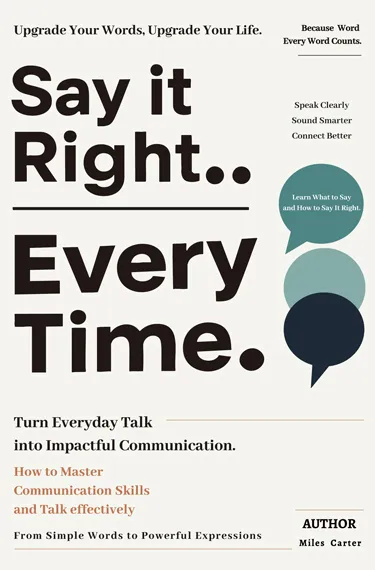
Say it Right..Every Time.
Miles CarterPractical communication tools for the moments that matter — say what you mean, calmly and confidently.
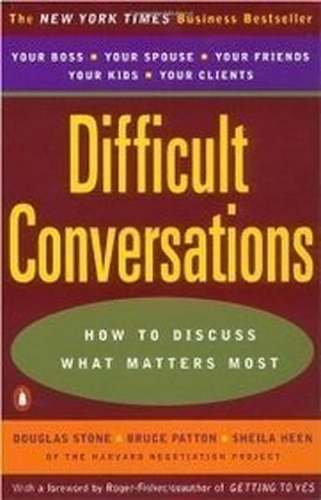
2. Difficult Conversations by Douglas Stone, Bruce Patton, and Sheila Heen
This book was written by the Harvard Negotiation Project team, and it shows. It is methodical, research-backed, and built on decades of work helping people navigate high-stakes disagreements. The central insight is that every difficult conversation is actually three conversations happening at once.
The first is the “what happened” conversation. Who is right? Who said what? Who is to blame? Most people get stuck here, arguing about facts when the real issue is something else. The second conversation is about feelings. How do you feel about what happened? How do they feel? This is the layer most people avoid, because emotions are uncomfortable. The third conversation is about identity. What does this situation say about you? About them? About who you are and who you want to be?
Stone, Patton, and Heen argue that conflict escalates when these three conversations get tangled together. You think you are arguing about what happened, but you are really arguing about how you feel and what it means for your identity. The book gives you a framework for untangling them, so you can address each layer without them feeding into one another.
The writing is clear and patient, with plenty of examples drawn from real conversations. The authors do not pretend that difficult conversations are easy. They just show you how to have them without making things worse. The book is less about winning and more about understanding, which sounds soft but is actually the most practical approach to real conflict.
This is perfect for anyone who finds themselves stuck in the same unresolved disagreements and wants to understand the deeper structure of why they keep happening.
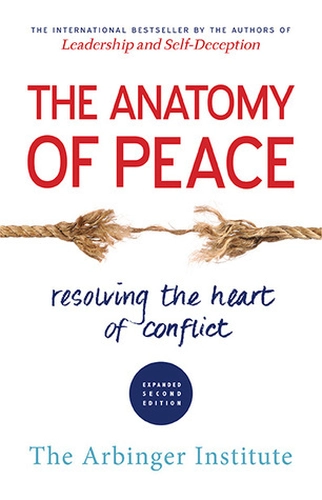
3. The Anatomy of Peace by The Arbinger Institute
This is the most unusual book on this list. It is structured as a narrative, following a group of people at a leadership retreat as they work through their own conflicts. The framing feels almost like a novel, and the ideas are introduced gradually through the characters’ conversations and realizations.
The central argument is that conflict does not start with what you say. It starts before that, with what you carry in your heart. The book introduces the concept of two mindsets: the “heart of war” and the “heart of peace.” When you are in the heart of war, you see other people as obstacles, objects, or vehicles for your own needs. You judge them before they speak. You interpret everything they do through that lens. And no amount of skillful language will help, because the conflict is already happening inside you.
The heart of peace is different. It is a stance of openness, curiosity, and genuine interest in understanding the other person’s experience. When you approach a conversation from this place, you do not need perfect scripts. The words come more naturally because you are not trying to win or defend. You are trying to understand.
This is a harder book to summarize because the ideas are woven into the narrative rather than listed out. But the core insight is powerful: you cannot have a peaceful conversation if you are already at war with the other person in your mind. The work of conflict resolution starts before you open your mouth.
This is perfect for anyone who has tried all the communication techniques and still finds themselves stuck in the same patterns, because it points to something deeper than technique.
Different books here will land differently depending on where you are. If you need words to say in the moment, start with Carter. If you want to understand the hidden structure of your recurring conflicts, Stone, Patton, and Heen will give you a framework. If you sense that the problem is not your words but something deeper, The Anatomy of Peace offers a different path.
None of these books will make conflict disappear. Conflict is not the problem. The problem is how we handle it. What they can do, if you read them honestly, is help you catch yourself before you make things worse. You will notice when you are about to say something that escalates tension. You will notice when you are arguing about the wrong thing. You will notice when you are bringing a war mindset into a conversation that did not need to be a battle.
That noticing is where everything changes.