Money is one of those things that affects almost every part of your life. How you sleep. How you talk to your partner. How you show up at work. How much freedom you have to make choices. And yet, most people never receive any formal education on how to handle it. They learn from watching their parents, from trial and error, from the occasional article that pops up on their feed. It is not enough.
The three books below are not niche. They are not for people who already have a deep understanding of finance. They are for everyone. Each one covers a different piece of the puzzle. One gets you out of the hole. One teaches you the fundamentals through story. One shows you how to make wealth-building automatic.
Read all three, and you will have everything you need to change your financial life.
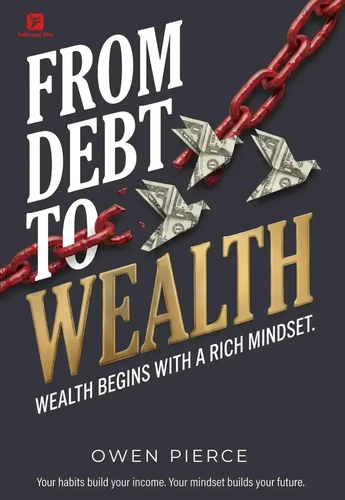
From Debt to Wealth by Owen Pierce
Most personal finance books assume a certain starting point. They assume you have a steady income. They assume you are not in crisis. They assume you have money left over at the end of the month. If those assumptions are not true, the advice does not land. It is not that the advice is wrong. It is that it was not written for you.
This book is different. It is written for people who are tired of the cycle. For people who work hard but never seem to get ahead. For people who have stopped checking their bank account because it only makes them feel worse.
Pierce starts with a question most books avoid: why does your income never seem to be enough? The answer is not that you are bad with money. It is that you have been playing by rules that were never designed to make you wealthy. You work harder, you earn a little more, but your expenses grow right along with it. You buy things to feel better and end up deeper in the hole. The cycle is not about willpower. It is about habits you were never taught to break.
The book gives you a complete reset. How to break the paycheck-to-paycheck cycle. How to eliminate bad debt without feeling deprived. How to build savings when you have never been able to keep them. How to shift your mindset from surviving to building.
What I appreciate most is that this book does not tell you to “just save more.” It assumes you do not have extra money to save. It shows you how to create the extra money first. Then you can worry about everything else.
If you have tried to get your finances together and failed, or if you have never tried because you did not know where to start, this book is where you begin.
What you will learn from ‘From Debt to Wealth’:
- How to break the paycheck-to-paycheck cycle
- How to eliminate bad debt without feeling deprived
- How to build savings when you have never been able to
- Why earning more money does not solve the problem if your habits stay the same
- How to shift from survival mode to building mode
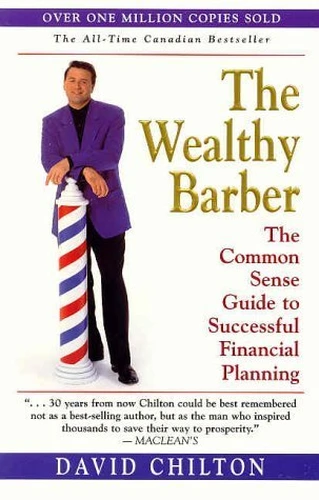
The Wealthy Barber by David Chilton
Some finance books feel like homework. They are dense, dry, and hard to get through. This one does not.
Chilton wrote a book about money that is actually enjoyable to read. He set it in a barbershop. A barber named Roy gives financial advice to his customers while cutting their hair. Through these conversations, the reader learns about compound interest, saving early, and living within your means. It is storytelling that teaches you without you even realizing you are learning.
The book covers the core principles that everyone should know: pay yourself first, let compound interest do the work, and do not overcomplicate it. The advice is simple and timeless. It is the kind of book you could hand to a teenager, a new graduate, or someone in their forties who is just starting to take money seriously.
What makes it essential reading is the storytelling format. It sticks. You remember Roy’s advice because it comes through conversations, not lectures. You remember the examples because they feel real.
If you have ever bounced off a finance book because it felt too dry, this one will pull you back in.
What you will learn from ‘The Wealthy Barber’:
- The power of compound interest and why starting early matters
- The “pay yourself first” principle and how to make it work
- Why most people overcomplicate investing and what to do instead
- How to live within your means without feeling deprived
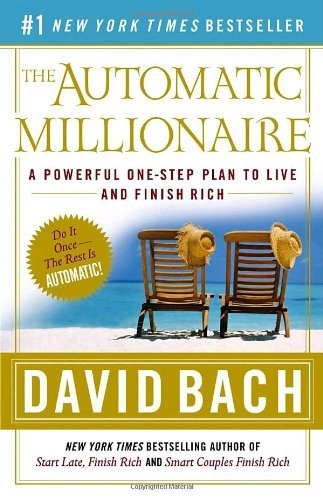
The Automatic Millionaire by David Bach
The problem with most money advice is that it relies on willpower. Save more this month. Spend less next month. Make better decisions every single day. The problem is, willpower is a limited resource. Eventually, you get tired. You slip. And then you feel like a failure.
Bach’s solution is simple: remove willpower from the equation. Set up automatic transfers so your savings and investments happen without you having to think about them. You do not need to be disciplined every day. You just need to set up the system once.
This is the book that popularized the “pay yourself first” idea in a practical, concrete way. Bach walks you through exactly how to set up automatic contributions to savings, retirement accounts, and even debt repayment. The goal is to make your financial life run on autopilot.
What I appreciate most is that Bach does not tell you to become a spreadsheet person. He acknowledges that most people are not natural budgeters. He gives you a system that works whether you are good with numbers or not.
If you have tried to save money and failed, or if you want to build wealth without constantly thinking about it, this book gives you the system to do exactly that.
What you will learn from ‘The Automatic Millionaire’:
- How to set up automatic savings and investments
- Why willpower is not the answer and what works instead
- How to make your financial life run on autopilot
- The “latte factor” and why small expenses add up
These three books cover different stages of the financial journey. Pierce gets you out of the hole and onto solid ground. Chilton teaches you the core principles in a way that actually sticks. Bach shows you how to automate the whole thing so you do not have to think about it every day.
Read all three, and you will have a complete understanding of what it takes to build wealth. But you do not need to read them all at once. Start with the one that matches where you are right now.
