I have always been the kind of person who asks too many questions. Why do people do what they do? Why did history take the path it did? Why does the world work in ways that do not seem to make sense on the surface? I read to find answers. Sometimes I find them. More often, I find better questions.
The books below are for anyone who shares that itch. They do not all answer the same question, because curiosity is not one question. It is a hundred. Each of these books satisfies a different kind of curiosity. One about the person in front of you. One about the species you belong to. One about the hidden mechanics of everyday life.
If you have ever found yourself wondering why things are the way they are, these books will take you deeper.
How to Read Someone’s Mind by Miles Carter

Some kinds of curiosity are abstract. You wonder about the universe. You wonder about history. You wonder about economics. But there is one kind of curiosity that is deeply practical, because it affects every conversation you will ever have: what is the person in front of me actually thinking?
I used to walk away from conversations replaying them in my head, trying to figure out what actually happened. Someone would say they were fine, but I knew they were not. I could not explain why.
Carter gave me a framework for naming what I was already sensing. His approach is not about memorizing a list of gestures. It is about reading emotional signals in real time. He breaks it down into four layers: face, body, voice, and context.
The section on contempt was the one that changed how I see relationships. Contempt is an emotion that does not shout or argue. It shows up as a flicker in the eyes, a slight pull at the corner of the mouth, a moment when the other person looks through you instead of at you. I started noticing this in conversations I had been having for years. Suddenly I understood why certain relationships felt off in ways I could never explain.
The book also teaches you to observe baseline behavior. People have patterns. When those patterns shift, something has shifted underneath. Instead of asking “is he lying?” I started asking “what is different about today compared to how he usually is?” That one question made me more relaxed in conversations. I stopped trying to decode every gesture and started paying attention to the whole person.
If you are curious about what is happening beneath the surface of every interaction, this book will give you a way to see it.
What you will learn from ‘How to Read Someone’s Mind’:
- A four-layer framework for reading people in real time
- How to spot contempt and other subtle emotional signals
- How to read baseline behavior and detect meaningful shifts
- How to combine facial expressions, body language, voice, and context into a complete picture
Sapiens by Yuval Noah Harari
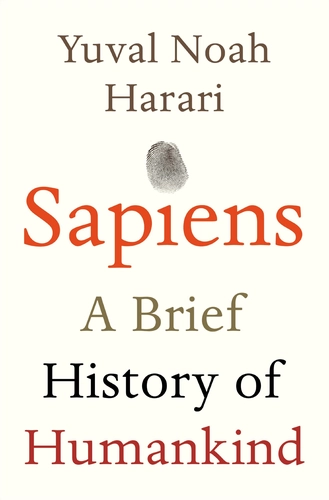
One kind of curiosity is about people you meet. Another kind is about people in general. How did we get here? How did a species of upright apes end up building cities, inventing money, and arguing about religion on the internet?
Harari’s book answers that question on a scale that is both sweeping and unsettling. He traces the entire history of our species through three revolutions. The Cognitive Revolution, seventy thousand years ago, when we developed the ability to imagine things that do not exist. The Agricultural Revolution, about twelve thousand years ago, which changed everything and locked most humans into a harder way of life. And the Scientific Revolution, which started about five hundred years ago and has been accelerating ever since.
What makes the book satisfying for a curious mind is the way Harari connects dots you never thought to connect. Why did humans develop language? Not just to point at danger, but to gossip. Why did we invent money? Because trust is hard to scale, and money is trust you can carry in your pocket. Why do we believe in nations, religions, and corporations? Because we are the only species that can cooperate on a large scale with complete strangers.
Harari is not trying to comfort you. He is trying to make you think. If you have ever looked at the modern world and wondered how we ended up here, this book will give you answers you did not expect.
What you will learn from ‘Sapiens’:
- How humans went from one of many species to the dominant one
- The role of fiction and storytelling in building civilizations
- Why the Agricultural Revolution may have made life worse, not better
- How money, religion, and empires created global cooperation
- Where the species might be heading next
Freakonomics by Steven Levitt and Stephen Dubner
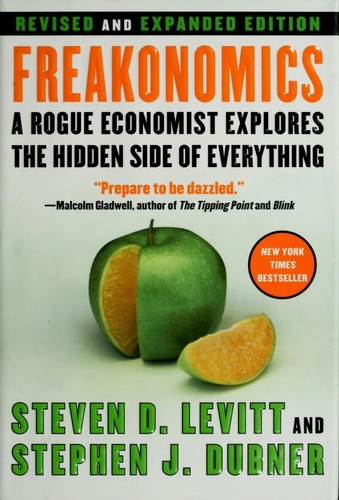
Some curiosity is about big questions. Some is about small ones. And some of the most satisfying curiosity is about questions you never thought to ask.
Freakonomics is built on a simple idea: apply economic thinking to everyday life, and you will find hidden patterns everywhere. The book is less about economics and more about how the world really works.
Levitt is an economist who asks strange questions. What do schoolteachers and sumo wrestlers have in common? They both cheat. How is the Ku Klux Klan like a group of real estate agents? Both rely on information asymmetry. Why did crime drop so dramatically in the 1990s? Not because of better policing. Because of a Supreme Court decision about abortion decades earlier.
The book is dense with examples, each one more counterintuitive than the last. The style is accessible and even playful. Dubner, the co-author and writer, makes sure the ideas land without feeling like work. You do not need to know economics to enjoy it. You just need to be curious about why people do what they do.
If you have ever thought you understood something, only to find out you were completely wrong, Freakonomics will give you that feeling over and over again. And it will make you rethink how you see the world.
What you will learn from ‘Freakonomics’:
- Why conventional wisdom is often wrong
- How incentives drive behavior in unexpected ways
- Why correlation is not causation, and why that matters
- How economics can explain everything from parenting to crime
- How to ask better questions about the world around you
Three books. Three different scales of curiosity.
Carter answers the question: what is happening inside the person in front of me right now?
Harari answers the question: how did we become the species we are today?
Levitt and Dubner answer the question: why does everyday life not work the way it seems like it should?
If you are curious about any of these, start with that one. Or read all three and see how your view of the world shifts.
