The words were right there in your head. Clear. Precise. You rehearsed them. And then the moment came, and nothing came out. Or worse, something came out—but it was weaker, messier, and nothing like what you meant to say.
A 2026 workplace communication survey found that nearly 70% of professionals admit they have held back an idea in a meeting because they were afraid they would not say it well enough. The problem is not confidence. It is knowing what to say and when.
There are three layers to expression. The first is the words themselves. What do you say in the moment? The second is self-understanding. Why does this keep happening to you, and what can you do about it that fits who you actually are? The third is the foundation underneath everything: your internal state. If your mind is chaotic, no amount of scripting will save you.
The three books below address each of these layers. One gives you the words. One helps you understand yourself. One helps you quiet the noise so you can speak from a clearer place.
1. Say It Right Every Time by Miles Carter
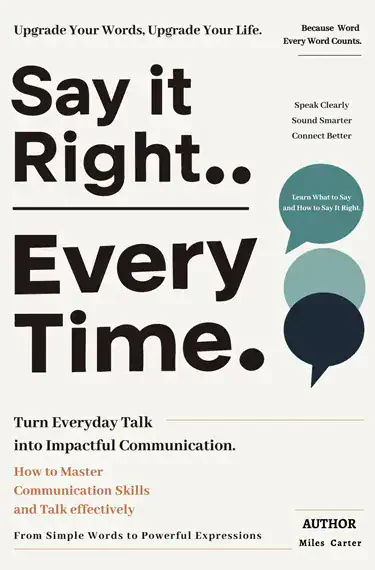
Carter solves the most immediate problem: you know what you want to say, but when the pressure hits, your words come out wrong. Or they do not come out at all.
He does not tell you to “just be confident.” He gives you language patterns that work even when your nerves are working against you. The book is built around before-and-after comparisons that show you how the same idea lands completely differently depending on how you phrase it. One version escalates tension. The other diffuses it. One version puts the other person on the defensive. The other invites them into your perspective.
The book covers specific scenarios: job interviews, salary negotiations, difficult conversations, and team meetings. It teaches you to build a quick mental filter before you speak. It does not ask you to change who you are. It asks you to change what you say.
If you freeze in the moment or constantly replay conversations wishing you had said something differently, this book gives you a toolkit you can use immediately. It is the fastest fix for the most visible part of the problem.
This is perfect for anyone who knows what they want to say but cannot seem to get it out clearly when it matters. If you walk away from conversations thinking “I should have said that differently,” this book is for you.
2. Quiet by Susan Cain
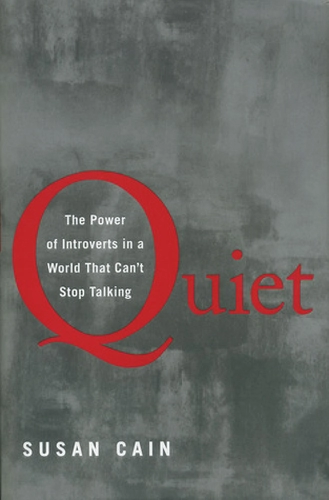
Some people struggle to express themselves not because they lack the words, but because they are trying to express themselves in a way that does not fit who they are.
Cain’s book is a deep dive into introversion. It is written for people who have spent their lives being told they are too quiet, too shy, too reluctant to speak up. She argues that many people who struggle to express themselves are not broken. They are simply introverts living in a culture that rewards extroversion. Their natural way of processing the world is different, and they are constantly being pushed to perform in ways that drain them.
The book is part research, part personal narrative, part cultural critique. Cain traces the history of how extroversion became the ideal in Western culture and shows how introverts have been systematically undervalued. But she does not stop at diagnosis. She offers practical advice on how to find your voice without pretending to be someone you are not. How to prepare for high-stakes conversations in a way that works with your natural tendencies. How to step into the spotlight when you need to, without draining yourself completely.
This is not a quick fix. It is a book about understanding yourself and giving yourself permission to communicate in a way that fits your wiring.
This is perfect for anyone who has spent their whole life trying to speak like an extrovert and failing. If you have ever been told you are “too quiet” or felt like something was wrong with you because you do not speak up the way others do, this book will change how you see yourself.
3. The Art of Communicating by Thich Nhat Hanh
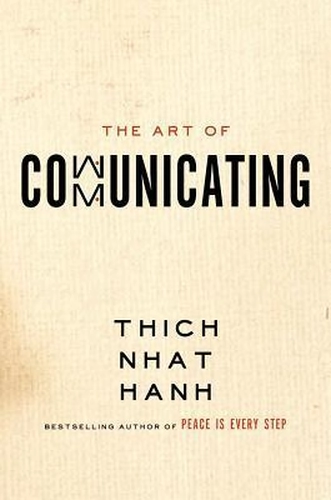
The third layer is internal state. If your mind is full of noise, if you are anxious, distracted, or overwhelmed, no amount of scripting or self-understanding will help. Your words will still come out tangled because your mind is tangled.
Thich Nhat Hanh is a Buddhist monk and one of the most respected mindfulness teachers in the world. His book is about communication, but it is not about what to say. It is about how to be present. His argument is that communication is not something you do. It is something you allow. If your heart is calm, the words will follow. If your heart is not, nothing you learn will help.
The book is built around the practice of mindful listening—listening to yourself and listening to the other person without judgment. He writes about how to recognize the emotions that arise before you speak. How to pause and let them pass. How to speak from a place of clarity rather than reactivity. It is spiritual, but it is also deeply practical. He gives specific exercises for becoming more present in conversations.
This is the most unusual book on this list. It is not about technique. It is about being.
This is perfect for anyone who has tried all the communication strategies and still feels stuck. If you have studied the scripts, practiced the phrases, and still feel like your words come from a place of chaos, this book points to the layer underneath everything else.
Different books here will land differently depending on where you are.
If you need words to say in the moment, start with Carter. His book gives you the language to get through high-pressure conversations without making things worse.
If you have spent your whole life feeling like something is wrong with you because you are quiet, Cain will help you understand yourself better. She will show you that your wiring is not a flaw—it is a different way of being in the world.
And if you have tried everything and still feel like your words come from a place of chaos, Thich Nhat Hanh points to the layer underneath it all. He will show you how to quiet the noise so you can speak from clarity.
None of these books will flip a switch overnight. Communication is not a skill you master. It is a practice. What they can do, if you read them honestly, is help you see where the real blockage is. And once you see that, the words get a little easier.
