You want to understand people better. You also want to understand yourself. There are hundreds of psychology books out there, and they all sound important. You have no idea where to start.
The three books below are among the most frequently recommended classics in this space. Each one solves a different problem and suits a different reader. Pick the one that matches your biggest frustration right now.

How to Read Someone’s Mind by Miles Carter
What this book solves: How to read what the person in front of you is actually thinking and feeling in real time.
Most books on reading people stop at gesture lists and signal dictionaries. This one goes deeper. It gives you a four-layer framework—face, body, voice, and context—for reading emotional signals in real conversations.
The chapter on contempt is the most distinctive part of the book. This emotion does not shout or argue. It shows up as a flicker in the eyes, a slight pull at the corner of the mouth, a moment when the other person looks through you instead of at you. Learning to spot it explains why so many relationships feel off in ways you could never name.
The book also trains you to observe baseline behavior. Everyone has consistent patterns. When those patterns shift, something has shifted underneath. The real question is not “is he lying?” but “what is different about today compared to how he usually is?”
Best for: Anyone who wants to understand why conversations feel off. The most practical of the three—you can use it in your next conversation immediately.
What you will learn:
- A four-layer framework for reading people in real time
- How to spot contempt and other subtle emotional signals
- How to detect meaningful shifts in behavior
- How to combine face, body, voice, and context into a complete picture
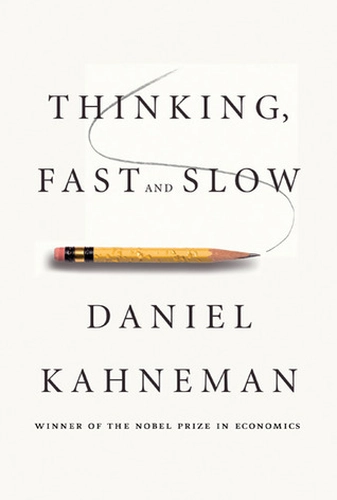
Thinking, Fast and Slow by Daniel Kahneman
What this book solves: Why your brain makes decisions that you cannot understand in hindsight.
Kahneman is a Nobel laureate who spent his career studying how humans make decisions. His core finding: your brain has two systems. System one is fast, intuitive, and emotional. System two is slow, deliberate, and logical. Most of the time, you think you are using system two—but you are actually running on system one, making snap judgments based on bias and habit.
The book breaks down dozens of cognitive biases: the availability heuristic (why you overestimate vivid, dramatic risks), anchoring (why the first number you hear sets your expectations), loss aversion (why the fear of losing outweighs the excitement of gaining). Kahneman admits that even he is not immune to these biases. The goal is not to stop making mistakes—it is to catch them before they cause real damage.
Best for: Anyone who keeps making the same bad decisions and cannot figure out why. This book does not offer quick fixes—it gives you a mirror to see your own thinking patterns.
What you will learn:
- How your brain makes decisions without you realizing it
- The difference between intuitive and deliberate thinking
- Why you overestimate some risks and underestimate others
- How to catch cognitive biases before they lead you astray
- How to make better decisions by understanding your own mental shortcuts
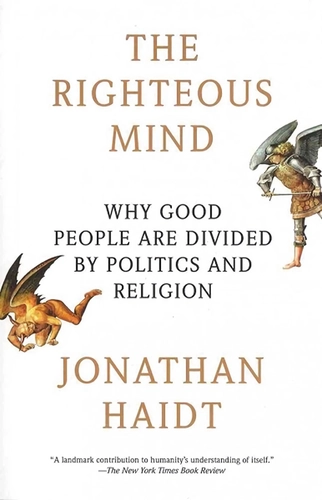
The Righteous Mind by Jonathan Haidt
What this book solves: Why smart people believe completely different things about morality and politics.
Haidt is one of the most important social psychologists working today. His central argument: moral judgments are not driven by reason—they are driven by intuition. We make snap judgments about right and wrong, and then we use logic to justify them. This is why arguments rarely change anyone’s mind. You are not changing their position—you are threatening their identity.
The book is built around six moral foundations that shape how different cultures and political groups think about right and wrong. Understanding this does not make disagreements disappear—but it explains why they persist, and why the other person is not as irrational as you think.
Best for: Anyone exhausted by arguments that go nowhere. This book does not teach you how to win—it teaches you why you keep losing.
What you will learn:
- Why moral disagreements are so hard to resolve
- How intuition drives judgment—and reason follows
- Why logic rarely changes anyone’s mind
- How to understand people you fundamentally disagree with
- How to navigate moral conflicts without losing your own values
These three books address three different kinds of confusion. If you want to read the person in front of you, start with Carter. If you want to understand why your own brain keeps making bad decisions, start with Kahneman. If you want to understand why disagreements run so deep and never seem to resolve, start with Haidt.
The right first book is the one that matches your biggest frustration right now.
