If you are in your twenties or thirties, you are probably managing money you were never taught how to manage.
You graduated with student loans. You got your first real job. You opened a credit card. You started paying rent. You have insurance, a retirement account, and a vague sense that you should be doing more. Nobody ever sat you down and explained any of it.
The problem is, most personal finance books were not written for you. They were written for people who already have money. People who already own homes. People who already understand what a fiduciary is.
You need something different. You need books that start where you are.
Here are three books that do exactly that.
Best Book For Getting Out Of The Cycle
1. From Debt to Wealth by Owen Pierce
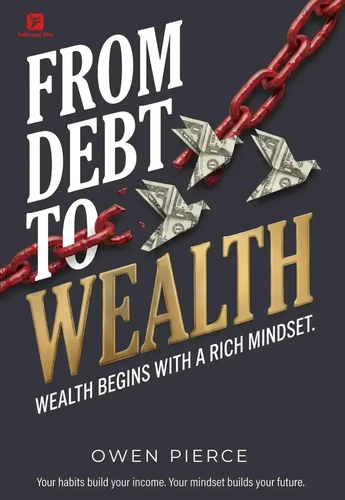
You work hard. Your income goes up. But somehow, you never get ahead. Your expenses grow right along with your paycheck. You buy things to feel better and end up deeper in the hole. You tell yourself you will start saving next month—and next month never comes.
This is not a willpower problem. It is a knowledge gap. You were never taught the rules of the game.
Pierce starts where most finance books refuse to go: with the question of why you are stuck in the first place. He argues that wealth is not a reward for hard work. It is compensation for your cognition. Working more hours will not get you there. Understanding how money actually works will.
The book walks you through a complete reset. How to break the paycheck-to-paycheck cycle without feeling deprived. How to eliminate bad debt in a way that actually sticks. How to build savings when you have never been able to keep them. It does not assume you already have money to manage. It assumes you are starting from behind—and gives you a path forward.
What you will learn from ‘From Debt to Wealth’:
- How to break the paycheck-to-paycheck cycle without feeling deprived
- How to eliminate bad debt in a way that actually sticks
- How to build savings when you have never been able to keep them
- Why earning more money does not solve the problem if your habits stay the same
- How to shift from survival mode to building mode
Best Book For Making Wealth Automatic
2. The Automatic Millionaire by David Bach
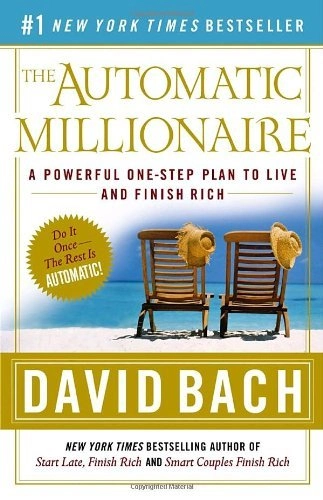
Most people believe that building wealth requires constant willpower. You need to make the right decision every day. You need to resist temptation every time. You need to stay motivated month after month.
Bach argues that this approach is backwards. Willpower is a limited resource. Eventually, you get tired, you slip, and you feel like a failure. The solution is not more discipline. It is removing discipline from the equation entirely.
His core idea is simple: set up automatic transfers so your savings and investments happen without you having to think about them. You do not need to be disciplined every day. You just need to set up the system once.
Bach walks you through exactly how to do this. How to set up automatic contributions to savings and retirement accounts. How to automate debt payments. How to make your financial life run on autopilot. He also covers the “latte factor”—the idea that small daily expenses add up over time, and redirecting them can make a massive difference.
What makes this book useful is its practicality. Bach does not tell you to become a spreadsheet person. He gives you a system that works whether you are good with numbers or not.
What you will learn from ‘The Automatic Millionaire’:
- How to set up automatic savings and investments
- Why willpower is not the answer—and what works instead
- How to make your financial life run on autopilot
- The “latte factor” and why small expenses add up
- How to build wealth without thinking about it every day
Best Book For Learning The Basics Without Falling Asleep
3. The Wealthy Barber by David Chilton
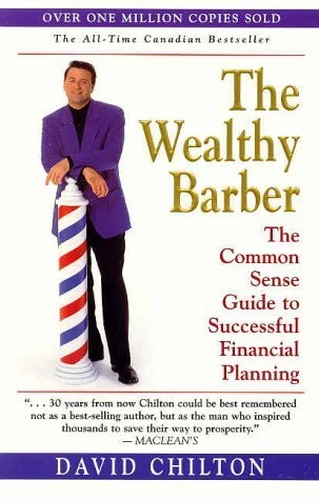
Most personal finance books feel like homework. They are dense, dry, and hard to get through. Chilton took a different approach. He wrote a book about money that is actually enjoyable to read.
The book is set in a barbershop. A barber named Roy gives financial advice to his customers while cutting their hair. Through these conversations, the reader learns about compound interest, saving early, and living within your means. It is storytelling that teaches you without you even realizing you are learning.
The advice is simple and timeless. Pay yourself first. Let compound interest do the work. Do not overcomplicate it. Chilton covers the core principles that everyone should know, but he does it in a way that sticks. You remember Roy’s advice because it comes through conversations, not lectures.[reference:0]
What makes this book essential is the format. If you have ever bounced off a finance book because it felt too dry, this one will pull you back in. It is approachable, engaging, and perfect for someone who is just starting out.[reference:1]
What you will learn from ‘The Wealthy Barber’:
- The power of compound interest and why starting early matters
- The “pay yourself first” principle and how to make it work
- Why most people overcomplicate investing—and what to do instead
- How to live within your means without feeling deprived
- The basics of saving, investing, and building wealth over time
Frequently Asked Questions
What if I am completely overwhelmed and do not know where to start?
Start with Pierce’s book. It assumes you are starting from behind and gives you a clear path forward. The other two books are valuable, but Pierce meets you where you actually are.
What if I already have some savings and just want a system that runs itself?
Start with Bach. His “pay yourself first” automation system removes the need for daily discipline. Set it up once and let it run.
What if I have tried to read finance books before and found them too boring?
Start with Chilton. The storytelling format makes the basics easy to absorb without feeling like you are studying. It is the most approachable entry point for someone who has bounced off other books.
Do I need to read all three books, or can I pick just one?
Each book stands on its own. They cover different entry points to the same problem. Choose the one that matches where you are right now. If you need more, read the next.
